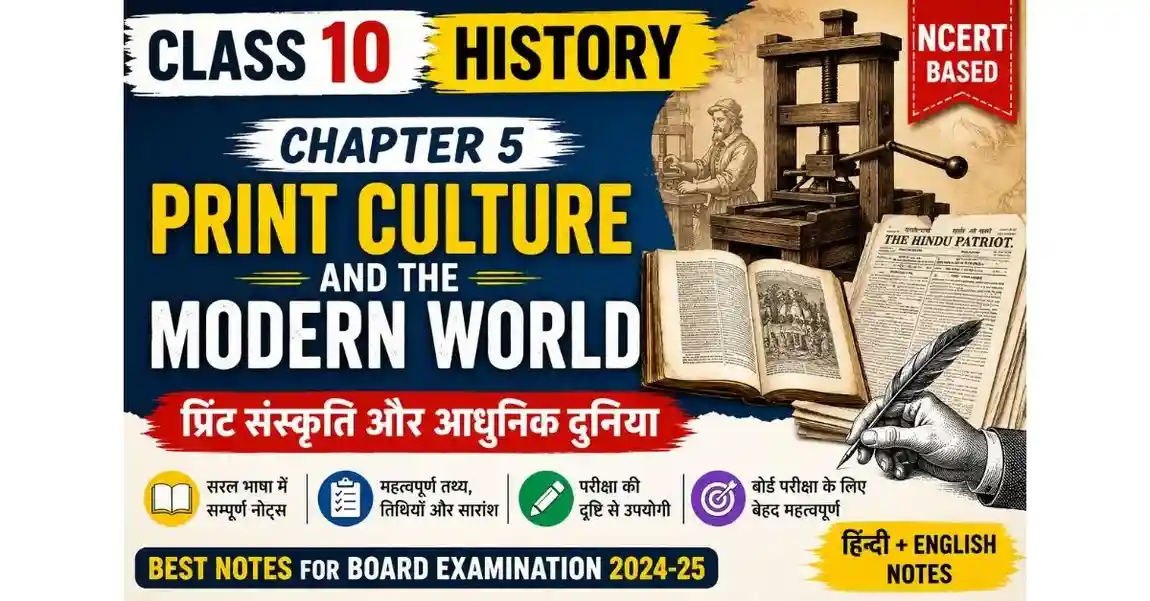
कक्षा 10 इतिहास का अध्याय “Print Culture and the Modern World” आधुनिक दुनिया में मुद्रण तकनीक के विकास और उसके प्रभाव को समझाने वाला बेहद महत्वपूर्ण अध्याय है। इस अध्याय में बताया गया है कि कैसे चीन, जापान और यूरोप से शुरू हुई प्रिंट संस्कृति ने शिक्षा, विज्ञान, धर्म, राजनीति और समाज को बदल दिया। गुटेनबर्ग के प्रिंटिंग प्रेस के आविष्कार ने पुस्तकों को सस्ता और सुलभ बनाया, जिससे आम लोगों तक ज्ञान पहुँच सका।
भारत में भी प्रिंट संस्कृति ने सामाजिक सुधार आंदोलनों और स्वतंत्रता संग्राम को मजबूत करने में महत्वपूर्ण भूमिका निभाई। इस पोस्ट में आपको Chapter 5 के सभी महत्वपूर्ण टॉपिक्स सरल हिंदी + English भाषा में, NCERT आधारित और परीक्षा की दृष्टि से उपयोगी नोट्स के रूप में मिलेंगे। ये नोट्स बोर्ड परीक्षा, रिवीजन और क्विक स्टडी के लिए बेहद लाभदायक हैं।
Chapter 5: Print Culture and the Modern World
(Class 10 History Notes | NCERT Based)
Print Culture means the culture developed through printed books, newspapers, magazines, pamphlets, and journals. The invention of printing technology changed human life deeply. It spread knowledge, ideas, religion, scientific thinking, and political awareness among people. In Europe and India, print culture helped in the growth of education, nationalism, reform movements, and modern thinking. This chapter explains how print technology developed from China to Europe and India and how it transformed society and politics in the modern world.
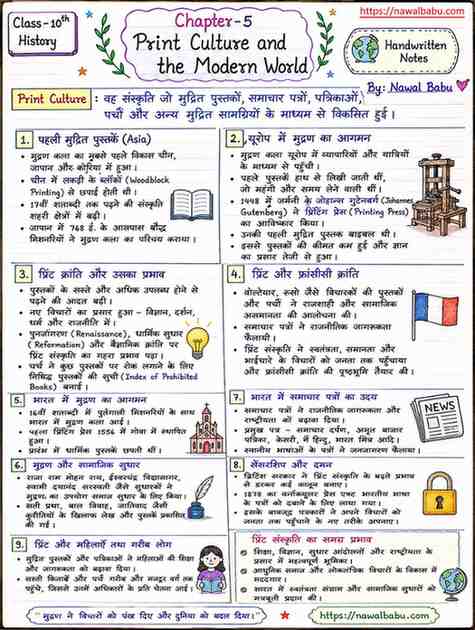
प्रिंट संस्कृति का अर्थ है छपी हुई पुस्तकों, समाचार पत्रों, पत्रिकाओं और पर्चों से विकसित संस्कृति। मुद्रण तकनीक के आविष्कार ने मानव जीवन को पूरी तरह बदल दिया। इससे ज्ञान, शिक्षा, धर्म, विज्ञान और राजनीतिक चेतना का प्रसार हुआ। इस अध्याय में चीन से लेकर यूरोप और भारत तक मुद्रण संस्कृति के विकास और उसके प्रभावों का अध्ययन किया गया है। For Objective Questions, Visit Learneasily8.
The First Printed Books: पहली मुद्रित पुस्तकें
Printing technology first developed in China, Japan, and Korea. In China, books were printed using woodblock printing. The Chinese government printed books for civil service examinations. By the 17th century, urban culture grew, and reading became popular among merchants and women. In Japan, Buddhist texts were printed, and later many illustrated books became famous. Printing helped spread education and literature among common people.
मुद्रण तकनीक का सबसे पहले विकास चीन, जापान और कोरिया में हुआ। चीन में लकड़ी के ब्लॉक से छपाई की जाती थी। सरकारी परीक्षाओं के लिए पुस्तकें छापी जाती थीं। 17वीं शताब्दी में पढ़ने की संस्कृति बढ़ी। जापान में बौद्ध ग्रंथ और चित्रयुक्त पुस्तकें प्रसिद्ध हुईं। इससे शिक्षा और साहित्य का प्रसार हुआ।
Woodblock Printing in China: चीन में वुडब्लॉक प्रिंटिंग
In woodblock printing, the text or design was carved on wooden blocks. Ink was applied, and paper was pressed over the block. This method was slow but useful for printing books in large numbers. China became the leading producer of printed books. Confucian texts and examination materials were widely printed for students and scholars.
वुडब्लॉक प्रिंटिंग में लकड़ी के ब्लॉक पर अक्षर या चित्र उकेरे जाते थे। फिर उन पर स्याही लगाकर कागज दबाया जाता था। यह प्रक्रिया धीमी थी लेकिन उपयोगी थी। चीन मुद्रित पुस्तकों का प्रमुख केंद्र बन गया। कन्फ्यूशियस के ग्रंथ और परीक्षा सामग्री बड़े पैमाने पर छापी जाती थी।
Print in Japan: जापान में मुद्रण कला
Buddhist missionaries introduced printing technology into Japan around 768 CE. The famous Diamond Sutra was one of the oldest printed books. During the Edo period, urban culture developed rapidly, and people enjoyed reading poetry, novels, and travel books. Cheap printed books increased literacy and entertainment among ordinary people.
768 ईस्वी के आसपास बौद्ध मिशनरियों ने जापान में मुद्रण तकनीक का परिचय कराया। डायमंड सूत्र सबसे पुरानी मुद्रित पुस्तकों में से एक थी। एदो काल में शहरी संस्कृति विकसित हुई और लोग कविता, उपन्यास और यात्रा पुस्तकें पढ़ने लगे। सस्ती पुस्तकों से साक्षरता बढ़ी।
Print Comes to Europe: यूरोप में मुद्रण का आगमन
Printing technology reached Europe through traders and travelers. Earlier, manuscripts were copied by hand, which was time-consuming and costly. The invention of the printing press by Johannes Gutenberg around 1448 revolutionized book production. Books became cheaper and more accessible. Knowledge spread rapidly, helping the Renaissance, Reformation, and Scientific Revolution.
व्यापारियों और यात्रियों के माध्यम से मुद्रण तकनीक यूरोप पहुँची। पहले पुस्तकें हाथ से लिखी जाती थीं जो महंगी और समय लेने वाली थीं। लगभग 1448 में जोहान्स गुटेनबर्ग ने प्रिंटिंग प्रेस का आविष्कार किया। इससे पुस्तकें सस्ती और आसानी से उपलब्ध हो गईं। ज्ञान का तेजी से प्रसार हुआ।
Gutenberg and the Printing Press: गुटेनबर्ग और प्रिंटिंग प्रेस
Johannes Gutenberg developed the movable metal type printing press in Germany. His first major printed book was the Bible. The printing press could produce many copies quickly and accurately. This invention reduced the cost of books and encouraged reading among common people. It is considered one of the greatest inventions in history.
जोहान्स गुटेनबर्ग ने जर्मनी में मूवेबल मेटल टाइप प्रिंटिंग प्रेस विकसित किया। उनकी पहली प्रमुख मुद्रित पुस्तक बाइबिल थी। इस मशीन से कम समय में अधिक प्रतियाँ छपने लगीं। पुस्तकों की कीमत कम हुई और आम लोगों में पढ़ने की आदत बढ़ी। इसे इतिहास का महान आविष्कार माना जाता है।
The Print Revolution and Its Impact: प्रिंट क्रांति और उसका प्रभाव
The print revolution transformed European society. Books spread new ideas about science, religion, and philosophy. People started questioning old beliefs and traditions. Literacy rates increased because books became affordable. Printing encouraged discussions, debates, and the exchange of ideas. It played a major role in shaping modern society and democratic thinking.
प्रिंट क्रांति ने यूरोपीय समाज को बदल दिया। पुस्तकों के माध्यम से विज्ञान, धर्म और दर्शन के नए विचार फैले। लोगों ने पुरानी मान्यताओं पर सवाल उठाना शुरू किया। पुस्तकों के सस्ते होने से साक्षरता बढ़ी। इससे विचारों का आदान-प्रदान और बहस बढ़ी। आधुनिक समाज के निर्माण में इसका महत्वपूर्ण योगदान रहा।
The Reading Mania: पढ़ने का बढ़ता उत्साह
By the 17th and 18th centuries, reading became a popular habit in Europe. Booksellers sold books at fairs and markets. Libraries were established, and newspapers and journals became common. People from different social groups began reading literature, political writings, and scientific works. Reading created awareness and encouraged independent thinking.
17वीं और 18वीं शताब्दी तक यूरोप में पढ़ना एक लोकप्रिय आदत बन गया। पुस्तक विक्रेता मेलों और बाजारों में किताबें बेचने लगे। पुस्तकालय स्थापित हुए और समाचार पत्र लोकप्रिय हुए। विभिन्न वर्गों के लोग साहित्य, राजनीति और विज्ञान से जुड़ी पुस्तकें पढ़ने लगे। इससे जागरूकता और स्वतंत्र सोच बढ़ी।
Religious Debates and Fear of Books: धार्मिक बहस और पुस्तकों का डर
The Church feared that printed books could spread rebellious and heretical ideas. Some books criticized the Church and traditional authority. To control this, the Roman Catholic Church maintained an Index of Prohibited Books. However, readers continued to explore new ideas secretly, and printing strengthened intellectual freedom.
चर्च को डर था कि मुद्रित पुस्तकें विद्रोही विचार फैला सकती हैं। कुछ पुस्तकों ने चर्च और परंपरागत सत्ता की आलोचना की। इसलिए चर्च ने प्रतिबंधित पुस्तकों की सूची बनाई। फिर भी लोग नए विचार पढ़ते रहे और मुद्रण ने बौद्धिक स्वतंत्रता को मजबूत किया।
Print and the French Revolution: प्रिंट और फ्रांसीसी क्रांति
Print culture helped spread revolutionary ideas in France. Philosophers like Rousseau and Voltaire criticized monarchy and social inequality through books and pamphlets. Newspapers informed people about political events. Printed materials created public opinion against the monarchy and inspired people to demand liberty, equality, and justice during the French Revolution.
फ्रांस में प्रिंट संस्कृति ने क्रांतिकारी विचारों को फैलाया। रूसो और वोल्टेयर जैसे विचारकों ने पुस्तकों और पर्चों के माध्यम से राजशाही की आलोचना की। समाचार पत्रों ने लोगों को राजनीतिक घटनाओं की जानकारी दी। मुद्रित सामग्री ने जनता को स्वतंत्रता और समानता के लिए प्रेरित किया।
Print Comes to India: भारत में मुद्रण का आगमन
Printing technology came to India with Portuguese missionaries in the 16th century. The first printing press was established in Goa. Initially, religious books were printed. Later, English officials and Indian reformers used print for education and social reform. Newspapers, journals, and books in Indian languages became popular during the 19th century.
16वीं शताब्दी में पुर्तगाली मिशनरियों के साथ भारत में मुद्रण तकनीक आई। पहला प्रिंटिंग प्रेस गोवा में स्थापित हुआ। शुरुआत में धार्मिक पुस्तकें छपती थीं। बाद में अंग्रेज अधिकारियों और भारतीय समाज सुधारकों ने शिक्षा और सुधार के लिए इसका उपयोग किया। भारतीय भाषाओं में समाचार पत्र लोकप्रिय हुए।
Print and Religious Reform: मुद्रण और धार्मिक सुधार
Religious reformers used print to spread their ideas among people. Raja Ram Mohan Roy published newspapers and writings against social evils like sati system. Hindu, Muslim, and Sikh reformers printed religious texts and debates. Printing encouraged discussions about religion, customs, and social reforms in Indian society.
समाज सुधारकों ने अपने विचार फैलाने के लिए मुद्रण का उपयोग किया। राजा राम मोहन राय ने सती प्रथा जैसी कुरीतियों के खिलाफ लेख और समाचार पत्र प्रकाशित किए। विभिन्न धर्मों के सुधारकों ने धार्मिक ग्रंथ और बहसें प्रकाशित कीं। इससे सामाजिक सुधार की चर्चा बढ़ी।
Rise of Newspapers in India: भारत में समाचार पत्रों का विकास
Newspapers became powerful tools for spreading information and political awareness. Indian newspapers criticized British policies and promoted nationalism. Vernacular newspapers connected local people with national movements. Despite censorship laws, journalists continued publishing articles supporting freedom and social reforms.
समाचार पत्र सूचना और राजनीतिक जागरूकता फैलाने का शक्तिशाली माध्यम बने। भारतीय समाचार पत्रों ने ब्रिटिश नीतियों की आलोचना की और राष्ट्रवाद को बढ़ावा दिया। स्थानीय भाषाओं के समाचार पत्रों ने लोगों को राष्ट्रीय आंदोलनों से जोड़ा। सेंसरशिप के बावजूद पत्रकार लिखते रहे।
Print and Censorship: मुद्रण और सेंसरशिप
The British government feared the growing influence of Indian newspapers and books. Several laws were introduced to control printing and publishing. The Vernacular Press Act of 1878 tried to suppress Indian-language newspapers. However, nationalist writers used creative methods to continue spreading patriotic ideas among people.
ब्रिटिश सरकार भारतीय समाचार पत्रों के बढ़ते प्रभाव से डरती थी। इसलिए कई कानून बनाए गए। 1878 का वर्नाक्युलर प्रेस एक्ट भारतीय भाषाओं के समाचार पत्रों को नियंत्रित करने के लिए लाया गया। फिर भी राष्ट्रवादी लेखकों ने नए तरीकों से अपने विचार फैलाए।
Print and Women: मुद्रण और महिलाएँ
Print culture increased women’s education and participation in society. Books and magazines specially written for women discussed health, education, and household management. Women writers started expressing their views through novels and essays. Although conservative groups opposed women’s education, print helped in changing social attitudes gradually.
प्रिंट संस्कृति ने महिलाओं की शिक्षा और सामाजिक भागीदारी बढ़ाई। महिलाओं के लिए विशेष पुस्तकें और पत्रिकाएँ प्रकाशित होने लगीं। महिला लेखिकाओं ने उपन्यास और लेख लिखना शुरू किया। रूढ़िवादी विरोध के बावजूद मुद्रण ने समाज की सोच बदलने में मदद की।
Print and the Poor People: प्रिंट और गरीब लोग
Cheap books and pamphlets reached workers and poor people in towns and villages. Public libraries and street literature made reading accessible to common people. Workers read political writings and became aware of their rights. Print culture gave a voice to lower classes and encouraged social awareness.
सस्ती पुस्तकें और पर्चे मजदूरों और गरीब लोगों तक पहुँचे। पुस्तकालयों और सड़क साहित्य ने पढ़ना आसान बनाया। मजदूरों ने राजनीतिक लेख पढ़कर अपने अधिकारों को समझा। प्रिंट संस्कृति ने निम्न वर्गों को आवाज दी।
Impact of Print Culture: प्रिंट संस्कृति का प्रभाव
Print culture transformed society by spreading education, nationalism, scientific ideas, and democratic values. It encouraged debates, reforms, and political movements. Books and newspapers connected people across regions and languages. Printing became a powerful medium for social change and modernization in both Europe and India.
प्रिंट संस्कृति ने शिक्षा, राष्ट्रवाद, विज्ञान और लोकतांत्रिक मूल्यों का प्रसार किया। इससे बहस, सुधार और राजनीतिक आंदोलनों को बल मिला। पुस्तकें और समाचार पत्र लोगों को जोड़ने लगे। यूरोप और भारत दोनों में मुद्रण सामाजिक परिवर्तन का महत्वपूर्ण माध्यम बना।
Read More: Class 10 History Chapter 1 Notes in Hindi + English | Rise of Nationalism in Europe (NCERT 2026-27)
Important Keywords / महत्वपूर्ण शब्द
- Print Culture – मुद्रण संस्कृति
- Woodblock Printing – लकड़ी ब्लॉक छपाई
- Printing Press – मुद्रण यंत्र
- Manuscript – हस्तलिखित पांडुलिपि
- Renaissance – पुनर्जागरण
- Reformation – धर्म सुधार आंदोलन
- Vernacular Press – स्थानीय भाषा प्रेस
- Censorship – सेंसरशिप
- Nationalism – राष्ट्रवाद
- Literacy – साक्षरता
Important Dates / महत्वपूर्ण तिथियाँ
| Year | Event |
|---|---|
| 594 CE | First printed books in China |
| 768 CE | Printing introduced in Japan |
| 1448 | Gutenberg developed printing press |
| 1517 | Martin Luther’s writings printed |
| 1556 | First printing press in Goa |
| 1878 | Vernacular Press Act passed |
Conclusion / निष्कर्ष
Print culture played an important role in shaping the modern world. It spread education, awareness, nationalism, and scientific thinking among people. Printing made knowledge accessible to ordinary people and encouraged social and political reforms. In India, print culture strengthened the freedom struggle and social reform movements. Therefore, the invention of print technology became one of the most influential developments in human history.
प्रिंट संस्कृति ने आधुनिक दुनिया के निर्माण में महत्वपूर्ण भूमिका निभाई। इससे शिक्षा, जागरूकता, राष्ट्रवाद और वैज्ञानिक सोच का विकास हुआ। भारत में इसने स्वतंत्रता आंदोलन और सामाजिक सुधारों को मजबूत किया। इसलिए मुद्रण तकनीक मानव इतिहास की सबसे प्रभावशाली खोजों में से एक मानी जाती है।