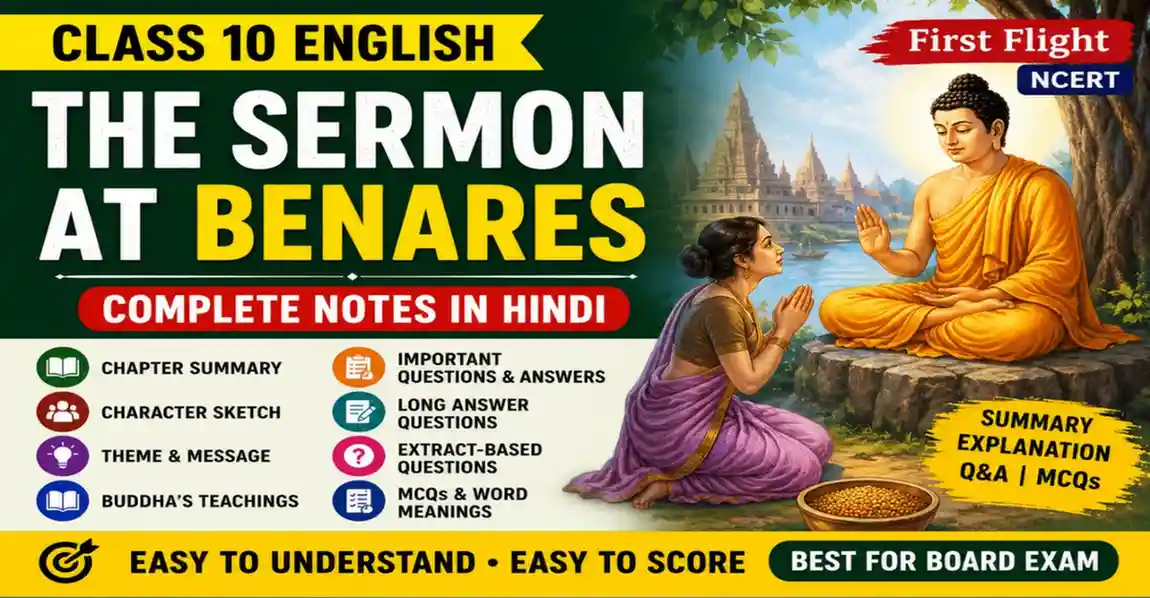
The Sermon at Benares Class 10 Notes in Hindi उन विद्यार्थियों के लिए उपयोगी हैं जो NCERT English के इस महत्वपूर्ण chapter को आसान भाषा में समझना चाहते हैं। इस chapter में Gautama Buddha और Kisa Gotami की कहानी के माध्यम से जीवन, मृत्यु, दुख, मोह और शांति का गहरा संदेश दिया गया है। इस पाठ में बताया गया है कि मृत्यु जीवन का एक अटल और सार्वभौमिक सत्य है, जिससे कोई भी मनुष्य बच नहीं सकता। Kisa Gotami अपने मृत पुत्र को जीवित कराने के लिए बुद्ध के पास जाती है, लेकिन बुद्ध उसे mustard seeds से जुड़ा एक कार्य देकर जीवन की वास्तविकता समझाते हैं।
इन The Sermon at Benares Class 10 Notes में आपको chapter summary, Hindi explanation, important word meanings, character sketch, theme, Buddha’s teachings, important questions and answers, long-answer questions, extract-based questions और MCQs सरल भाषा में मिलेंगे। ये notes CBSE Class 10 English Board Exam की तैयारी और quick revision के लिए भी बेहद उपयोगी हैं। Download NCERT BOOK PDF.
The Sermon at Benares Class 10 Notes: Summary & Q&A
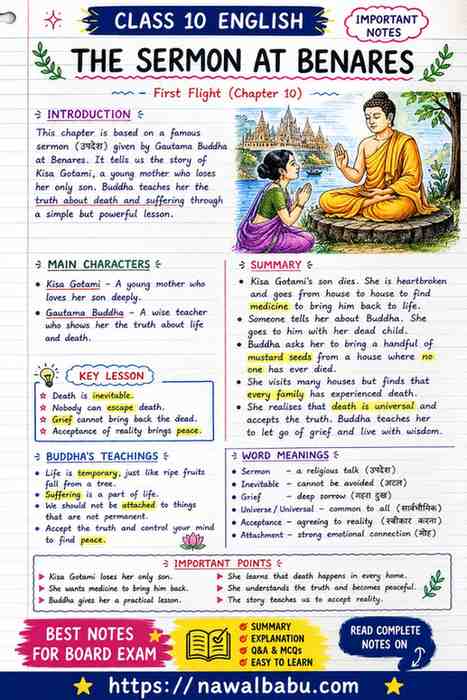
The Sermon at Benares is an important chapter from the Class 10 NCERT English textbook, First Flight. The chapter teaches us an important truth of life: death is inevitable, and no human being can escape it. Through the story of Kisa Gotami, the Buddha explains that sorrow and suffering are natural parts of life. A person can find peace only when they accept the reality of death and stop living in endless grief.
हिंदी में: यह पाठ हमें सिखाता है कि मृत्यु जीवन का अटल सत्य है। हर व्यक्ति को एक दिन मृत्यु का सामना करना पड़ता है। इसलिए हमें दुख में डूबे रहने के बजाय जीवन की सच्चाई को स्वीकार करके शांति प्राप्त करनी चाहिए।
The Sermon at Benares – Chapter Overview
The Sermon at Benares means Benares में दिया गया उपदेश। यह पाठ भगवान बुद्ध के जीवन और उनके उपदेश पर आधारित है। इसमें एक दुखी माँ Kisa Gotami अपने मृत पुत्र को जीवित कराने के लिए बुद्ध के पास जाती है। बुद्ध उसे एक ऐसा कार्य करने को कहते हैं जिससे वह स्वयं समझ जाती है कि मृत्यु हर परिवार के जीवन का हिस्सा है।
मुख्य विचार:
- Death is universal – मृत्यु सार्वभौमिक है।
- Nobody can escape death – कोई भी मृत्यु से नहीं बच सकता।
- Grief cannot bring the dead back – शोक मृत व्यक्ति को वापस नहीं ला सकता।
- Acceptance of reality brings peace – सच्चाई को स्वीकार करने से शांति मिलती है।
About the Author – लेखक के बारे में
यह पाठ Lord Buddha के जीवन और उनके ज्ञान पर आधारित है। भगवान बुद्ध का जन्म Siddhartha Gautama के रूप में हुआ था। उन्होंने संसार के दुख, बीमारी, बुढ़ापे और मृत्यु को देखकर सत्य की खोज करने का निर्णय लिया। ज्ञान प्राप्त करने के बाद उन्होंने लोगों को जीवन की वास्तविकता और दुख से मुक्ति का मार्ग बताया।
हिंदी में: बुद्ध ने लोगों को सिखाया कि संसार में दुख का मुख्य कारण इच्छाएँ और आसक्ति हैं। जब मनुष्य जीवन की सच्चाई को स्वीकार करता है और मोह से ऊपर उठता है, तब उसे मानसिक शांति मिलती है।
Read More: Glimpses of India Class 10 English: Summary in Hindi, Explanation, Question Answer & NCERT Notes
Important Characters – प्रमुख पात्र
1. Kisa Gotami – किसा गौतमी
Kisa Gotami is the central character of the story. She is a young woman whose only son dies. She is unable to accept his death and desperately searches for medicine to bring him back to life. She finally meets Buddha, who helps her understand the truth about death through a simple but meaningful task.
हिंदी में: किसा गौतमी अपने पुत्र की मृत्यु से पूरी तरह टूट जाती है। वह मृत्यु की सच्चाई को स्वीकार नहीं कर पाती। बुद्ध के मार्गदर्शन से उसे धीरे-धीरे समझ आता है कि मृत्यु प्रत्येक परिवार का सामान्य सत्य है।
Character Traits:
- Loving mother – स्नेही माँ
- Deeply emotional – अत्यंत भावुक
- Grief-stricken – दुख से पीड़ित
- Determined – दृढ़ निश्चयी
- Finally wise – अंत में समझदार
2. Gautama Buddha – गौतम बुद्ध
Gautama Buddha is the spiritual teacher in the chapter. He understands Kisa Gotami’s pain but does not directly lecture her about death. Instead, he gives her a practical task. He asks her to bring mustard seeds from a house where nobody has ever died. Through this experience, Kisa discovers the universal truth of death herself.
हिंदी में: बुद्ध एक महान और बुद्धिमान शिक्षक हैं। वे किसा गौतमी को सीधे उपदेश देने के बजाय अनुभव के माध्यम से सच्चाई समझाते हैं। उनका तरीका अत्यंत व्यावहारिक, शांत और प्रभावशाली है।
Character Traits:
- Wise – बुद्धिमान
- Compassionate – दयालु
- Calm – शांत
- Practical – व्यावहारिक
- Spiritual teacher – आध्यात्मिक गुरु
Summary of The Sermon at Benares – सारांश
Kisa Gotami’s Happy Life – किसा गौतमी का सुखी जीवन
Kisa Gotami was a young woman who lived in a family where she was not treated with much respect. After she had a son, her position in the family improved. Her child became the centre of her happiness. She loved him deeply and considered him the most precious person in her life.
हिंदी में: किसा गौतमी को विवाह के बाद अपने परिवार में अधिक सम्मान नहीं मिलता था। लेकिन जब उसके पुत्र का जन्म हुआ, तो उसकी स्थिति बदल गई। उसका पुत्र ही उसके जीवन की सबसे बड़ी खुशी बन गया और वह उससे बहुत अधिक प्रेम करने लगी।
Death of Kisa Gotami’s Son – पुत्र की मृत्यु
Unfortunately, Kisa Gotami’s son died when he was still a young child. His sudden death completely shattered her. She could not believe that her beloved child was dead. She carried his lifeless body from one person to another, asking everyone for medicine that could bring him back to life.
हिंदी में: जब उसके छोटे पुत्र की मृत्यु हो गई, तो किसा गौतमी का संसार उजड़ गया। वह इस सच्चाई को स्वीकार नहीं कर पा रही थी। वह अपने मृत बच्चे को लेकर घर-घर गई और लोगों से ऐसी दवा माँगती रही जो उसके पुत्र को जीवित कर सके।
Meeting the Buddha – बुद्ध से मुलाकात
Someone directed Kisa Gotami to Gautama Buddha. She went to him with the hope that he could save her child. Buddha understood her deep pain and sorrow. Instead of telling her immediately that her son was dead, he gave her a task that would help her discover the truth herself.
हिंदी में: लोगों ने किसा गौतमी को बुद्ध के पास जाने की सलाह दी। वह अपने पुत्र को जीवित कराने की आशा लेकर बुद्ध के पास पहुँची। बुद्ध ने उसकी पीड़ा को समझा और उसे एक ऐसा कार्य दिया जिससे वह स्वयं जीवन की सच्चाई समझ सके।
The Mustard Seeds – सरसों के दाने
Buddha asked Kisa Gotami to bring a handful of mustard seeds from a house where no family member had ever died. She became hopeful and went from house to house. People were ready to give her mustard seeds, but every house had experienced the death of someone—a parent, child, husband, wife or relative.
हिंदी में: बुद्ध ने किसा गौतमी से कहा कि वह ऐसे घर से मुट्ठी भर सरसों के दाने लाए जहाँ कभी किसी की मृत्यु न हुई हो। वह कई घरों में गई, लेकिन उसे ऐसा एक भी घर नहीं मिला जहाँ मृत्यु न हुई हो।
Kisa Gotami Realises the Truth – किसा गौतमी को सच्चाई का एहसास
After visiting many houses, Kisa Gotami finally understood what Buddha wanted her to learn. She realised that death is not something that happens only to her family. Every family has experienced the pain of losing someone. She understood that no person can escape death.
हिंदी में: कई घरों में जाने के बाद किसा गौतमी को समझ आया कि मृत्यु केवल उसके पुत्र की नहीं हुई है। संसार में हर परिवार ने किसी न किसी प्रिय व्यक्ति को खोया है। इस प्रकार उसे मृत्यु की सार्वभौमिक सच्चाई का ज्ञान हुआ।
Buddha’s Sermon – बुद्ध का उपदेश
Buddha explains that human life is temporary. Just as ripe fruits fall from trees, human beings must eventually die. Death is a natural law of life. Those who remain attached to the dead and continue crying cannot find peace. Wisdom lies in accepting the truth of death and controlling one’s grief.
हिंदी में: बुद्ध कहते हैं कि मनुष्य का जीवन अस्थायी है। जिस प्रकार पके हुए फल गिर जाते हैं, उसी प्रकार मनुष्य को भी एक दिन मृत्यु का सामना करना पड़ता है। मृत्यु को रोकना किसी के वश में नहीं है। इसलिए सच्चाई को स्वीकार करना ही शांति का मार्ग है।
The Final Lesson – अंतिम शिक्षा
The story ends with Kisa Gotami accepting the reality of her son’s death. She understands that sorrow and attachment cannot change the natural law of life. She becomes calmer and wiser. Buddha’s teaching helps her move from personal grief to spiritual understanding.
हिंदी में: अंत में किसा गौतमी अपने पुत्र की मृत्यु को स्वीकार कर लेती है। उसे समझ आता है कि अत्यधिक शोक करने से मृत व्यक्ति वापस नहीं आता। बुद्ध की शिक्षा उसे दुख से ऊपर उठकर जीवन के सत्य को समझने में सहायता करती है।
Read Also: Statistics Class 10 Notes in Hindi | सांख्यिकी अध्याय के सम्पूर्ण नोट्स, सूत्र एवं महत्वपूर्ण प्रश्न
Main Theme – मुख्य विषय
1. Death is Inevitable – मृत्यु अटल है
The most important theme of the chapter is that death is unavoidable. Every living person must die one day. No wealth, power, medicine or human effort can completely stop death. The story teaches us to accept this universal truth instead of becoming permanently trapped in sorrow.
हिंदी में: मृत्यु जीवन का सबसे बड़ा सत्य है। संसार में कोई भी व्यक्ति इससे बच नहीं सकता। इसलिए मृत्यु को जीवन का स्वाभाविक हिस्सा मानकर स्वीकार करना चाहिए।
2. Sorrow and Grief – दुख और शोक
The chapter shows that excessive grief can make a person unable to see reality. Kisa Gotami becomes so deeply attached to her son that she refuses to accept his death. Buddha helps her understand that every family suffers loss. Real wisdom comes when grief is controlled through understanding.
हिंदी में: अत्यधिक शोक मनुष्य को वास्तविकता से दूर कर सकता है। किसा गौतमी अपने पुत्र के मोह में मृत्यु की सच्चाई को स्वीकार नहीं कर पाती। बुद्ध उसे समझाते हैं कि दुख को समझदारी और सत्य की स्वीकृति से नियंत्रित किया जा सकता है।
3. Importance of Acceptance – स्वीकृति का महत्व
The story teaches that acceptance is necessary for inner peace. We cannot change everything that happens in life. When we accept things that are beyond our control, our mind becomes calmer. Kisa Gotami finds peace only after she accepts the truth that her son cannot return.
हिंदी में: जीवन में कुछ घटनाएँ हमारे नियंत्रण से बाहर होती हैं। उन्हें बदलने की कोशिश करने के बजाय हमें उन्हें स्वीकार करना चाहिए। सच्चाई को स्वीकार करने के बाद ही मनुष्य को मानसिक शांति मिलती है।
4. Human Attachment – मानवीय मोह
Kisa Gotami’s attachment to her son is natural, but her extreme attachment makes her unable to accept reality. Buddha’s teaching shows that excessive attachment can become a source of suffering. A balanced mind understands that everything in the world is temporary.
हिंदी में: अपने प्रियजनों से प्रेम करना स्वाभाविक है, लेकिन अत्यधिक मोह दुख का कारण बन सकता है। बुद्ध सिखाते हैं कि संसार की प्रत्येक वस्तु और संबंध अस्थायी है।
Buddha’s Teachings – बुद्ध की शिक्षाएँ
The Four Noble Truths – चार आर्य सत्य
Buddha’s teachings are connected with the fundamental truths of human suffering. According to the lesson, life is full of suffering, suffering has causes, suffering can end, and there is a path leading to freedom from suffering. Understanding these truths helps people develop wisdom and achieve inner peace.
हिंदी में: बुद्ध के अनुसार जीवन में दुख है और दुख का एक कारण है। दुख से मुक्ति संभव है और इसके लिए सही मार्ग अपनाना आवश्यक है। मनुष्य को अपनी इच्छाओं और मोह पर नियंत्रण रखकर शांति की ओर बढ़ना चाहिए।
Suffering is Universal – दुख सार्वभौमिक है
Buddha teaches that suffering is not limited to one person or one family. Everyone experiences pain, loss and separation at some point. Kisa Gotami learns this when she discovers that every house she visits has experienced death.
हिंदी में: दुख किसी एक व्यक्ति का नहीं है। संसार का प्रत्येक मनुष्य किसी न किसी रूप में दुख और वियोग का अनुभव करता है। यह समझ किसा गौतमी को अपने व्यक्तिगत दुख से बाहर निकलने में सहायता करती है।
Control Over Grief – शोक पर नियंत्रण
Buddha does not say that people should never feel sad. Instead, he teaches that people should not allow grief to control their entire lives. Continuous crying and mourning cannot bring back the dead. Understanding reality helps a person overcome excessive sorrow.
हिंदी में: बुद्ध का उद्देश्य यह नहीं है कि मनुष्य दुख महसूस न करे। वे केवल यह समझाते हैं कि दुख को अपने जीवन पर पूरी तरह हावी नहीं होने देना चाहिए। लगातार रोने से मृत व्यक्ति वापस नहीं आ सकता।
Important Symbols – महत्वपूर्ण प्रतीक
Mustard Seeds – सरसों के दाने
The mustard seeds are the most important symbol in the story. They represent the condition that Kisa Gotami must fulfil before receiving help. Although mustard seeds are common and easily available, finding them from a house untouched by death is impossible. Thus, they become a symbol of the universality of death.
हिंदी में: सरसों के दाने बुद्ध की शिक्षा का माध्यम हैं। वे सामान्य वस्तु हैं, लेकिन ऐसे घर से मिलना जहाँ कभी मृत्यु न हुई हो, असंभव है। इससे किसा गौतमी को समझ आता है कि मृत्यु हर परिवार का हिस्सा है।
The Dead Son – मृत पुत्र
Kisa Gotami’s dead son represents human attachment and the pain caused by loss. Her inability to accept his death reflects the emotional struggle that people face when they lose someone they love. Through her experience, the chapter teaches the importance of accepting life’s harsh realities.
हिंदी में: मृत पुत्र किसा गौतमी के मोह और दुख का प्रतीक है। वह अपने पुत्र की मृत्यु को स्वीकार नहीं कर पाती। उसके अनुभव से पता चलता है कि अत्यधिक मोह मनुष्य को सच्चाई स्वीकार करने से रोक सकता है।
Title Significance – शीर्षक की सार्थकता
The title The Sermon at Benares is appropriate because the chapter presents the spiritual teaching of Gautama Buddha at Benares. The sermon focuses on death, suffering, attachment and acceptance. Buddha’s message helps Kisa Gotami understand the universal truth of life and death.
हिंदी में: शीर्षक पूरी तरह उपयुक्त है क्योंकि पाठ में बुद्ध द्वारा दिया गया उपदेश मुख्य विषय है। यह उपदेश मृत्यु की अनिवार्यता और दुख से मुक्ति का मार्ग बताता है। बुद्ध का संदेश केवल किसा गौतमी के लिए नहीं बल्कि पूरी मानवता के लिए महत्वपूर्ण है।
Important Word Meanings – कठिन शब्दों के अर्थ
| Word | Meaning in English | हिंदी अर्थ |
|---|---|---|
| Sermon | Religious or moral speech | उपदेश |
| Benares | An ancient Indian city | बनारस |
| Grief | Deep sorrow | गहरा दुख |
| Sorrow | Sadness | शोक / दुख |
| Afflicted | Suffering from pain | पीड़ित |
| Deceased | Dead person | मृत व्यक्ति |
| Lamentation | Expression of grief | विलाप |
| Mortals | Human beings | नश्वर मनुष्य |
| Inevitable | Cannot be avoided | अपरिहार्य / अटल |
| Impermanent | Not lasting forever | अस्थायी |
| Attachment | Strong emotional connection | मोह / लगाव |
| Compassion | Sympathy for suffering | करुणा |
| Wisdom | Ability to understand deeply | ज्ञान / बुद्धिमत्ता |
| Acceptance | Agreeing with reality | स्वीकृति |
| Peace | Freedom from disturbance | शांति |
| Universal | Common to everyone | सार्वभौमिक |
| Relatives | Members of one’s family | रिश्तेदार |
| Pluck | To pull off | तोड़ना |
| Mortal | One who must die | नश्वर |
| Immortal | One who never dies | अमर |
Important Questions and Answers – महत्वपूर्ण प्रश्न-उत्तर
Q1. Who was Kisa Gotami?
Answer: Kisa Gotami was a young woman whose only son died. She loved her son deeply and was unable to accept his death. She went from house to house searching for medicine that could bring him back to life. Later, Buddha helped her understand that death is a universal truth.
हिंदी में: किसा गौतमी एक युवा महिला थी जिसके इकलौते पुत्र की मृत्यु हो गई थी। वह अपने पुत्र से बहुत प्रेम करती थी और उसकी मृत्यु को स्वीकार नहीं कर पा रही थी। बुद्ध ने उसे मृत्यु की सच्चाई समझने में सहायता की।
Q2. Why did Kisa Gotami go to Buddha?
Answer: Kisa Gotami went to Buddha because her only son had died and she desperately wanted to bring him back to life. She believed that Buddha might have some medicine that could cure her son. Buddha understood her grief and gave her a task to help her realise the truth.
हिंदी में: किसा गौतमी अपने मृत पुत्र को जीवित कराने की आशा से बुद्ध के पास गई। उसे विश्वास था कि बुद्ध के पास कोई ऐसी दवा हो सकती है जो उसके पुत्र को ठीक कर दे। बुद्ध ने उसे एक विशेष कार्य दिया।
Q3. What did Buddha ask Kisa Gotami to bring?
Answer: Buddha asked Kisa Gotami to bring a handful of mustard seeds. However, there was one condition: the seeds had to come from a house where no person had ever died. This condition was impossible to fulfil and helped her understand that death is common to every family.
हिंदी में: बुद्ध ने किसा गौतमी से एक मुट्ठी सरसों के दाने लाने को कहा। लेकिन दाने ऐसे घर से होने चाहिए थे जहाँ कभी किसी की मृत्यु न हुई हो। यह शर्त पूरी नहीं हो सकी और उसे मृत्यु की सच्चाई समझ में आ गई।
Q4. Why could Kisa Gotami not get the mustard seeds?
Answer: Kisa Gotami could find mustard seeds in many houses, but she could not find a house that had never experienced death. Every family had lost someone. This experience made her realise that death is universal and that her suffering was not unique.
हिंदी में: उसे सरसों के दाने तो कई घरों में मिल सकते थे, लेकिन ऐसा कोई घर नहीं मिला जहाँ किसी की मृत्यु न हुई हो। इस अनुभव से उसे समझ आया कि मृत्यु प्रत्येक परिवार के जीवन का हिस्सा है।
Q5. What lesson did Kisa Gotami learn?
Answer: Kisa Gotami learned that death is inevitable and common to all human beings. She understood that excessive grief cannot bring back the dead. She also realised that accepting the truth of life and death is necessary for peace. This wisdom helped her overcome her personal sorrow.
हिंदी में: किसा गौतमी ने सीखा कि मृत्यु सभी मनुष्यों के लिए अटल है। अत्यधिक शोक मृत व्यक्ति को वापस नहीं ला सकता। जीवन की सच्चाई को स्वीकार करना ही मानसिक शांति प्राप्त करने का मार्ग है।
Q6. What is the central message of the chapter?
Answer: The central message is that death is an unavoidable part of life. Every person must face separation and loss. We should not remain trapped in endless grief because it cannot change reality. By accepting the impermanence of life and controlling attachment, we can achieve peace and wisdom.
हिंदी में: पाठ का मुख्य संदेश है कि मृत्यु जीवन का अटल सत्य है। प्रत्येक व्यक्ति को कभी न कभी वियोग का सामना करना पड़ता है। सच्चाई को स्वीकार करके और मोह को नियंत्रित करके ही मनुष्य शांति प्राप्त कर सकता है।
Long Answer Questions – दीर्घ उत्तरीय प्रश्न
Q1. How did Buddha change Kisa Gotami’s attitude towards death?
Buddha changed Kisa Gotami’s attitude through a practical lesson rather than a direct lecture. He asked her to collect mustard seeds from a house where nobody had died. She visited many houses but discovered that every family had experienced death. This experience made her realise that death is universal. She finally accepted that her son’s death was a natural part of life and that endless grief could not bring him back.
हिंदी में: बुद्ध ने किसा गौतमी को सीधे उपदेश नहीं दिया बल्कि अनुभव के माध्यम से सच्चाई समझाई। उन्होंने उसे ऐसे घर से सरसों के दाने लाने को कहा जहाँ कभी मृत्यु न हुई हो। कई घरों में जाने के बाद उसे पता चला कि हर परिवार ने किसी न किसी को खोया है। इससे उसने मृत्यु की सार्वभौमिक सच्चाई को स्वीकार किया।
Q2. What does the chapter teach us about human suffering?
The chapter teaches that human suffering is universal and unavoidable. Every person experiences loss, separation and death. However, suffering becomes greater when people refuse to accept reality. Kisa Gotami’s experience shows that excessive attachment and continuous mourning cannot change the past. True wisdom lies in understanding the temporary nature of life and accepting events that cannot be changed.
हिंदी में: यह अध्याय सिखाता है कि दुख जीवन का सार्वभौमिक हिस्सा है। प्रत्येक व्यक्ति को कभी न कभी वियोग और मृत्यु का सामना करना पड़ता है। वास्तविकता को स्वीकार न करने से दुख बढ़ जाता है। जीवन की अस्थायी प्रकृति को समझना ही सच्ची बुद्धिमानी है।
Extract-Based Important Questions – परीक्षा उपयोगी प्रश्न
Extract 1: Kisa Gotami and Her Dead Son
Question: Why was Kisa Gotami unable to accept her son’s death?
Answer: Kisa Gotami loved her only son deeply. His sudden death shocked her, and she became emotionally unable to accept the reality. She believed that someone could provide medicine to bring him back to life.
हिंदी में: अपने इकलौते पुत्र के प्रति अत्यधिक प्रेम और मोह के कारण वह उसकी मृत्यु को स्वीकार नहीं कर पा रही थी।
Extract 2: The Mustard Seeds
Question: What was special about the mustard seeds Buddha asked for?
Answer: The mustard seeds had to come from a house where no person had ever died. Although Kisa Gotami found many houses with mustard seeds, every family had experienced death. This condition helped her understand the universality of death.
हिंदी में: सरसों के दाने ऐसे घर से होने चाहिए थे जहाँ कभी किसी की मृत्यु न हुई हो। ऐसा घर उसे कहीं नहीं मिला।
Extract 3: Buddha’s Message
Question: Why does Buddha compare human beings with ripe fruits?
Answer: Buddha compares human beings with ripe fruits because ripe fruits eventually fall from trees. Similarly, every human being must eventually die. The comparison highlights the natural and unavoidable nature of death.
हिंदी में: जैसे पके हुए फल एक दिन पेड़ से गिर जाते हैं, वैसे ही प्रत्येक मनुष्य को एक दिन मृत्यु का सामना करना पड़ता है।
Important MCQs – बहुविकल्पीय प्रश्न
1. Who is the main character of the story?
A. Buddha
B. Kisa Gotami
C. A merchant
D. A farmer
Answer: B. Kisa Gotami
2. What did Kisa Gotami lose?
A. Her husband
B. Her wealth
C. Her only son
D. Her house
Answer: C. Her only son
3. Whom did Kisa Gotami approach for help?
A. A doctor
B. A king
C. Gautama Buddha
D. A priest
Answer: C. Gautama Buddha
4. What did Buddha ask her to bring?
A. Rice
B. Mustard seeds
C. Fruits
D. Water
Answer: B. Mustard seeds
5. What was the condition for collecting mustard seeds?
A. They must be fresh.
B. They must be from a rich family.
C. They must be from a house untouched by death.
D. They must be yellow.
Answer: C. They must be from a house untouched by death.
6. What did Kisa Gotami finally realise?
A. Wealth is important.
B. Death is universal.
C. Medicine is useless.
D. Buddha was a doctor.
Answer: B. Death is universal.
7. What is the main theme of the chapter?
A. Wealth
B. Adventure
C. Death and acceptance
D. Politics
Answer: C. Death and acceptance
8. What does excessive attachment cause?
A. Happiness
B. Suffering
C. Wealth
D. Success
Answer: B. Suffering
One-Line Questions and Answers – एक पंक्ति में प्रश्न-उत्तर
Q1. Who was Kisa Gotami?
Ans: She was a woman who lost her only son.
Q2. Who helped Kisa Gotami understand the truth of death?
Ans: Gautama Buddha helped her understand it.
Q3. What did Buddha ask her to collect?
Ans: He asked her to collect mustard seeds.
Q4. From where did she have to collect the seeds?
Ans: She had to collect them from a house where nobody had died.
Q5. What did she realise after visiting many houses?
Ans: She realised that death is common to everyone.
Q6. What is the main lesson of the chapter?
Ans: The main lesson is that death is inevitable and must be accepted.
Q7. Can grief bring back the dead?
Ans: No, grief cannot bring back the dead.
Q8. What is necessary for inner peace?
Ans: Acceptance of reality is necessary for inner peace.
Exam-Oriented Important Points – परीक्षा के लिए महत्वपूर्ण बिंदु
- Kisa Gotami is the central character of the story.
- Her only son died, causing her immense grief.
- She went to Gautama Buddha for help.
- Buddha asked her to bring mustard seeds.
- The seeds had to come from a house where no one had ever died.
- She visited many houses but found no such house.
- She realised that death is universal.
- Buddha taught her that life is temporary.
- Excessive grief cannot bring back the dead.
- Acceptance of reality leads to peace.
- The story highlights the problem of attachment and suffering.
- The chapter teaches us to understand the inevitable nature of death.
- The mustard seeds symbolise the universality of death.
- Kisa Gotami’s journey is from grief to wisdom.
- The central message is: We must accept the realities of life to attain peace.
Moral of the Story – कहानी की सीख
The story gives a powerful lesson about life and death. Death is a natural process that no human being can avoid. Losing someone we love is painful, but remaining trapped in grief cannot change the situation. We should respect our emotions but gradually accept reality. True wisdom lies in understanding that everything in life is temporary. Once we accept this truth, we can overcome excessive sorrow and move towards peace and spiritual understanding.
हिंदी में: इस कहानी की सबसे बड़ी सीख यह है कि मृत्यु जीवन का अटल सत्य है। किसी प्रिय व्यक्ति को खोना दुखद है, लेकिन हमेशा शोक में डूबे रहना समाधान नहीं है। हमें जीवन की सच्चाई को स्वीकार करना चाहिए। मृत्यु को स्वीकार करना ही शांति और ज्ञान की ओर पहला कदम है।
Quick Revision – 5-Minute Revision Notes
Kisa Gotami → एक दुखी माँ
Problem → इकलौते पुत्र की मृत्यु
Hope → पुत्र को जीवित कराने की इच्छा
Teacher → Gautama Buddha
Task → ऐसे घर से Mustard Seeds लाना जहाँ कभी मृत्यु न हुई हो
Experience → हर घर में किसी न किसी की मृत्यु हुई थी
Realisation → Death is universal
Final Lesson → Excessive grief cannot change reality
Solution → Acceptance and wisdom
Central Theme → Death, suffering, attachment and acceptance
याद रखने की आसान Trick:
“Son → Buddha → Mustard Seeds → Many Houses → Death Everywhere → Acceptance → Peace”
हिंदी में:
“पुत्र की मृत्यु → बुद्ध → सरसों के दाने → कई घर → हर जगह मृत्यु → सच्चाई की समझ → शांति”
Conclusion – निष्कर्ष
The Sermon at Benares is a deeply meaningful chapter that teaches students an important lesson about life. Through Kisa Gotami’s personal tragedy, Buddha explains that death is universal and inevitable. The chapter encourages us to accept reality instead of allowing grief and attachment to control our lives. It also shows that true wisdom comes from understanding the temporary nature of human life. Therefore, the best way to overcome suffering is through acceptance, wisdom and inner peace.
हिंदी में: यह अध्याय हमें जीवन और मृत्यु की वास्तविकता समझाता है। किसा गौतमी की कहानी के माध्यम से बुद्ध बताते हैं कि मृत्यु से कोई नहीं बच सकता। जीवन की सच्चाई को स्वीकार करके ही मनुष्य दुख से ऊपर उठ सकता है और वास्तविक शांति प्राप्त कर सकता है।