
यदि आप Class 10 Geography Chapter 2 “Forest and Wildlife Resources” के आसान, विस्तृत और परीक्षा उपयोगी नोट्स खोज रहे हैं, तो यह पोस्ट आपके लिए बेहद उपयोगी है। इस अध्याय में वन एवं वन्य जीवों का महत्व, जैव विविधता, वन संरक्षण, प्रोजेक्ट टाइगर, राष्ट्रीय उद्यान, वन्य जीव अभयारण्य तथा संयुक्त वन प्रबंधन जैसे महत्वपूर्ण विषयों को सरल हिंदी + English भाषा में समझाया गया है।
ये नोट्स NCERT आधारित हैं और बोर्ड परीक्षा की तैयारी के लिए बहुत मददगार साबित होंगे। प्रत्येक टॉपिक को आसान शब्दों, बुलेट पॉइंट्स और उदाहरणों के साथ समझाया गया है ताकि विद्यार्थी जल्दी याद कर सकें। यदि आप परीक्षा में अच्छे अंक प्राप्त करना चाहते हैं और Geography को आसान तरीके से समझना चाहते हैं, तो ये नोट्स आपके लिए एक बेहतरीन अध्ययन सामग्री हैं। For Objective Questions, Visit Learneasily8.
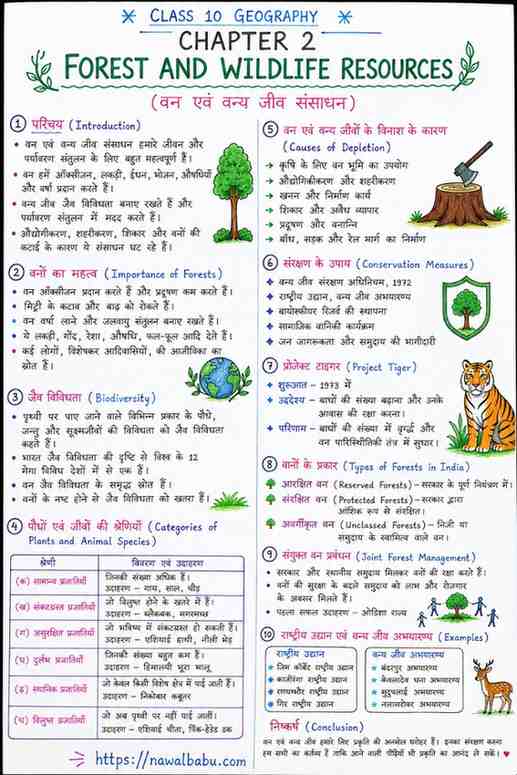
Forest and Wildlife Resources Notes: वन एवं वन्य जीव संसाधन सम्पूर्ण नोट्स
Forest and Wildlife Resources are very important for human life and ecological balance. Forests provide us oxygen, timber, medicines, food, rainfall, and shelter to wildlife. Wildlife maintains biodiversity and keeps the ecosystem balanced. Due to industrialization, urbanization, mining, hunting, and deforestation, forests and wildlife are decreasing rapidly. Therefore, conservation of forests and wildlife has become necessary. India has rich biodiversity, and many steps are taken by the government and local communities for their protection.
वन और वन्य जीव संसाधन मानव जीवन तथा पर्यावरण संतुलन के लिए अत्यंत आवश्यक हैं। वन हमें ऑक्सीजन, लकड़ी, औषधियाँ, भोजन, वर्षा तथा वन्य जीवों को आश्रय प्रदान करते हैं। वन्य जीव जैव विविधता बनाए रखते हैं। औद्योगीकरण, शहरीकरण, खनन, शिकार और वनों की कटाई के कारण वन और वन्य जीव तेजी से समाप्त हो रहे हैं। इसलिए उनका संरक्षण बहुत जरूरी है।
Importance of Forests and Wildlife (वन एवं वन्य जीवों का महत्व)
Forests and wildlife are valuable natural resources. Forests help in controlling soil erosion, maintaining rainfall, reducing pollution, and balancing climate. They are home to many animals and birds. Wildlife is important for ecological balance and tourism. Many tribal communities depend on forests for food, fuel, medicine, and livelihood. Forests also absorb carbon dioxide and reduce global warming. Without forests and wildlife, life on Earth would become difficult and environmental imbalance would increase rapidly.
- Forests provide oxygen and fresh air.
- They control floods and soil erosion.
- Wildlife maintains ecological balance.
- Forests are sources of medicines and timber.
- Many people depend on forests for livelihood.
Biodiversity (जैव विविधता)
Biodiversity means the variety of plants, animals, and microorganisms found on Earth. India is one of the 12 mega biodiversity countries in the world. Different regions of India have different species because of variations in climate and landforms. Forests are rich sources of biodiversity. Biodiversity is important for ecological stability and human survival. Destruction of forests leads to loss of biodiversity. Conservation of biodiversity helps protect endangered species and maintains the balance of nature for future generations.
- Biodiversity includes flora and fauna.
- India has rich biological diversity.
- It is important for ecological stability.
- Deforestation destroys biodiversity.
- Conservation protects endangered species.
Flora and Fauna (वनस्पति एवं जीव-जंतु)
Flora refers to plants and vegetation, while fauna refers to animals and birds. India has about 47,000 plant species and around 90,000 animal species. Some species are becoming extinct because of habitat destruction and hunting. Flora and fauna are interdependent and support life on Earth. Forests provide shelter and food to wildlife. Protection of flora and fauna is necessary to maintain biodiversity and environmental balance.
Examples of Flora and Fauna
- Flora: Teak, Sal, Neem, Bamboo
- Fauna: Tiger, Elephant, Lion, Deer, Peacock
Categories of Existing Plants and Animal Species (पौधों एवं जीवों की श्रेणियाँ)
Species are divided into different categories according to their population and risk of extinction. These categories help in identifying endangered species and planning conservation methods. Some species are abundant, while some are very rare and endangered. Human activities and environmental changes affect their survival.
(a) Normal Species (सामान्य प्रजातियाँ)
These species have sufficient population for survival. Example: Cattle, Sal, Pine.
(b) Endangered Species (संकटग्रस्त प्रजातियाँ)
These species are in danger of extinction due to hunting and habitat loss. Example: Blackbuck, Crocodile, Indian Wild Ass.
(c) Vulnerable Species (असुरक्षित प्रजातियाँ)
These species may become endangered in future if negative factors continue. Example: Blue Sheep, Asiatic Elephant.
(d) Rare Species (दुर्लभ प्रजातियाँ)
These species have very small population and may become endangered. Example: Himalayan Brown Bear.
(e) Endemic Species (स्थानिक प्रजातियाँ)
Species found only in a particular area are called endemic species. Example: Andaman Teal, Nicobar Pigeon.
(f) Extinct Species (विलुप्त प्रजातियाँ)
Species that no longer exist are called extinct species. Example: Asiatic Cheetah, Pink-headed Duck.
Causes of Depletion of Forest and Wildlife (वन एवं वन्य जीवों के विनाश के कारण)
Forests and wildlife are decreasing because of many human activities. Large-scale deforestation for agriculture, industries, mining, and urbanization destroys habitats of animals. Hunting and poaching also reduce wildlife population. Pollution and forest fires damage forests badly. Construction of roads, dams, and railways also affects biodiversity. Excessive exploitation of natural resources creates ecological imbalance and threatens the survival of many species.
- Agricultural expansion
- Industrialization and urbanization
- Mining activities
- Hunting and poaching
- Forest fires and pollution
- Construction of dams and roads
Conservation of Forest and Wildlife in India (भारत में वन एवं वन्य जीव संरक्षण)
The Indian government has taken many steps to conserve forests and wildlife. National parks, wildlife sanctuaries, and biosphere reserves are established for protection of endangered species. The Indian Wildlife Protection Act was passed in 1972. Many social movements like Chipko Movement also helped in forest conservation. Awareness among people and participation of local communities are important for successful conservation.
- Wildlife Protection Act, 1972
- National Parks and Sanctuaries
- Biosphere Reserves
- Social forestry programs
- Public awareness campaigns
Read Also: Class 10 History Chapter 1 Notes in Hindi + English | Rise of Nationalism in Europe (NCERT 2026-27)
Project Tiger (प्रोजेक्ट टाइगर)
Project Tiger was launched in 1973 to protect the decreasing tiger population in India. Hunting and habitat destruction had reduced the number of tigers rapidly. Under this project, many tiger reserves were created and strict laws were implemented against poaching. It helped increase tiger population and improve forest ecosystems. India is now home to the largest number of tigers in the world.
Main Objectives
- Protect tigers from extinction
- Conserve natural habitat
- Control poaching
- Maintain ecological balance
Types of Forests in India (भारत में वनों के प्रकार)
Forests in India are classified according to ownership and management. Different forests are managed by government, private owners, or local communities. Forest classification helps in proper conservation and utilization of forest resources.
(a) Reserved Forests (आरक्षित वन)
These forests are under direct government control and are most protected.
(b) Protected Forests (संरक्षित वन)
These forests are partially protected by the government.
(c) Unclassed Forests (अवर्गीकृत वन)
These forests belong to government, private individuals, or communities.
Community and Conservation (समुदाय एवं संरक्षण)
Local communities play an important role in forest conservation. Many villages protect forests through traditional practices. The Chipko Movement in Uttarakhand is a famous example where villagers hugged trees to stop deforestation. In Rajasthan, Bishnoi community protects animals and trees. Community participation helps in sustainable use of forest resources and increases environmental awareness among people.
Examples
- Chipko Movement
- Bishnoi Community
- Joint Forest Management (JFM)
Joint Forest Management (JFM) (संयुक्त वन प्रबंधन)
Joint Forest Management is a program in which local communities and government work together to protect forests. Villagers protect forests from illegal cutting and grazing. In return, they receive forest products and employment opportunities. This program improves forest cover and provides benefits to local people. Odisha was the first state to start this movement successfully.
Benefits of JFM
- Increases forest protection
- Provides employment
- Reduces illegal cutting
- Encourages public participation
National Parks and Wildlife Sanctuaries (राष्ट्रीय उद्यान एवं वन्यजीव अभयारण्य)
National Parks and Wildlife Sanctuaries are protected areas created to conserve wildlife and forests. Hunting and human activities are restricted in these regions. National parks provide complete protection to animals and plants. Sanctuaries allow limited human activities. These protected areas preserve biodiversity and attract tourists.
Examples
- Jim Corbett National Park
- Kaziranga National Park
- Ranthambore National Park
- Gir National Park
Importance of Wildlife Conservation (वन्य जीव संरक्षण का महत्व)
Wildlife conservation is necessary to maintain ecological balance and biodiversity. Every species plays a role in the food chain and ecosystem. Extinction of species can disturb nature’s balance. Wildlife also supports tourism and scientific research. Conservation ensures that future generations can enjoy natural heritage and resources.
- Maintains food chain
- Protects biodiversity
- Supports tourism
- Prevents ecological imbalance
- Preserves natural heritage
Conclusion (निष्कर्ष)
Forests and wildlife are priceless gifts of nature. They maintain ecological balance and support human life in many ways. Rapid deforestation and hunting have created serious environmental problems. Therefore, conservation of forests and wildlife is the responsibility of both government and citizens. Sustainable use of natural resources and participation of local communities can help protect biodiversity for future generations.
वन और वन्य जीव प्रकृति की अमूल्य धरोहर हैं। वे पर्यावरण संतुलन बनाए रखते हैं और मानव जीवन को अनेक लाभ प्रदान करते हैं। उनकी सुरक्षा करना हम सभी का कर्तव्य है ताकि आने वाली पीढ़ियाँ भी प्रकृति का लाभ उठा सकें।