अगर आप Class 10 Geography Chapter 1 “Resources and Development” के आसान, समझने योग्य और परीक्षा उपयोगी नोट्स खोज रहे हैं, तो यह पोस्ट आपके लिए बेहद उपयोगी है। इस अध्याय में संसाधनों के प्रकार, संसाधन विकास, सतत विकास, भूमि संसाधन, मृदा संरक्षण तथा भारत में संसाधन नियोजन जैसे महत्वपूर्ण विषयों को सरल Hindi + English भाषा में समझाया गया है।
ये नोट्स NCERT आधारित हैं और बोर्ड परीक्षा की तैयारी के लिए विशेष रूप से तैयार किए गए हैं। प्रत्येक heading के नीचे आसान points और short explanation दिए गए हैं ताकि विद्यार्थी जल्दी याद कर सकें। इस पोस्ट की मदद से छात्र कम समय में पूरे अध्याय का revision कर सकते हैं और महत्वपूर्ण concepts को अच्छे से समझ सकते हैं। यह नोट्स स्कूल परीक्षा, बोर्ड एग्जाम तथा quick revision के लिए बहुत लाभदायक हैं। For Objective Questions, Visit Learneasily8.
Class 10 Geography Chapter 1 Notes in Hindi: Resources and Development
Resources are very important for human life and development. Humans use natural things like land, water, forests, minerals, and soil to fulfill their daily needs. These resources help in agriculture, industries, transport, and economic growth. But overuse of resources creates environmental problems like pollution and land degradation. Therefore, proper planning and conservation of resources are necessary. In this chapter, we study the meaning, types, development, conservation, land resources, and soil resources in simple Hindi + English language for easy learning and revision.
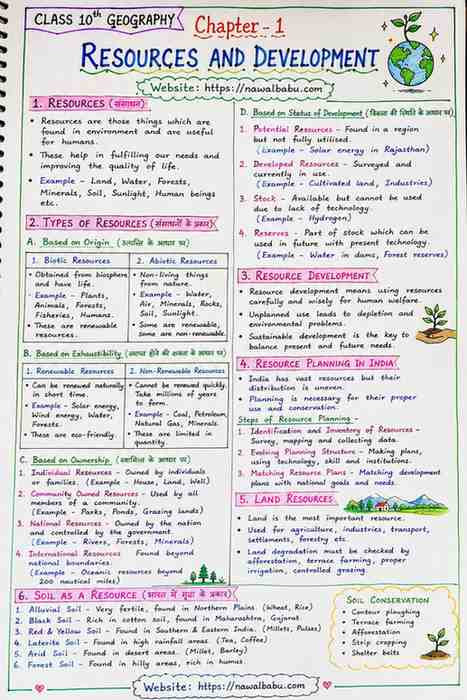
What are Resources? / संसाधन क्या हैं?
- Anything available in the environment that can satisfy human needs is called a resource.
- A resource must be technologically accessible, economically feasible, and culturally acceptable.
- Resources improve human life and support development.
- Examples: Water, forests, minerals, land, sunlight, and human skills.
- Humans are also considered resources because they use knowledge and technology.
- Proper use of resources helps economic growth and environmental balance.
- Misuse of resources can create ecological crises and resource depletion.
Types of Resources / संसाधनों के प्रकार
- Resources are classified into different categories for better understanding and management.
- Classification depends on origin, ownership, exhaustibility, and status of development.
- Different resources have different uses and importance in human life.
- Main types are natural resources, human-made resources, and human resources.
- Proper classification helps in planning and conservation.
- Resource management is necessary for sustainable development.
- Balanced use of resources ensures future availability and environmental safety.
Based on Origin / उत्पत्ति के आधार पर
Biotic Resources / जैव संसाधन
- Biotic resources are obtained from the biosphere and have life.
- Examples: Plants, animals, forests, fisheries, and humans.
- These resources are renewable because they reproduce naturally.
- Humans depend on biotic resources for food, clothing, shelter, and medicines.
- Forests and wildlife are important biotic resources.
- Overexploitation can disturb ecological balance and reduce biodiversity.
- Conservation of biotic resources is essential for environmental protection.
Abiotic Resources / अजैव संसाधन
- Abiotic resources are non-living resources found in nature.
- Examples: Air, water, rocks, minerals, sunlight, and soil.
- These resources support agriculture, industries, and transportation.
- Some abiotic resources are renewable like sunlight and air.
- Minerals and fossil fuels are non-renewable abiotic resources.
- Excessive use may lead to depletion of resources.
- Proper management is important for future generations.
Based on Exhaustibility / समाप्त होने की क्षमता के आधार पर
Renewable Resources / नवीकरणीय संसाधन
- Renewable resources can be renewed or reproduced naturally.
- Examples: Solar energy, wind energy, forests, and water.
- These resources are environment-friendly and sustainable.
- They are available continuously if properly managed.
- Overuse can also reduce their availability temporarily.
- Renewable energy helps reduce pollution and global warming.
- Conservation ensures long-term availability of these resources.
Non-Renewable Resources / अनवीकरणीय संसाधन
- Non-renewable resources cannot be replaced quickly after use.
- They take millions of years to form naturally.
- Examples: Coal, petroleum, natural gas, and minerals.
- These resources are limited in quantity.
- Excessive use may exhaust them completely in future.
- Industries and transport heavily depend on these resources.
- Careful and efficient use is necessary for sustainability.
Based on Ownership / स्वामित्व के आधार पर
Individual Resources / व्यक्तिगत संसाधन
- Individual resources are privately owned by individuals or families.
- Examples: Houses, agricultural land, wells, and plantations.
- Owners have legal rights over these resources.
- These resources improve economic conditions of families.
- Government laws regulate their use and ownership.
- Proper management increases productivity and development.
- Misuse may cause environmental degradation and resource wastage.
Community-Owned Resources / सामुदायिक संसाधन
- Community resources are accessible to all community members.
- Examples: Public parks, ponds, grazing lands, and playgrounds.
- These resources support social welfare and community activities.
- Villagers often depend on common resources for daily needs.
- Proper maintenance is necessary for long-term use.
- Overuse can reduce their usefulness and create conflicts.
- Public awareness helps in conservation of these resources.
National Resources / राष्ट्रीय संसाधन
- National resources belong to the entire country.
- Government controls and manages these resources.
- Examples: Rivers, forests, minerals, roads, and railways.
- Citizens have equal rights to use these resources.
- National resources support economic development and security.
- Proper planning ensures balanced regional growth.
- Conservation is important for future national development.
International Resources / अंतरराष्ट्रीय संसाधन
- International resources lie beyond national boundaries.
- Oceanic resources beyond 200 nautical miles are international resources.
- No country can use them without international permission.
- These resources are managed by international organizations.
- They are important for global cooperation and development.
- Shared use helps maintain world peace and balance.
- Protection of international resources is globally important.
Based on Status of Development / विकास की स्थिति के आधार पर
Potential Resources / संभावी संसाधन
- Potential resources are available but not fully utilized currently.
- Future technology can help use these resources effectively.
- Rajasthan and Gujarat have potential for solar and wind energy.
- Proper planning can increase their utilization.
- These resources support future economic development.
- Investment and research improve their productivity.
- Potential resources are important for sustainable growth.
Developed Resources / विकसित संसाधन
- Developed resources are surveyed and currently in use.
- Their quality and quantity are already known.
- Examples: Cultivated land, industries, and power stations.
- These resources directly support economic activities.
- Technology helps improve their efficiency and productivity.
- Proper management increases national income and development.
- Developed resources are important for industrial growth.
Stock / भंडार
- Stock refers to materials available in nature but not usable currently.
- Lack of proper technology limits their use.
- Hydrogen is an example of stock resource.
- Scientific advancement may make them useful in future.
- Stock resources have high future potential.
- Research and innovation are necessary for utilization.
- Technology converts stock into useful resources.
Reserves / सुरक्षित भंडार
- Reserves are part of stock that can be used in future.
- Existing technology can use them but they are conserved.
- Water stored in dams is an example of reserves.
- Forest reserves are protected by governments.
- Reserves help meet future needs and emergencies.
- Proper conservation maintains resource balance.
- Sustainable use prevents unnecessary depletion.
Resource Development / संसाधन विकास
- Resource development means careful and planned use of resources.
- Unplanned use creates environmental and economic problems.
- Resource development supports industries, agriculture, and human welfare.
- Scientific techniques improve productivity and efficiency.
- Conservation is necessary during development activities.
- Sustainable development focuses on present and future needs.
- Balanced development maintains ecological stability and growth.
Sustainable Development / सतत विकास
- Sustainable development fulfills present needs without harming future generations.
- It balances economic growth and environmental protection.
- Overuse of resources causes pollution and ecological imbalance.
- Conservation of forests, soil, and water supports sustainability.
- Renewable energy is important for sustainable development.
- Public awareness helps protect natural resources.
- Sustainable practices improve quality of life and environmental safety.
Resource Planning in India / भारत में संसाधन नियोजन
- India has rich but unevenly distributed resources.
- Some regions are rich in minerals, while others have fertile soil.
- Resource planning ensures balanced regional development.
- Proper planning reduces resource wastage and environmental damage.
- Technology and skilled manpower support planning processes.
- Government policies help in resource management.
- Effective planning improves economic growth and sustainability.
Steps of Resource Planning / संसाधन नियोजन के चरण
Identification and Inventory of Resources
- Resources are identified through surveying and mapping.
- Data about quality and quantity is collected carefully.
- Technology helps in resource assessment and planning.
- Accurate information supports effective development plans.
- Resource inventory prevents misuse and wastage.
- Planning becomes easier with proper resource data.
- It is the first step of resource management.
Know More: Class 10 History Chapter 2 Notes in Hindi | Nationalism in India Easy Explanation (NCERT 2026-27)
Evolving a Planning Structure
- Suitable planning structures are developed using technology and institutions.
- Government prepares development plans according to regional needs.
- Skilled manpower and infrastructure are important.
- Planning improves agriculture, industries, and transport systems.
- Coordination between agencies ensures proper implementation.
- Good planning reduces regional inequalities.
- It supports sustainable economic development.
Matching Resource Development Plans
- Development plans are matched with national goals.
- Resources are utilized according to environmental conditions.
- Balanced use prevents ecological damage and resource depletion.
- Proper implementation increases productivity and development.
- Planning helps achieve long-term sustainability.
- Monitoring ensures successful utilization of resources.
- It improves living standards and economic progress.
Land Resources / भूमि संसाधन
- Land is one of the most important natural resources.
- Agriculture, industries, transport, and settlements depend on land.
- India has limited land resources because of high population.
- Increasing urbanization creates pressure on land.
- Proper land use planning is necessary for conservation.
- Land supports biodiversity and ecological balance.
- Scientific management helps maintain productivity and sustainability.
Land Utilization / भूमि उपयोग
- Land is used for agriculture, industries, forests, and housing.
- Physical and human factors influence land use patterns.
- Climate, soil, and relief affect agricultural activities.
- Population growth increases demand for land resources.
- Urbanization changes traditional land use patterns.
- Scientific land management reduces degradation.
- Balanced land utilization supports sustainable development.
Land Degradation and Conservation Measures / भूमि निम्नीकरण और संरक्षण उपाय
- Land degradation reduces land quality and productivity.
- Deforestation, mining, overgrazing, and industrial waste cause degradation.
- Excessive use of fertilizers also damages soil quality.
- Afforestation helps restore ecological balance.
- Terrace farming and controlled grazing reduce erosion.
- Proper irrigation methods prevent waterlogging and salinity.
- Conservation measures improve agricultural productivity and environment.
Soil as a Resource / संसाधन के रूप में मृदा
- Soil is an important renewable natural resource.
- It supports agriculture and plant growth.
- Soil forms through weathering and decomposition processes.
- Different soils are found due to climate and relief variations.
- Fertile soil is necessary for food production.
- Soil conservation protects agricultural productivity.
- Healthy soil maintains ecological and environmental balance.
Types of Soil in India / भारत में मृदा के प्रकार
Alluvial Soil / जलोढ़ मिट्टी
- Formed by river deposits in plains and valleys.
- Very fertile and suitable for agriculture.
- Rich in potash and lime but poor in nitrogen.
- Wheat, rice, sugarcane, and pulses grow well.
- Found mainly in Northern Plains of India.
- It is the most widespread soil type in India.
- Important for food grain production and economy.
Black Soil / काली मिट्टी
- Also called Regur soil or cotton soil.
- Found mainly in Maharashtra and Gujarat.
- Has high moisture-retaining capacity.
- Rich in calcium carbonate and magnesium.
- Best suitable for cotton cultivation.
- Supports soybean, sugarcane, and oilseeds.
- Important for commercial agriculture in India.
Red and Yellow Soil / लाल और पीली मिट्टी
- Found in southern and eastern India.
- Red color due to iron oxide content.
- Less fertile compared to alluvial soil.
- Suitable for millet, pulses, and groundnut cultivation.
- Fertility improves with irrigation and fertilizers.
- Requires proper soil management techniques.
- Widely used for dry farming practices.
Laterite Soil / लैटेराइट मिट्टी
- Develops in areas of heavy rainfall and heat.
- Found in Karnataka, Kerala, Tamil Nadu, and Assam.
- Becomes hard when exposed to sunlight.
- Generally less fertile in nature.
- Tea, coffee, and cashew grow with fertilizers.
- Requires irrigation for better productivity.
- Useful for plantation agriculture.
Arid Soil / शुष्क मिट्टी
- Found in desert regions of Rajasthan and Gujarat.
- Sandy texture and high salt content.
- Lacks moisture and organic matter.
- Less fertile naturally.
- Irrigation improves agricultural productivity.
- Millet and barley are commonly grown.
- Soil conservation is necessary in desert areas.
Forest Soil / वन मिट्टी
- Found in hilly and mountainous regions.
- Texture varies according to altitude and climate.
- Rich in organic matter in lower valleys.
- Supports plantation crops and forests.
- Important for biodiversity conservation.
- Prevents soil erosion in mountainous areas.
- Forest conservation maintains soil fertility.
Soil Erosion and Soil Conservation / मृदा अपरदन और संरक्षण
- Soil erosion is removal of fertile topsoil by wind and water.
- Deforestation and overgrazing increase soil erosion.
- Soil erosion reduces agricultural productivity.
- Contour ploughing helps control water erosion.
- Terrace farming is useful in hilly regions.
- Afforestation and shelter belts prevent wind erosion.
- Soil conservation is essential for sustainable agriculture.
Conclusion / निष्कर्ष
- Resources are essential for human survival and development.
- Proper planning and conservation are necessary for sustainability.
- Land and soil are important natural resources for agriculture.
- Overuse of resources creates environmental problems.
- Sustainable development protects future generations.
- Resource management improves economic growth and ecological balance.
- Wise use of resources ensures a better future for all.