जल मानव जीवन का सबसे महत्वपूर्ण प्राकृतिक संसाधन है। बिना जल के जीवन की कल्पना भी नहीं की जा सकती। कृषि, उद्योग, बिजली उत्पादन, घरेलू उपयोग और पर्यावरण संतुलन के लिए जल अत्यंत आवश्यक है। कक्षा 10 भूगोल के अध्याय “जल संसाधन (Water Resources)” में जल संकट, जल संरक्षण, बहुउद्देशीय नदी घाटी परियोजनाएँ, वर्षा जल संचयन तथा पारंपरिक जल संरक्षण प्रणालियों के बारे में विस्तार से बताया गया है। For Objective Questions, Visit Learneasily8.
इस पोस्ट में आपको NCERT आधारित आसान भाषा में हिंदी + English मिश्रित नोट्स मिलेंगे, जो बोर्ड परीक्षा की तैयारी के लिए बेहद उपयोगी हैं। सभी महत्वपूर्ण बिंदुओं को सरल शब्दों, तालिकाओं और बुलेट पॉइंट्स में समझाया गया है ताकि विद्यार्थी जल्दी याद कर सकें। यदि आप Class 10 Geography Chapter 3 Water Resources Notes खोज रहे हैं, तो यह पोस्ट आपके लिए एक सम्पूर्ण अध्ययन सामग्री साबित होगी।
Water Resources Notes (जल संसाधन) – Class 10 Geography Notes
Water is one of the most important natural resources on Earth. Life cannot exist without water. Human beings use water for drinking, agriculture, industries, electricity generation, transportation and many other activities. India receives plenty of rainfall, but due to uneven distribution, overuse and pollution, many areas face water scarcity. Therefore, conservation and proper management of water resources are very important for sustainable development. इस अध्याय में हम जल संसाधनों के महत्व, जल संकट, बहुउद्देशीय परियोजनाओं और जल संरक्षण के उपायों के बारे में अध्ययन करेंगे।
Water Scarcity and the Need for Water Conservation: जल संकट और जल संरक्षण की आवश्यकता
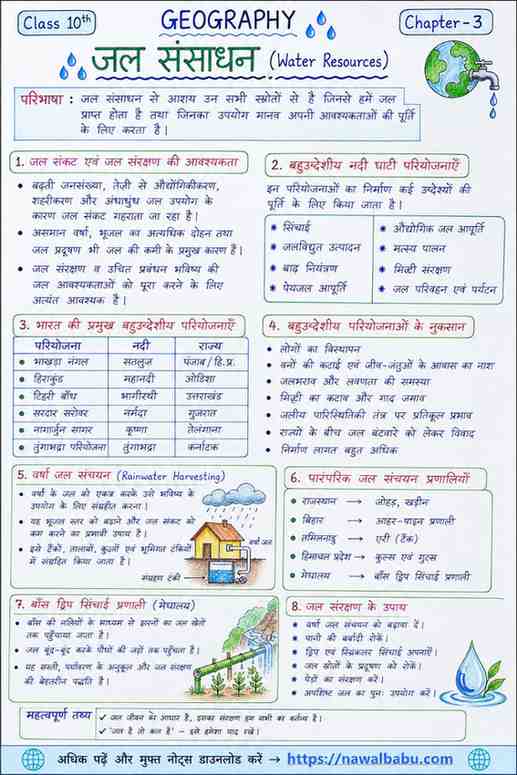
Water scarcity means shortage of water for daily needs. It occurs due to increasing population, urbanisation, industrialisation and excessive use of groundwater. In India, many regions face drought and water shortage during summer. Pollution of rivers and lakes has also reduced clean water availability. Climate change and irregular rainfall worsen the problem. इसलिए जल का सही उपयोग और संरक्षण आवश्यक है। Rainwater harvesting, afforestation and proper irrigation methods can help in conserving water for future generations.
Main Causes of Water Scarcity / जल संकट के मुख्य कारण
- Increasing population growth
- Rapid industrial development
- Expansion of irrigated agriculture
- Over-exploitation of groundwater
- Unequal distribution of rainfall
- Pollution of rivers and lakes
- Urbanisation and modern lifestyle
- Climate change and drought conditions
Multi-purpose River Valley Projects: बहुउद्देशीय नदी घाटी परियोजनाएँ
Multipurpose projects are large projects built on rivers to serve many purposes such as irrigation, electricity generation, flood control and water supply. Large dams are constructed to store water. These projects are called the “Temples of Modern India” by Jawaharlal Nehru because they support economic development. However, they also create environmental and social problems like displacement of people and destruction of forests. इसलिए इन परियोजनाओं का संतुलित विकास आवश्यक है।
Objectives of Multi-purpose Projects / परियोजनाओं के उद्देश्य
- Irrigation for agriculture
- Generation of hydroelectricity
- Flood control
- Water supply for industries and cities
- Inland navigation
- Fish breeding and recreation
- Soil conservation
Major Multi-purpose Projects in India: भारत की प्रमुख बहुउद्देशीय परियोजनाएँ
India has many important river valley projects developed after independence. These projects help in agricultural and industrial growth. Bhakra Nangal Project on the Satluj River is known for irrigation and electricity. Hirakud Project on the Mahanadi controls floods in Odisha. Damodar Valley Corporation is called the “Ruhr Valley of India.” Tehri Dam and Sardar Sarovar Project are also important. These projects contribute to water management and economic development in different regions of India.
Important Projects and Rivers / प्रमुख परियोजनाएँ और नदियाँ
| Project Name | River | State |
|---|---|---|
| Bhakra Nangal | Satluj | Punjab-Himachal Pradesh |
| Hirakud | Mahanadi | Odisha |
| Tehri Dam | Bhagirathi | Uttarakhand |
| Sardar Sarovar | Narmada | Gujarat |
| Nagarjuna Sagar | Krishna | Telangana |
| Tungabhadra | Tungabhadra | Karnataka |
Disadvantages of Multi-purpose Projects: बहुउद्देशीय परियोजनाओं के नुकसान
Although multipurpose projects are useful, they also create several environmental and social issues. Construction of large dams leads to displacement of local people and destruction of forests and wildlife habitats. Sediments get trapped in dams, reducing soil fertility downstream. Waterlogging and salinity may increase in irrigated regions. Large dams may also disturb the natural flow of rivers and aquatic life. इसलिए अब छोटे बांधों और स्थानीय जल संरक्षण तकनीकों पर अधिक ध्यान दिया जा रहा है।
Problems Created by Dams / बांधों से होने वाली समस्याएँ
- Displacement of people
- Deforestation and loss of biodiversity
- Waterlogging and salinity
- Soil erosion and sedimentation
- Disturbance to aquatic ecosystem
- Conflicts between states over water sharing
- High construction cost
Rainwater Harvesting: वर्षा जल संचयन
Rainwater harvesting means collecting and storing rainwater for future use. It is one of the oldest and most effective methods of water conservation. Rainwater can be stored in tanks, ponds, wells and underground reservoirs. This method helps recharge groundwater levels and reduces water scarcity. In many parts of India, traditional rainwater harvesting systems have been used for centuries. आज के समय में वर्षा जल संचयन जल संकट का महत्वपूर्ण समाधान माना जाता है।
Advantages of Rainwater Harvesting / वर्षा जल संचयन के लाभ
- Increases groundwater level
- Reduces water scarcity
- Prevents flooding and soil erosion
- Provides water during dry seasons
- Environment-friendly and low cost
- Helps in sustainable water management
Traditional Water Harvesting Systems: पारंपरिक जल संचयन प्रणाली
Different regions of India developed traditional methods to conserve water according to local climate conditions. In Rajasthan, people used “Khadins” and “Johads” to store rainwater. In Bihar and Bengal, ponds and tanks were common. In hilly areas, “Guls” and “Kuls” carried water for irrigation. These traditional systems were simple, economical and eco-friendly. आधुनिक समय में इन प्रणालियों को पुनर्जीवित करने की आवश्यकता है ताकि जल संकट को कम किया जा सके।
Examples of Traditional Systems / पारंपरिक प्रणालियों के उदाहरण
| Region | Traditional Method |
|---|---|
| Rajasthan | Johads, Khadins |
| Bihar | Ahar-Pyne System |
| Tamil Nadu | Eris (Tanks) |
| Himachal Pradesh | Kuls and Guls |
| Meghalaya | Bamboo Drip Irrigation |
Bamboo Drip Irrigation System: बाँस ड्रिप सिंचाई प्रणाली
Bamboo drip irrigation is a traditional irrigation system used in Meghalaya. In this method, bamboo pipes are used to transport water from springs to agricultural fields. Water drips slowly near plant roots, reducing wastage. This system is eco-friendly, economical and suitable for hilly regions. It shows the scientific knowledge of local people in water management. यह प्रणाली जल संरक्षण का उत्कृष्ट उदाहरण है और आज भी कई क्षेत्रों में उपयोग की जाती है।
Features of Bamboo Drip Irrigation / विशेषताएँ
- Uses bamboo pipes
- Saves water effectively
- Low-cost irrigation method
- Suitable for hilly areas
- Environment-friendly system
- Reduces water wastage
Need for Water Management: जल प्रबंधन की आवश्यकता
Proper water management is essential for sustainable development. Growing population and increasing demand for water have created pressure on available resources. Water should be used carefully in agriculture, industries and households. Modern irrigation methods like drip irrigation and sprinkler systems help save water. Public awareness and government policies are also important for water conservation. यदि आज जल संरक्षण नहीं किया गया, तो भविष्य में गंभीर जल संकट उत्पन्न हो सकता है।
Measures for Water Conservation / जल संरक्षण के उपाय
- Rainwater harvesting
- Afforestation
- Recycling of wastewater
- Drip and sprinkler irrigation
- Prevention of water pollution
- Repairing leaking pipelines
- Public awareness campaigns
Conclusion / निष्कर्ष
Water is a precious resource necessary for life and development. India faces serious challenges related to water scarcity due to increasing demand and environmental problems. Multipurpose projects, rainwater harvesting and traditional conservation methods help manage water resources effectively. Every citizen should use water wisely and avoid wastage. Sustainable water management can ensure water security for future generations. “Save Water, Save Life” is not only a slogan but also a necessity for human survival and environmental balance.
Know More: CBSE Class 10 Science Syllabus 2026–27 (Latest) – Complete Guide, Chapter Wise, PDF Analysis
Quick Revision Points / त्वरित पुनरावृत्ति बिंदु
- Water is essential for life and economic development.
- Water scarcity is caused by overuse and uneven rainfall.
- Multipurpose projects provide irrigation and electricity.
- Large dams also create environmental problems.
- Rainwater harvesting is an effective conservation method.
- Traditional systems are eco-friendly and useful.
- Bamboo drip irrigation is used in Meghalaya.
- Sustainable water management is necessary for the future.