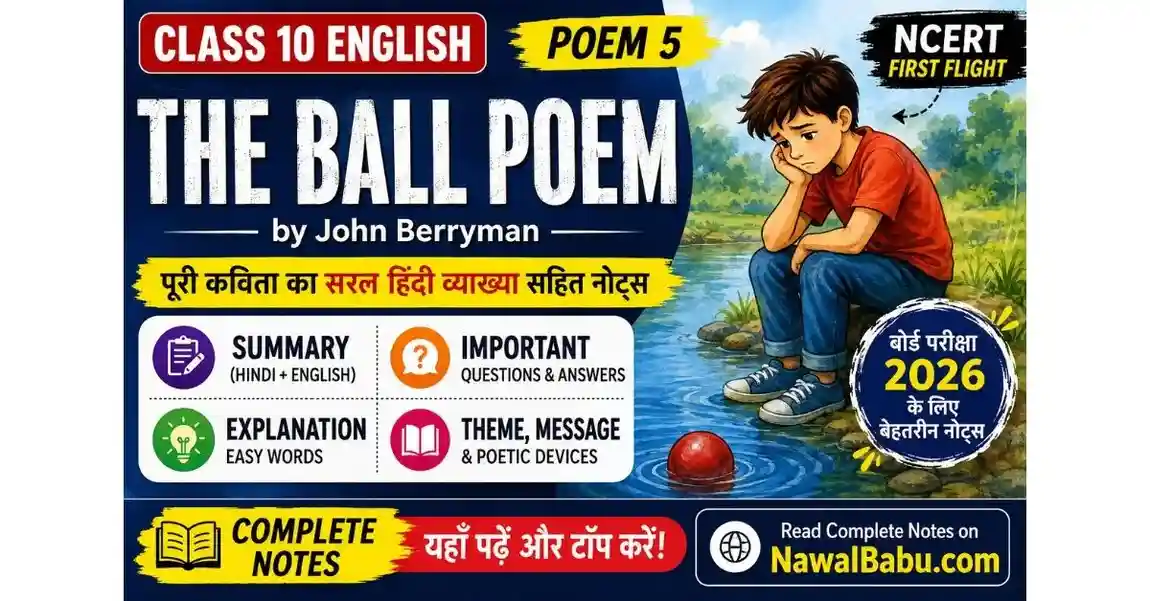
अगर आप The Ball Poem Class 10 English Notes in Hindi खोज रहे हैं, तो यह पोस्ट आपके लिए बहुत उपयोगी है। The Ball Poem Class 10 English की NCERT First Flight पुस्तक की एक महत्वपूर्ण कविता है, जिसे प्रसिद्ध कवि John Berryman ने लिखा है। इस कविता में एक छोटे बच्चे की गेंद खो जाने की घटना के माध्यम से जीवन की एक गहरी सच्चाई समझाई गई है। कविता हमें बताती है कि जीवन में हमें कई बार अपनी प्रिय वस्तुओं का नुकसान सहना पड़ता है और हर नुकसान की भरपाई पैसे से नहीं की जा सकती।
इस पोस्ट में आपको The Ball Poem Summary in Hindi and English, सरल Explanation, Central Idea, Theme, Symbolism, Poetic Devices, Important Questions and Answers, Message और Exam-Oriented One-Liners आसान भाषा में मिलेंगे। ये notes CBSE Class 10 English Board Exam की तैयारी और quick revision के लिए विशेष रूप से उपयोगी हैं। Download NCERT BOOK PDF.
The Ball Poem Class 10 Notes: Summary, Explanation, Questions & Answers
Poem 5: The Ball Poem
Poet: John Berryman
Book: First Flight – Class 10 English
Poem: The Ball Poem
Introduction
English:
The Ball Poem is a beautiful poem by John Berryman. It describes a young boy who loses his ball and feels deeply sad. The lost ball becomes a symbol of the first experience of loss in his life. Through this simple incident, the poet teaches us an important lesson about loss, responsibility, maturity, and learning to accept reality.
हिंदी:
The Ball Poem John Berryman द्वारा लिखी गई एक भावपूर्ण कविता है। इसमें एक छोटे लड़के की गेंद खो जाने की घटना के माध्यम से हानि, जिम्मेदारी, भावनाओं और जीवन की वास्तविकता को स्वीकार करने का संदेश दिया गया है।
The Ball Poem – Summary
English Summary
The poem begins with a boy who loses his ball while playing. The ball falls into the water and disappears. The boy becomes very sad and stands helplessly watching the place where his ball has gone. The poet understands that buying another ball cannot remove the boy’s sadness. The boy is experiencing the pain of losing something he loves. This experience teaches him that loss is a natural part of life and everyone must learn to accept it.
हिंदी सारांश
कविता में एक बच्चा खेलते समय अपनी गेंद खो देता है। गेंद पानी में गिरकर दूर चली जाती है। बच्चा बहुत दुखी होकर उस स्थान को देखता रहता है जहाँ उसकी गेंद खो गई है। कवि समझता है कि नई गेंद खरीद देने से बच्चे का वास्तविक दुख दूर नहीं होगा। यह घटना बच्चे को जीवन का एक महत्वपूर्ण सबक सिखाती है कि जीवन में चीजें खोती रहती हैं और हमें हानि को स्वीकार करना सीखना पड़ता है।
About the Poet – John Berryman
English:
John Berryman was a famous American poet. He was born in 1914 and is known for his deeply emotional and thoughtful poetry. His poems often explore human feelings, suffering, loss and personal experiences. In The Ball Poem, he uses a simple incident from a child’s life to explain a serious truth about human life.
हिंदी:
John Berryman एक प्रसिद्ध अमेरिकी कवि थे। उनका जन्म 1914 में हुआ था। उनकी कविताओं में मानवीय भावनाओं, दुख, संघर्ष और जीवन के अनुभवों को विशेष स्थान मिलता है। The Ball Poem में उन्होंने एक बच्चे की गेंद खोने की छोटी-सी घटना के माध्यम से जीवन की गहरी सच्चाई समझाई है।
Central Idea of the Poem
English:
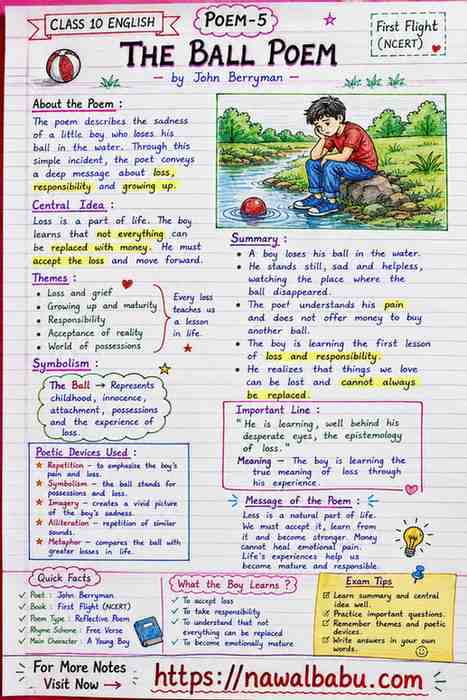
The central idea of the poem is that loss is an unavoidable part of life. The boy’s lost ball represents the things and people we lose during our lives. The poet says that we cannot always replace our losses with money. We must learn to accept loss and develop the courage to move forward. This process makes a person emotionally mature and responsible.
हिंदी:
कविता का मुख्य विचार है कि हानि जीवन का अनिवार्य हिस्सा है। बच्चे की खोई हुई गेंद जीवन में खोने वाली वस्तुओं और रिश्तों का प्रतीक है। हर नुकसान की भरपाई पैसे से नहीं की जा सकती। इसलिए हमें दुख को स्वीकार करके आगे बढ़ना सीखना चाहिए। यही अनुभव हमें भावनात्मक रूप से मजबूत और परिपक्व बनाता है।
Theme of The Ball Poem
Major Themes
- Loss and grief – हानि और दुख
- Growing up – बड़ा होना
- Responsibility – जिम्मेदारी
- Acceptance of reality – वास्तविकता को स्वीकार करना
- Emotional maturity – भावनात्मक परिपक्वता
- Material possessions – भौतिक वस्तुओं का महत्व
The poem shows that losing something we love can teach us valuable lessons about life.
The Lost Ball – Symbolism
English:
The ball is not merely a toy. It represents the boy’s childhood, innocence, attachment and possessions. When he loses it, he experiences genuine pain for the first time. The loss of the ball prepares him to face greater losses in life. Thus, the ball becomes a symbol of all the things that people love but may eventually lose.
हिंदी:
गेंद केवल एक खिलौना नहीं है। यह बच्चे के बचपन, मासूमियत, लगाव और प्रिय वस्तुओं का प्रतीक है। गेंद खोने पर बच्चा पहली बार वास्तविक दुख का अनुभव करता है। यह छोटी-सी हानि उसे भविष्य में होने वाली बड़ी हानियों का सामना करने के लिए तैयार करती है।
Why is the Boy So Sad?
English:
The boy is sad because the ball is emotionally valuable to him. It may be an ordinary ball in terms of money, but it has a special place in his heart. He is attached to it. Therefore, simply buying another ball cannot remove his sadness. His grief comes from the experience of losing something he loved.
हिंदी:
लड़का इसलिए दुखी है क्योंकि गेंद उसके लिए भावनात्मक रूप से बहुत महत्वपूर्ण है। पैसे की दृष्टि से गेंद सामान्य वस्तु हो सकती है, लेकिन बच्चे का उससे गहरा लगाव है। इसलिए नई गेंद खरीद देना उसके दुख को समाप्त नहीं कर सकता। उसका दुख गेंद की कीमत से नहीं बल्कि उसके लगाव से जुड़ा है।
Why Does the Poet Not Offer Money to Buy Another Ball?
English:
The poet understands that the boy’s problem is not the loss of money but the loss of something he loved. A new ball may replace the physical object, but it cannot replace the boy’s emotional attachment to the old ball. The poet wants the boy to experience and understand the pain of loss instead of immediately escaping from it.
हिंदी:
कवि जानता है कि बच्चे की समस्या पैसे की नहीं बल्कि प्रिय वस्तु के खोने की है। नई गेंद पुरानी गेंद की जगह ले सकती है, लेकिन पुराने गेंद से जुड़ी भावनाओं को नहीं। कवि चाहता है कि बच्चा दुख का अनुभव करे और उससे जीवन का सबक सीखे।
What Does the Boy Learn?
English:
The boy learns an important lesson about loss and responsibility. He realizes that things can be lost and cannot always be recovered. He also learns that material possessions are temporary. Instead of depending on someone else to solve his problem, he must accept the situation and learn to move forward.
हिंदी:
बच्चा हानि और जिम्मेदारी का महत्वपूर्ण पाठ सीखता है। उसे समझ आता है कि वस्तुएँ खो सकती हैं और हर खोई हुई वस्तु वापस नहीं मिलती। वह यह भी समझता है कि भौतिक वस्तुएँ स्थायी नहीं होतीं। उसे अपनी भावनाओं को संभालकर परिस्थितियों को स्वीकार करना सीखना होगा।
“Money is external” – Meaning
English:
The poet says that money is “external” because money can buy another ball, but it cannot remove the emotional pain caused by losing the original ball. The boy must personally experience the feeling of loss. This teaches him that some experiences in life cannot be solved through money.
हिंदी:
“Money is external” का अर्थ है कि पैसे से नई गेंद खरीदी जा सकती है, लेकिन पुरानी गेंद खोने का भावनात्मक दुख दूर नहीं किया जा सकता। बच्चे को स्वयं हानि के अनुभव से गुजरना होगा। इससे वह समझता है कि जीवन की हर समस्या का समाधान पैसे से नहीं किया जा सकता।
“He is learning, well behind his desperate eyes”
Meaning in English:
The boy looks extremely sad and helpless, but internally he is learning an important lesson. He is learning how to deal with loss. His painful experience is helping him become emotionally mature.
हिंदी अर्थ:
बच्चा बाहर से बहुत दुखी और निराश दिखाई देता है, लेकिन अंदर से वह जीवन का महत्वपूर्ण पाठ सीख रहा है। वह सीख रहा है कि हानि और दुख का सामना कैसे किया जाता है। यह अनुभव उसे भावनात्मक रूप से परिपक्व बना रहा है।
“The epistemology of loss”
Meaning
English:
“Epistemology” means the study or understanding of knowledge. Here, “epistemology of loss” means learning and understanding what loss is through personal experience. The boy does not merely hear about loss; he actually experiences it. This experience teaches him a lesson that cannot be learned only through words.
हिंदी:
“Epistemology” का अर्थ है ज्ञान या समझ का अध्ययन। “Epistemology of loss” का अर्थ है हानि को अपने अनुभव से समझना। बच्चा केवल दूसरों से हानि के बारे में नहीं सुनता, बल्कि स्वयं गेंद खोकर उसका अनुभव करता है। इसलिए यह अनुभव उसके लिए वास्तविक ज्ञान बन जाता है।
“What is the boy now learning?”
English:
The boy is learning how to cope with loss. He is learning that losing things is a normal part of life and that people cannot always recover what they have lost. He must accept the loss, control his emotions and continue living. This is an important step towards maturity.
हिंदी:
बच्चा सीख रहा है कि हानि का सामना कैसे किया जाए। वह समझ रहा है कि जीवन में वस्तुओं का खोना सामान्य है और हर खोई हुई चीज वापस नहीं मिलती। उसे अपने दुख को स्वीकार करना, भावनाओं पर नियंत्रण रखना और जीवन में आगे बढ़ना सीखना होगा।
“The World of Possessions”
English:
“The world of possessions” refers to the material things that people own and love. Human beings become attached to their possessions, but these things are temporary. The boy’s ball is one such possession. Its loss teaches him that material objects can disappear and that people must learn not to depend completely on them for happiness.
हिंदी:
“The world of possessions” का अर्थ उन भौतिक वस्तुओं से है जिन्हें मनुष्य अपना मानता है और उनसे लगाव रखता है। लेकिन ये वस्तुएँ स्थायी नहीं होतीं। बच्चे की गेंद भी ऐसी ही वस्तु है। गेंद खोने से बच्चा सीखता है कि खुशी के लिए केवल भौतिक वस्तुओं पर निर्भर नहीं रहना चाहिए।
Poetic Devices in The Ball Poem
1. Repetition
Words and ideas are repeated to emphasize the boy’s loss and emotional condition.
2. Symbolism
The ball symbolizes childhood, possessions and the experience of loss.
3. Imagery
The poet creates a visual picture of the boy standing and watching his ball disappear.
4. Alliteration
The repetition of similar consonant sounds creates rhythm and emphasis.
5. Metaphor
The ball represents larger losses that people experience in life.
6. Enjambment
Some lines continue their meaning into the next line without a complete stop.
Important Questions and Answers
Q1. Why does the poet say, “No use to say ‘O there are other balls’”?
Answer:
The poet knows that another ball cannot replace the emotional value of the lost ball. The boy is attached to his old ball. He needs to experience the pain of loss and learn to accept it. Therefore, simply offering another ball would not solve his emotional problem.
हिंदी:
कवि जानता है कि दूसरी गेंद पुरानी गेंद से जुड़ी भावनाओं को नहीं बदल सकती। बच्चे को हानि का अनुभव करके उसे स्वीकार करना सीखना जरूरी है।
Q2. Why does the boy stand rigid, trembling, staring down?
Answer:
The boy is shocked and deeply hurt after losing his ball. He stands still and watches the place where the ball has disappeared. His physical reaction shows the intensity of his emotional pain and helplessness.
हिंदी:
गेंद खोने के बाद बच्चा सदमे और दुख में स्थिर खड़ा रहता है। वह उस स्थान को देखता रहता है जहाँ गेंद चली गई है। उसकी स्थिति उसके गहरे दुख और असहायता को दर्शाती है।
Q3. What does the poet mean by “senses first responsibility”?
Answer:
The phrase means that the boy is beginning to understand personal responsibility. He realizes that he must deal with his loss himself. Nobody can completely remove his pain. This experience helps him take an important step towards becoming mature and responsible.
हिंदी:
इसका अर्थ है कि बच्चा पहली बार अपनी जिम्मेदारी को समझने लगा है। उसे एहसास होता है कि उसे अपनी हानि और भावनाओं का सामना स्वयं करना होगा। यह अनुभव उसे परिपक्व और जिम्मेदार बनने में सहायता करता है।
Q4. What does the poet teach through the poem?
Answer:
The poet teaches that loss is a natural part of life. People lose possessions, relationships and other valuable things. We cannot always recover what we have lost. Therefore, we should accept loss, learn from our experiences and develop the courage to move forward.
हिंदी:
कवि सिखाता है कि हानि जीवन का स्वाभाविक हिस्सा है। हमें वस्तुओं और कभी-कभी प्रिय लोगों को भी खोना पड़ सकता है। इसलिए हमें हानि को स्वीकार करके अनुभव से सीखना और आगे बढ़ना चाहिए।
Character Sketch of the Boy
English:
The boy is innocent, sensitive and emotionally attached to his ball. Initially, he feels shocked and helpless after losing it. His sadness shows his innocence and attachment. However, his experience gradually teaches him an important lesson about loss and responsibility. Through this experience, he begins to move from childhood innocence towards emotional maturity.
हिंदी:
लड़का मासूम, संवेदनशील और अपनी गेंद से बहुत जुड़ा हुआ है। गेंद खोने के बाद वह दुखी और असहाय हो जाता है। उसका दुख उसकी मासूमियत को दिखाता है। लेकिन यह अनुभव उसे हानि और जिम्मेदारी का महत्वपूर्ण पाठ सिखाता है और उसे भावनात्मक रूप से परिपक्व बनाता है।
Message of the Poem
English:
The poem gives a universal message that loss is a part of life. We cannot keep everything we love forever. Instead of escaping from pain or trying to replace every loss with money, we should accept reality. Every loss can teach us something and make us stronger, wiser and more mature.
हिंदी:
कविता का सार्वभौमिक संदेश है कि हानि जीवन का हिस्सा है। हम अपनी सभी प्रिय वस्तुओं को हमेशा अपने पास नहीं रख सकते। इसलिए हमें हर नुकसान से भागने के बजाय वास्तविकता को स्वीकार करना चाहिए। जीवन के अनुभव हमें मजबूत, समझदार और परिपक्व बनाते हैं।
Quick Revision Notes
- Poet: John Berryman
- Poem: The Ball Poem
- Book: First Flight
- Main character: A young boy
- Lost object: Ball
- Main theme: Loss and acceptance
- Ball symbolizes: Childhood, possessions and loss
- Money cannot replace: Emotional attachment
- Main lesson: Accept loss and move forward
- Important concept: Emotional maturity
- “World of possessions”: Material things people own
- “Epistemology of loss”: Understanding loss through personal experience
Exam-Oriented One-Liners
- Who wrote The Ball Poem?
John Berryman. - What did the boy lose?
He lost his ball. - Where did the ball go?
It went into the water. - Why was the boy sad?
He was emotionally attached to his ball. - What does the ball symbolize?
It symbolizes childhood, possessions and loss. - Can money remove the boy’s sadness?
No, because his sadness is emotional. - What does the boy learn?
He learns to accept loss and responsibility. - What is the main theme?
Loss, acceptance and emotional maturity. - What does “world of possessions” mean?
It means the material things people own. - What is the main message?
Loss is a natural part of life, and we must learn to accept it.
Know More: Class 10 History Chapter 2 Notes in Hindi | Nationalism in India Easy Explanation (NCERT 2026-27)
Final Takeaway
English:
The Ball Poem is not really about a lost ball. It is about the first experience of loss and the process of growing up. The boy learns that life does not always give back what we lose. He must accept his pain and become strong enough to move forward. The poem teaches us that such experiences, although painful, help us become mature and responsible human beings.
हिंदी:
The Ball Poem केवल खोई हुई गेंद की कहानी नहीं है। यह हानि के पहले अनुभव और बड़े होने की प्रक्रिया के बारे में है। बच्चा सीखता है कि जीवन में खोई हुई हर चीज वापस नहीं मिलती। इसलिए हमें दुख को स्वीकार करके आगे बढ़ना चाहिए। ऐसे अनुभव हमें परिपक्व और जिम्मेदार बनाते हैं।