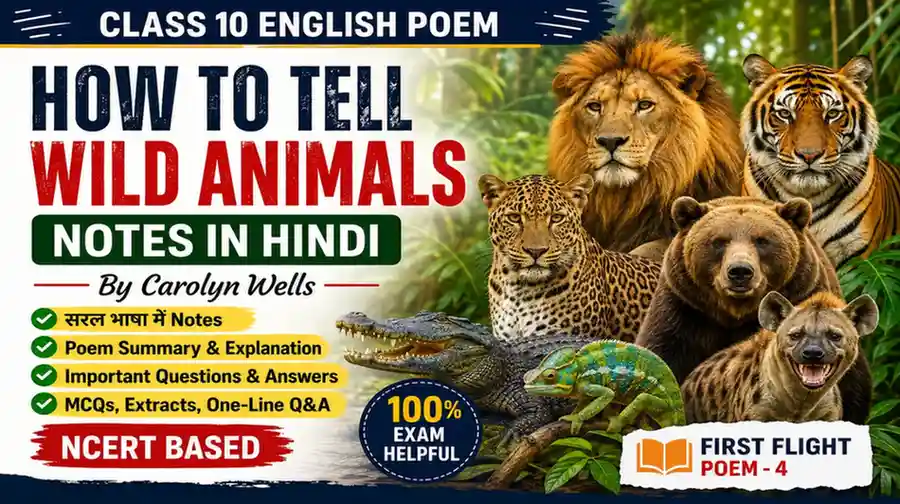
अगर आप Class 10 English Poem “How to Tell Wild Animals” के आसान और exam-oriented notes खोज रहे हैं, तो यह लेख आपके लिए बहुत उपयोगी है। इस कविता को Carolyn Wells ने लिखा है और इसमें विभिन्न जंगली जानवरों की पहचान उनके मजेदार और खतरनाक व्यवहार के आधार पर बताई गई है। इस पोस्ट में आपको How to Tell Wild Animals Class 10 Notes in Hindi and English सरल भाषा में मिलेंगे, ताकि आप कविता को आसानी से समझ और याद कर सकें।
यहाँ poem summary, Hindi explanation, stanza-wise explanation, difficult words, poetic devices, rhyme scheme, important questions and answers, extract-based questions, MCQs और one-line questions को शामिल किया गया है। साथ ही, परीक्षा की तैयारी के लिए important points और quick revision notes भी दिए गए हैं। ये notes NCERT Class 10 English First Flight के अनुसार तैयार किए गए हैं और students को बोर्ड परीक्षा में बेहतर तैयारी करने में मदद करेंगे। Download NCERT BOOK PDF.
How to Tell Wild Animals Class 10 Notes: Summary
Class: 10th
Subject: English
Poem: How to Tell Wild Animals
Poet: Carolyn Wells
Book: NCERT First Flight
Poem No.: 4
Introduction to the Poem
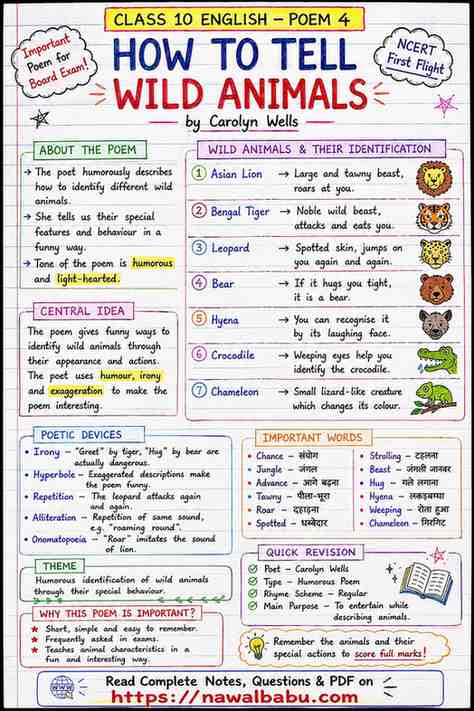
How to Tell Wild Animals is a humorous poem written by Carolyn Wells. In this poem, the poet describes different wild animals and gives funny ways to identify them. She explains the animals through their appearance, behaviour and dangerous actions. Instead of giving scientific information, the poet uses humour, exaggeration and irony to make the poem interesting. The poem teaches students about wild animals in a light-hearted and memorable way.
About the Poet – Carolyn Wells
Carolyn Wells (1862–1942) was an American writer and poet. She was famous for writing humorous poems, mysteries and children’s literature. Her writing style was generally simple, witty and entertaining. In How to Tell Wild Animals, she uses humour to describe dangerous animals. Instead of directly explaining their characteristics, she creates amusing situations in which a person can identify the animal. Her playful style makes the poem easy to understand and enjoyable for young readers.
Central Idea of the Poem
The central idea of How to Tell Wild Animals is to identify various wild animals through their special characteristics and behaviour. The poet describes the animals in a humorous manner. She suggests that if a dangerous animal attacks or eats you, you can easily know which animal it is! The poem combines knowledge with comedy. The exaggerated descriptions of the animals make the poem entertaining while helping students remember their basic characteristics.
Theme of the Poem
The main theme of the poem is humourous identification of wild animals. The poet describes animals such as the Asian Lion, Bengal Tiger, Leopard, Bear, Crocodile, Hyena, Chameleon and others through their behaviour.
- The poem is humorous rather than scientific.
- Dangerous situations are presented in a funny way.
- Animal characteristics help identify them.
- Humour, irony and exaggeration make the poem memorable.
- The poem shows the poet’s playful imagination.
Summary of the Poem – English
The poem humorously explains how to recognize different wild animals. The poet first describes the Asian Lion, which can be identified if it roars and attacks a person in the jungle. The Bengal Tiger can be recognized when it attacks and eats its victim. A Leopard repeatedly attacks its victim. A Bear may hug a person tightly. The Hyena is recognized by its smiling expression, while the Crocodile appears to be weeping. Finally, the poet describes the Chameleon, which can change its colour according to its surroundings.
Read More: Madam Rides the Bus Class 10 Notes in Hindi: Summary, Explanation, Question Answers & MCQs
कविता का सारांश – Hindi
इस कविता में कवयित्री Carolyn Wells ने जंगली जानवरों की पहचान करने के मजेदार तरीके बताए हैं। वह वैज्ञानिक तरीके से पहचान बताने के बजाय हास्यपूर्ण परिस्थितियों का प्रयोग करती हैं। यदि जंगल में कोई जानवर आपको पकड़कर खा जाए या हमला करे, तो उसके व्यवहार से उसकी पहचान की जा सकती है। एशियाई शेर दहाड़ता है, बंगाल टाइगर खा जाता है, तेंदुआ बार-बार हमला करता है और भालू गले लगाता है। लकड़बग्घा मुस्कुराता हुआ दिखाई देता है और मगरमच्छ रोता हुआ लगता है।
7. Stanza-wise Explanation
Stanza 1 – Asian Lion
“If ever you should go by chance
To jungles in the East;
And if there should to you advance
A large and tawny beast…”
कवयित्री कहती हैं कि यदि आप संयोग से पूर्वी देशों के जंगलों में जाएँ और आपको एक बड़ा, पीले-भूरे रंग का जानवर दिखाई दे, तो सावधान हो जाइए। यदि वह जानवर जोर से दहाड़ता है और आप पर हमला करता है, तो समझ जाइए कि वह Asian Lion है। यहाँ कवयित्री ने शेर की पहचान उसके आकार, रंग, दहाड़ और आक्रमण के आधार पर मजाकिया ढंग से बताई है।
Key Points:
- Animal: Asian Lion
- Colour: Tawny
- Main feature: Roaring
- Identification: Attacks and roars
- Tone: Humorous
Stanza 2 – Bengal Tiger
“Or if sometime when roaming round,
A noble wild beast greets you…”
यदि जंगल में घूमते समय कोई सुंदर और शक्तिशाली जंगली जानवर आपका स्वागत करता हुआ दिखाई दे, तो वह Bengal Tiger हो सकता है। कवयित्री मजाक में कहती हैं कि यदि वह जानवर आपको खा जाए, तो आप निश्चित रूप से पहचान सकते हैं कि वह बंगाल टाइगर था। यहाँ “greet” शब्द का प्रयोग हास्य पैदा करता है क्योंकि सामान्यतः स्वागत का अर्थ मित्रतापूर्ण व्यवहार होता है, जबकि बाघ का “स्वागत” वास्तव में हमला है।
Key Points:
- Animal: Bengal Tiger
- Identification: Stripes and attack
- Special action: Eats the victim
- Humour: “Greets” means attacks
Stanza 3 – Leopard
“If strolling forth, a beast you view,
Whose hide with spots is peppered…”
यदि आप जंगल में घूमते हुए किसी ऐसे जानवर को देखें जिसकी त्वचा पर बहुत सारे धब्बे हों, तो वह Leopard हो सकता है। कवयित्री कहती हैं कि यदि वह आप पर छलांग लगाता है और आपको बार-बार चोट पहुँचाता है, तो आप समझ सकते हैं कि वह तेंदुआ है। “Again and again” यह बताता है कि तेंदुआ लगातार हमला करता है। इस वर्णन में हास्य और अतिशयोक्ति दोनों दिखाई देते हैं।
Key Points:
- Animal: Leopard
- Main feature: Spotted skin
- Action: Repeatedly attacks
- Identification: Spots + repeated attack
Stanza 4 – Bear
“If there is nothing else to do,
The way to recognise the beast…”
इस stanza में कवयित्री Bear की पहचान बताती हैं। यदि जंगल में कोई जानवर अचानक आपको बहुत जोर से गले लगा ले, तो समझ जाइए कि वह भालू है। सामान्यतः किसी का गले लगाना प्यार और स्नेह का संकेत होता है, लेकिन भालू का “hug” करना बेहद खतरनाक हो सकता है। कवयित्री इस विरोधाभास का उपयोग करके हास्य पैदा करती हैं।
Key Points:
- Animal: Bear
- Identification: Gives a tight hug
- Humour: Dangerous hug
- Poetic technique: Irony
Stanza 5 – Hyena and Crocodile
इस stanza में कवयित्री Hyena और Crocodile दोनों की पहचान करती हैं। Hyena को उसके हँसते या मुस्कुराते चेहरे से पहचाना जा सकता है। दूसरी ओर, Crocodile को उसकी आँखों से बहते आँसुओं के कारण पहचाना जा सकता है। कवयित्री कहती हैं कि मगरमच्छ के आँसू वास्तव में उसकी भावनाओं के कारण नहीं होते। “Crocodile tears” एक प्रसिद्ध expression है, जिसका अर्थ है झूठे या दिखावटी आँसू।
Key Points:
- Hyena → Laughing appearance
- Crocodile → Weeping appearance
- Literary idea → Irony and humour
- “Crocodile tears” → False/simulated sadness
Stanza 6 – Chameleon
अंतिम stanza में कवयित्री Chameleon (गिरगिट) का वर्णन करती हैं। वह कहती हैं कि यदि आपको कोई छिपकली जैसा छोटा जानवर दिखाई दे और उसके शरीर पर कोई स्पष्ट रंग दिखाई न दे, तो वह Chameleon हो सकता है। Chameleon अपने आसपास के वातावरण के अनुसार अपना रंग बदल सकता है। इसलिए उसकी पहचान करना कठिन होता है। कवयित्री इसे भी हल्के-फुल्के हास्य के साथ प्रस्तुत करती हैं।
Key Points:
- Animal: Chameleon
- Appearance: Small lizard-like creature
- Special feature: Changes colour
- Identification: Difficult because of camouflage
Read Also: Electricity Class 10 Notes in Hindi + English | Important Formulas, Numericals & Board Exam Guide
Wild Animals Mentioned in the Poem
कविता में कई जंगली जानवरों का मजेदार तरीके से वर्णन किया गया है। प्रत्येक जानवर को उसकी किसी विशेष पहचान या व्यवहार से जोड़ा गया है। इससे students को animals की characteristics याद रखने में आसानी होती है।
| Animal | पहचान |
|---|---|
| Asian Lion | दहाड़ता है |
| Bengal Tiger | हमला करके खा जाता है |
| Leopard | बार-बार हमला करता है |
| Bear | कसकर गले लगाता है |
| Hyena | हँसता/मुस्कुराता दिखाई देता है |
| Crocodile | रोता हुआ दिखाई देता है |
| Chameleon | रंग बदलता है |
Characteristic of Each Animal
Asian Lion
- Large and tawny animal
- Lives in the jungles of the East
- Identified by its roar
- Dangerous to humans
Bengal Tiger
- Noble-looking wild animal
- Known for its powerful attack
- Can kill and eat its victim
- Its “greeting” is humorous irony
Leopard
- Has a spotted skin
- Jumps on its victim
- Attacks repeatedly
- Very dangerous animal
Bear
- Can give a powerful hug
- Its hug can be dangerous
- Poet presents this action humorously
Hyena
- Appears to be laughing
- Its facial expression helps identify it
- Creates a humorous picture
Crocodile
- Appears to shed tears
- Represents the idea of “crocodile tears”
- Tears are associated with false sorrow
Chameleon
- Small lizard-like creature
- Can change its colour
- Blends with its surroundings
- Difficult to identify
Poetic Devices
1. Rhyme Scheme
The poem mainly follows a regular rhyming pattern. The rhymes make the poem musical and easy to remember. The poet uses simple language and rhythmic lines to create a playful tone.
Examples of rhyming words include:
- chance – advance
- East – beast
- you – view
- tree – me
- smile – crocodile
The rhyme and rhythm contribute greatly to the humorous and entertaining character of the poem.
2. Alliteration
Alliteration is the repetition of the same consonant sound at the beginning of nearby words.
Examples include:
- “roaming round”
- “very best”
The use of similar sounds creates rhythm and makes the lines more enjoyable to read.
3. Onomatopoeia
Onomatopoeia refers to words that imitate or suggest natural sounds.
The word “roar” is associated with the loud sound of the lion. It helps the reader imagine the dangerous situation in the jungle.
Example:
Roar → Lion’s sound
4. Repetition
The poet uses repetition to emphasize repeated actions and create humour.
For example, the leopard is described as attacking its victim again and again. This repetition emphasizes the continuous nature of the attack.
Purpose:
- Creates emphasis
- Adds rhythm
- Increases humour
- Makes the description memorable
5. Irony
Irony means saying or presenting something that has a meaning different from what is normally expected.
For example, the tiger “greets” the person by attacking and eating him. Similarly, a bear “hugs” its victim.
These descriptions are funny because words like greet and hug normally suggest friendly behaviour, while the animals actually behave dangerously.
6. Hyperbole
Hyperbole means deliberate exaggeration.
The poem exaggerates dangerous situations for comic effect. The idea of identifying a wild animal by allowing it to attack or eat you is obviously exaggerated.
Purpose:
It makes the poem funny, memorable and entertaining.
Important Vocabulary
| Word | Meaning |
|---|---|
| By chance | संयोग से |
| Jungle | जंगल |
| East | पूर्व |
| Advance | आगे बढ़ना |
| Tawny | पीला-भूरा |
| Beast | जंगली जानवर |
| Roar | दहाड़ना |
| Noble | शानदार/गरिमापूर्ण |
| Strolling | टहलना |
| Spotted | धब्बेदार |
| Pepper | छोटे-छोटे धब्बों से भरना |
| Lep | छलांग लगाना |
| Hug | गले लगाना |
| Hyena | लकड़बग्घा |
| Crocodile | मगरमच्छ |
| Tears | आँसू |
| Chameleon | गिरगिट |
| Lizard | छिपकली |
Important Questions and Answers
Q1. How can you identify an Asian Lion?
Answer:
An Asian Lion can be identified by its large size, tawny colour and loud roar. If a person encounters it in an eastern jungle and the animal roars while attacking him, he can be sure that it is an Asian Lion. The poet presents this dangerous situation humorously.
Q2. How can you identify a Bengal Tiger?
Answer:
A Bengal Tiger can be identified as a noble-looking wild animal. According to the poet, if it suddenly approaches a person and eats him, there can be no doubt that it is a Bengal Tiger. The word “greets” creates humour because the tiger actually attacks rather than welcomes the person.
Q3. How does a leopard behave with its victim?
Answer:
A leopard has a spotted skin and can be recognized by its repeated attacks. When it sees a person, it may jump upon him and continue attacking again and again. The poet uses exaggeration and repetition to make this dangerous situation humorous.
Q4. How can you recognize a bear?
Answer:
A bear can be recognized when it gives a person a tight hug. Normally, a hug is considered a loving gesture, but a bear’s hug can be extremely dangerous. The poet uses irony to turn this dangerous action into a humorous way of identifying the animal.
Q5. How does the poet describe the Hyena?
Answer:
The poet describes the Hyena as an animal that appears to be laughing. Its facial expression resembles a smile or laugh. This unusual comparison creates humour. The poet uses the Hyena’s characteristic expression as a simple way of identifying it.
Q6. Why does the poet say that the Crocodile is weeping?
Answer:
The poet says that the Crocodile is weeping because crocodiles are traditionally associated with tears while eating their prey. The expression “crocodile tears” means false or insincere sorrow. Therefore, the poet humorously uses its tears as a method of identification.
Q7. How can you identify a Chameleon?
Answer:
A Chameleon can be identified as a small lizard-like creature that can change its colour according to its surroundings. Because it blends with its background, it can be difficult to notice. The poet humorously suggests that if you cannot see any clear colour, it may be a Chameleon.
Q8. What makes the poem humorous?
Answer:
The poem is humorous because the poet uses dangerous situations to identify wild animals. Words such as “greet,” “hug” and “smile” are normally associated with friendly behaviour, but they are used for dangerous animals. The poet also uses irony, exaggeration, repetition and playful descriptions to create humour.
Know More: Outcomes of Democracy Class 10 Notes in Hindi | लोकतंत्र के परिणाम अध्याय 5 सम्पूर्ण नोट्स PDF
Extract-Based Questions
Extract 1
“If ever you should go by chance
To jungles in the East…”
Questions:
1. Who is the poet of the poem?
Carolyn Wells.
2. Where does the poet imagine the reader going?
The reader is imagined going to the jungles in the East.
3. What does “by chance” mean?
It means accidentally or unexpectedly.
4. Which animal is described in this stanza?
The Asian Lion.
Extract 2
“If strolling forth, a beast you view,
Whose hide with spots is peppered…”
Questions:
1. Which animal has spotted skin?
The Leopard.
2. What does “hide” mean?
It means the animal’s skin.
3. What does “peppered with spots” mean?
It means covered with many spots.
4. How does the animal attack?
It jumps upon the victim and attacks repeatedly.
Extract 3
“Though to distinguish beasts of prey
A novice might nonplus…”
Questions:
1. Who may find it difficult to distinguish the animals?
A novice or inexperienced person.
2. What does “distinguish” mean?
To identify or tell the difference.
3. What does “beasts of prey” mean?
Animals that hunt and eat other animals.
4. What makes identification difficult?
The animals may look similar or behave unexpectedly.
MCQs
1. Who wrote How to Tell Wild Animals?
A. Robert Frost
B. Carolyn Wells
C. Leslie Norris
D. Walt Whitman
Answer: B. Carolyn Wells
2. What colour is the Asian Lion described as?
A. Black
B. White
C. Tawny
D. Green
Answer: C. Tawny
3. Which animal has a spotted skin?
A. Bear
B. Leopard
C. Hyena
D. Tiger
Answer: B. Leopard
4. Which animal is associated with a “hug”?
A. Bear
B. Tiger
C. Lion
D. Crocodile
Answer: A. Bear
5. Which animal appears to laugh?
A. Crocodile
B. Hyena
C. Leopard
D. Chameleon
Answer: B. Hyena
6. Which animal appears to weep?
A. Tiger
B. Bear
C. Crocodile
D. Lion
Answer: C. Crocodile
7. Which animal can change its colour?
A. Leopard
B. Chameleon
C. Hyena
D. Tiger
Answer: B. Chameleon
8. What is the dominant tone of the poem?
A. Sad
B. Serious
C. Humorous
D. Tragic
Answer: C. Humorous
One-Line Questions and Answers
Q1. Who wrote the poem?
Ans: Carolyn Wells wrote the poem.
Q2. What is the poem about?
Ans: It humorously describes ways of identifying wild animals.
Q3. Which animal has a tawny colour?
Ans: The Asian Lion.
Q4. Which animal has a spotted skin?
Ans: The Leopard.
Q5. Which animal gives a dangerous hug?
Ans: The Bear.
Q6. Which animal seems to laugh?
Ans: The Hyena.
Q7. Which animal seems to weep?
Ans: The Crocodile.
Q8. Which animal changes its colour?
Ans: The Chameleon.
Q9. What is “crocodile tears”?
Ans: It refers to false or insincere tears.
Q10. What is the tone of the poem?
Ans: The tone is humorous and playful.
Exam-Oriented Important Points
- Poet: Carolyn Wells
- Poem: How to Tell Wild Animals
- Main subject: Identification of wild animals
- Style: Humorous and playful
- Asian Lion: Roars
- Bengal Tiger: Attacks/eats its victim
- Leopard: Has spots and attacks repeatedly
- Bear: Gives a dangerous hug
- Hyena: Appears to laugh
- Crocodile: Appears to weep
- Chameleon: Changes colour
- Important poetic devices: Irony, repetition, hyperbole, alliteration
- Major purpose: To entertain while describing animal characteristics
Quick Revision Mind Map
How to Tell Wild Animals
→ Carolyn Wells
↓
Humorous description of wild animals
↓
Asian Lion → Tawny → Roars
↓
Bengal Tiger → Noble → Attacks/Eats
↓
Leopard → Spotted → Attacks repeatedly
↓
Bear → Hugs
↓
Hyena → Laughs
↓
Crocodile → Weeps → Crocodile tears
↓
Chameleon → Changes colour
Main Literary Devices:
→ Irony
→ Hyperbole
→ Repetition
→ Alliteration
→ Humour
What Students Should Remember
The poem should not be memorized word by word. Students should remember the animal + identifying feature combination. This makes almost every question from the poem easier to answer.
Easy Memory Trick:
Lion → Roar 🦁
Tiger → Eat 🐅
Leopard → Spots 🐆
Bear → Hug 🐻
Hyena → Laugh
Crocodile → Tears 🐊
Chameleon → Colour Change
The poem is mainly remembered for its humour, irony and unusual ways of identifying dangerous animals.