Electricity Class 10 Notes: आज के आधुनिक युग में Electricity (विद्युत) हमारे जीवन का सबसे महत्वपूर्ण हिस्सा बन चुकी है। मोबाइल चार्ज करने से लेकर पंखा, बल्ब और मशीनें चलाने तक हर काम बिजली पर निर्भर है। कक्षा 10 विज्ञान का यह अध्याय बोर्ड परीक्षा की दृष्टि से बेहद महत्वपूर्ण है क्योंकि इसमें Ohm’s Law, Resistance, Electric Power और Circuit जैसे कॉन्सेप्ट्स शामिल हैं, जिनसे अक्सर न्यूमेरिकल और थ्योरी प्रश्न पूछे जाते हैं।
इस पोस्ट में आपको Electricity के सभी टॉपिक्स आसान भाषा (Hindi + English) में समझाए गए हैं, साथ ही महत्वपूर्ण सूत्र (Formulas), उदाहरण (Examples) और परीक्षा के लिए जरूरी टिप्स भी दिए गए हैं। अगर आप इस अध्याय को सही तरीके से समझ लेते हैं, तो आप न केवल अच्छे अंक प्राप्त कर सकते हैं बल्कि दैनिक जीवन में भी इसके उपयोग को आसानी से समझ पाएंगे। For MCQs, Visit Learneasily8.
Electricity Class 10 Notes: Formulas, Numericals & Important Questions
What is Electricity ?
Electricity is one of the most important forms of energy used in our daily life. From lighting bulbs to running machines, everything depends on it.
Electricity (विद्युत) refers to the flow of electric charges.
👉 In simple words:
“Electric current is the flow of electrons in a conductor.”
Electric Charge and Current (विद्युत आवेश और धारा)
Electric Charge (आवेश)
- It is a property of matter.
- Two types:
- Positive (+)
- Negative (–)
Electric Current (धारा)
- Flow of electric charges is called current.
- Symbol: I
- Unit: Ampere (A)
👉 Formula:Or, I= t.Q
Where:
Q = Charge, t = Time
Electric Circuit (विद्युत परिपथ)
An electric circuit is a closed path through which current flows.
Components:
- Battery (Cell)
- Switch (Key)
- Bulb
- Wires
👉 If circuit is open → no current
👉 If circuit is closed → current flows
Potential Difference (विभवांतर)
It is the work done to move a unit charge from one point to another.
- Symbol: V
- Unit: Volt (V)
👉 Formula:
Electricity Class 10 Notes: Ohm’s Law (ओम का नियम)
This is one of the most important laws for exams.
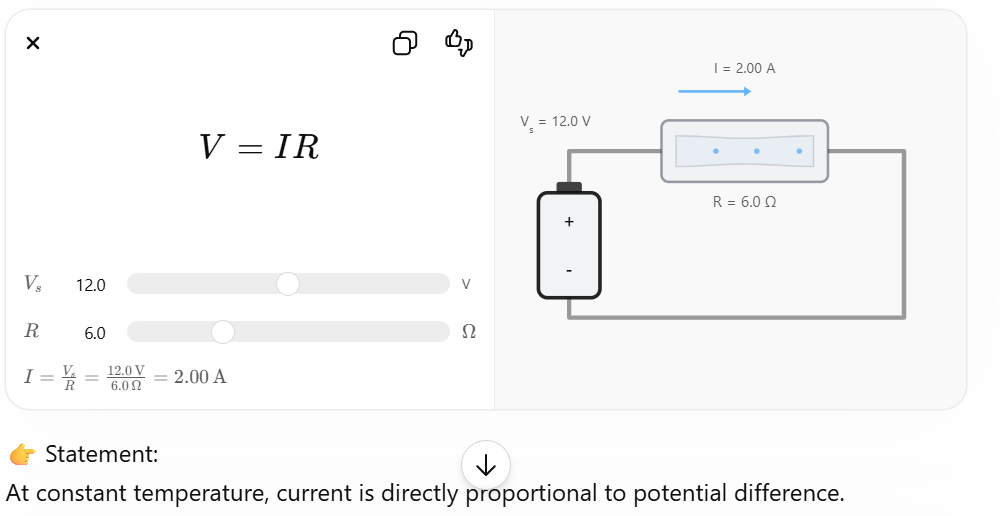
Where:
- V = Voltage
- I = Current
- R = Resistance
Electricity Class 10 Notes: Resistance (प्रतिरोध)
Resistance is the opposition to the flow of current.
- Symbol: R
- Unit: Ohm (Ω)
Factors affecting resistance:
- Length of conductor ↑ → Resistance ↑
- Area ↑ → Resistance ↓
- Material of conductor
- Temperature
Read More: Heredity and Evolution Class 10 Notes (Hindi + English) | आसान भाषा में पूरा अध्याय, उदाहरण सहित
Combination of Resistors (प्रतिरोधों का संयोजन)
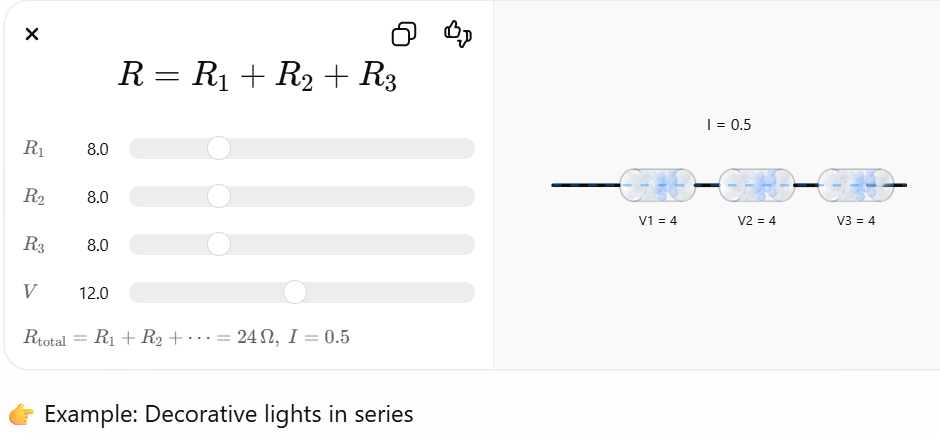
(A) Series Combination (श्रृंखला संयोजन)
- Same current flows
- Total resistance increases
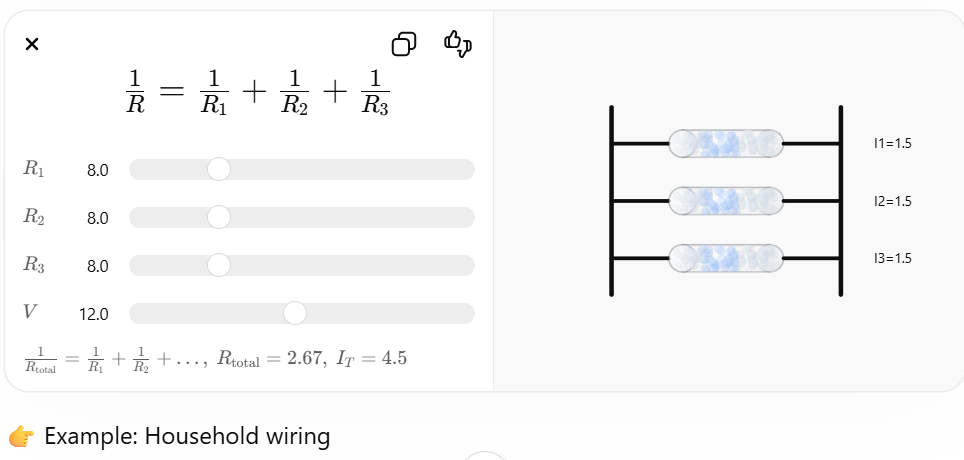
(B) Parallel Combination (समानांतर संयोजन)
- Same voltage across each resistor
- Total resistance decreases
Heating Effect of Electric Current (विद्युत धारा का ऊष्मीय प्रभाव)
When current passes through a conductor, heat is produced.
👉 Formula:Applications:
- Electric iron
- Heater
- Toaster
Electricity Class 10 Notes: Electric Power (विद्युत शक्ति)
Power is the rate at which electrical energy is consumed.
- Symbol: P
- Unit: Watt (W)
Other formulas:
Commercial Unit of Electricity (व्यावसायिक इकाई)
- Unit: kilowatt-hour (kWh)
- 1 kWh = 1 unit
👉 Used in electricity bills
Practical Examples (व्यावहारिक उदाहरण)
Example 1: Why do we use thick wires in heaters?
👉 Because resistance is low → more current flows → more heat
Example 2: Why are homes wired in parallel?
👉 So that all appliances get same voltage and work independently
Safety Measures (सुरक्षा उपाय)
- Use proper insulation
- Do not touch switches with wet hands
- Use fuse and MCB
- Avoid overloading
Important Definitions (Exam Point)
- Electric Current: Flow of charge
- Resistance: Opposition to current
- Potential Difference: Work done per unit charge
- Power: Energy consumed per second
Electricity Class 10 Notes: Conclusion
Electricity is an essential part of modern life. Understanding concepts like Ohm’s Law, resistance, and power helps in both exams and real life. Proper use and safety precautions are equally important.
Read Also: How do Organisms Reproduce Class 10 Notes in Hindi & English | जीव कैसे प्रजनन करते हैं पूर्ण नोट्स
Assertion–Reason Questions (विद्युत)
Directions:
Each question consists of two statements: Assertion (A) and Reason (R). Choose the correct option:
(a) Both A and R are true and R is correct explanation of A
(b) Both A and R are true but R is NOT correct explanation of A
(c) A is true but R is false
(d) A is false but R is true
- Assertion (A): Electric current is directly proportional to potential difference.
Reason (R): Resistance remains constant at constant temperature.
Answer: (a)
2. Assertion (A): The resistance of a conductor increases with increase in length.
Reason (R): Longer path offers more opposition to flow of current.
Answer: (a)
3. Assertion (A): Copper is used in electrical wiring.
Reason (R): Copper has high resistance.
Answer: (c)
4. Assertion (A): Electric bulbs glow when current passes through them.
Reason (R): Electric current produces heating effect.
Answer: (a)
5. Assertion (A): In parallel combination, total resistance decreases.
Reason (R): Current gets divided into different paths.
Answer: (a)
6. Assertion (A): In series circuit, current is same through all components.
Reason (R): There is only one path for current flow.
Answer: (a)
7. Assertion (A): Resistance of a conductor decreases with increase in area.
Reason (R): Larger area allows more electrons to flow easily.
Answer: (a)
8. Assertion (A): Electric fuse is used to protect circuits.
Reason (R): Fuse wire has high melting point.
Answer: (c)
9. Assertion (A): Power of an electric device is the rate of energy consumption.
Reason (R): Power is equal to voltage multiplied by current.
Answer: (b)
10. Assertion (A): Commercial unit of electrical energy is kWh.
Reason (R): 1 kWh = 1000 watt.
Answer: (c)
11. Assertion (A): Heating effect of current depends on resistance.
Reason (R): Heat produced is given by H = I²Rt.
Answer: (a)
12. Assertion (A): Household appliances are connected in parallel.
Reason (R): Each appliance gets same voltage.
Answer: (a)
13. Assertion (A): A good conductor has low resistance.
Reason (R): It allows current to flow easily.
Answer: (a)
14. Assertion (A): Current decreases when resistance increases.
Reason (R): According to Ohm’s Law, I = V/R.
Answer: (a)
15. Assertion (A): Electric current flows from negative to positive terminal.
Reason (R): Electrons move from negative to positive terminal.
Answer: (b)
16. Assertion (A): Nichrome wire is used in heating appliances.
Reason (R): It has high resistance and high melting point.
Answer: (a)
17. Assertion (A): Ammeter is connected in parallel in a circuit.
Reason (R): Ammeter has very low resistance.
Answer: (d)
18. Assertion (A): Voltmeter is connected in parallel.
Reason (R): It measures potential difference across a component.
Answer: (a)
19. Assertion (A): Increase in temperature increases resistance of metals.
Reason (R): Collisions of electrons increase.
Answer: (a)
20. Assertion (A): Series circuits are used in household wiring.
Reason (R): Appliances can be controlled independently.
Answer: (d)
Case Study Questions – Electricity
Case Study 1: Household Wiring (घरेलू वायरिंग)
Ravi’s house has several electrical appliances like fan, TV, refrigerator, and lights. All appliances are connected in parallel combination. One day, the bulb fused but other appliances kept working.
Questions:
- Why are appliances connected in parallel in homes?
Answer: So that each appliance gets same voltage and works independently. - What happens if one appliance stops working in parallel circuit?
Answer: Other appliances continue to work. - Which device is used to prevent overloading?
Answer: Fuse or MCB - What is the advantage of parallel combination?
Answer: Independent functioning + same voltage supply
Case Study 2: Electric Iron (Heating Effect)
An electric iron works on the heating effect of current. It contains a nichrome wire which gets heated when current flows.
Questions:
- Why is nichrome wire used in heating appliances?
Answer: Due to high resistance and high melting point. - What is the formula for heat produced?
Answer: H = I²Rt - Which effect of current is used in electric iron?
Answer: Heating effect - Why does the iron become hot?
Answer: Due to resistance, electrical energy converts into heat energy.
Case Study 3: Ohm’s Law Experiment
A student performs an experiment and observes that when voltage increases, current also increases proportionally.
Questions:
- Which law is verified in this experiment?
Answer: Ohm’s Law - What is the relation between V and I?
Answer: V ∝ I - What happens to resistance in this experiment?
Answer: It remains constant - Write the formula of Ohm’s Law.
Answer: V = IR
Case Study 4: Electric Bill Calculation
A household uses a 1000 W heater for 2 hours daily.
Questions:
- Convert power into kilowatt.
Answer: 1000 W = 1 kW - Calculate energy used in 1 day.
Answer: 1 kW × 2 h = 2 kWh - What is the commercial unit of energy?
Answer: kWh (unit) - If cost per unit is ₹5, find daily cost.
Answer: 2 × 5 = ₹10
Case Study 5: Series Circuit
Three resistors are connected in series in a circuit.
Questions:
- How does current behave in series circuit?
Answer: Same current flows through all resistors - What happens to total resistance?
Answer: It increases - Write formula for total resistance.
Answer: R = R₁ + R₂ + R₃ - What is the disadvantage of series circuit?
Answer: If one component fails, entire circuit stops
Case Study 6: Safety Measures
A short circuit occurs in a house due to faulty wiring, causing a sudden rise in current.
Questions:
- What is a short circuit?
Answer: Sudden increase in current due to low resistance path - Which device protects the circuit?
Answer: Fuse - What happens to fuse wire during overload?
Answer: It melts and breaks the circuit - Why is fuse wire thin?
Answer: To melt quickly and protect appliances
Case Study 7: Resistance Factors
A wire’s resistance depends on its length, area, and material.
Questions:
- What happens if length increases?
Answer: Resistance increases - What happens if area increases?
Answer: Resistance decreases - Which material has low resistance?
Answer: Copper - Why is copper used in wires?
Answer: Low resistance and good conductivity