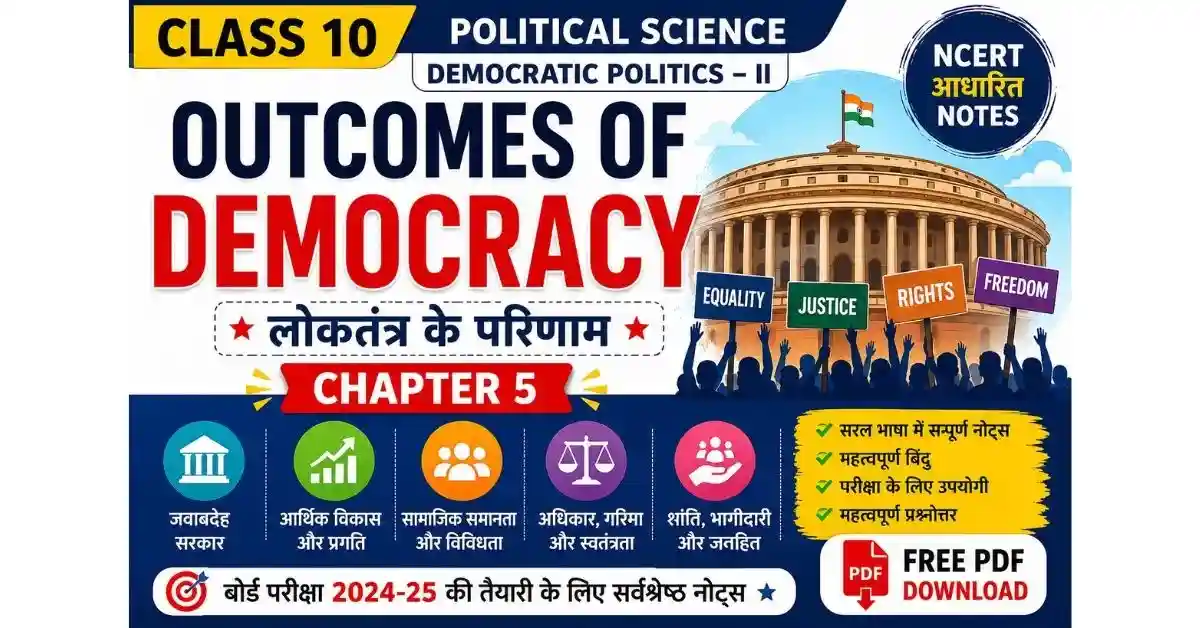
लोकतंत्र केवल एक शासन व्यवस्था नहीं बल्कि नागरिकों के अधिकारों, समानता और स्वतंत्रता का आधार है। कक्षा 10 राजनीति विज्ञान के अध्याय “Outcomes of Democracy (लोकतंत्र के परिणाम)” में हम समझते हैं कि लोकतंत्र जनता के लिए किस प्रकार कार्य करता है और इसके क्या सकारात्मक परिणाम होते हैं। इस अध्याय में जवाबदेह सरकार, आर्थिक विकास, सामाजिक विविधता, समानता, नागरिकों की गरिमा तथा लोकतंत्र की चुनौतियों जैसे महत्वपूर्ण विषयों को सरल भाषा में समझाया गया है।
यदि आप बोर्ड परीक्षा की तैयारी कर रहे हैं या आसान और विस्तृत नोट्स खोज रहे हैं, तो यह पोस्ट आपके लिए बहुत उपयोगी होगी। यहाँ आपको Hindi + English medium में NCERT आधारित सम्पूर्ण नोट्स, महत्वपूर्ण प्रश्नोत्तर तथा परीक्षा के लिए उपयोगी बिंदु सरल तरीके से मिलेंगे, जिससे आपका रिवीजन तेज और प्रभावी बनेगा। Download NCERT BOOK PDF Here.
Outcomes of Democracy: Class 10 Notes
Based on NCERT | Hindi + English Medium Notes
Democracy is considered the best form of government because it gives equal rights and opportunities to citizens. But many people ask whether democracy actually produces good results or not. This chapter explains the real outcomes of democracy in areas like political system, economy, social equality, freedom, and accountability. Democracy may work slowly, but it provides better participation, dignity, transparency, and peaceful solutions to problems.
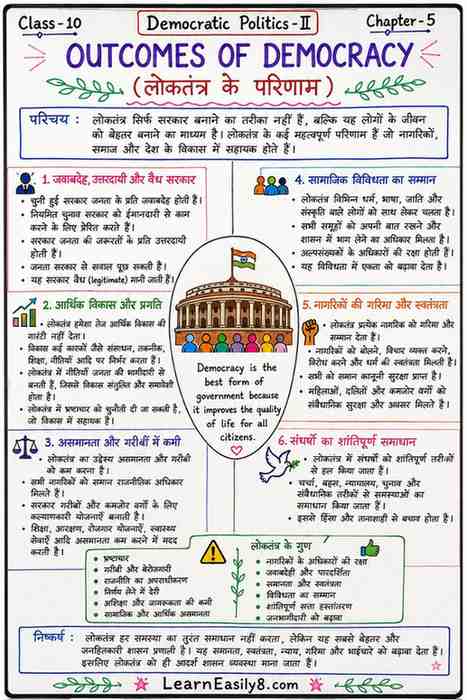
लोकतंत्र को शासन की सबसे अच्छी व्यवस्था माना जाता है क्योंकि यह नागरिकों को समान अधिकार और अवसर देता है। लेकिन प्रश्न उठता है कि क्या लोकतंत्र वास्तव में अच्छे परिणाम देता है? यह अध्याय लोकतंत्र के राजनीतिक, आर्थिक, सामाजिक और नैतिक परिणामों को समझाता है।
What are the Outcomes of Democracy?
लोकतंत्र के परिणाम क्या हैं?
Outcomes of democracy mean the final results or effects produced by democratic government. Democracy improves governance, protects rights, ensures accountability, and promotes equality. However, it may sometimes appear slow because decisions are taken after discussions and debates.
लोकतंत्र के परिणाम से आशय उन प्रभावों से है जो लोकतांत्रिक शासन द्वारा उत्पन्न होते हैं। लोकतंत्र अच्छी सरकार, अधिकारों की सुरक्षा, जवाबदेही और समानता को बढ़ावा देता है।
Main Outcomes of Democracy:
- Accountable government
- Responsive administration
- Political equality
- Protection of rights
- Economic development
- Social harmony
- Dignity and freedom of citizens
Accountable, Responsive and Legitimate Government
जवाबदेह, उत्तरदायी और वैध सरकार
Democracy produces a government that is accountable to the people. Leaders are elected by citizens and must answer for their actions. Regular elections force rulers to work honestly and carefully. Democratic governments also respond to public needs and make decisions after discussion and consultation.
लोकतंत्र ऐसी सरकार बनाता है जो जनता के प्रति जवाबदेह होती है। चुनाव के माध्यम से चुने गए नेता जनता को उत्तर देने के लिए बाध्य होते हैं।
Features of Democratic Government:
- Government is answerable to citizens
- Decisions are taken after debates
- Transparency in administration
- Citizens can question the government
- Elections help remove inefficient rulers
Drawbacks:
- Decision-making process is slow
- Consultation and debate take more time
- Delays may happen in implementing policies
Even though democracy is slow, it is more transparent and acceptable to people.
Economic Growth and Development
आर्थिक विकास और प्रगति
Many people expect democracy to bring rapid economic development. However, democratic countries do not always grow faster than non-democratic countries. Economic growth depends on many factors like population, resources, technology, education, and policies.
कई लोग मानते हैं कि लोकतंत्र आर्थिक विकास लाता है, लेकिन हर लोकतांत्रिक देश तेज़ी से विकसित नहीं होता। आर्थिक विकास कई कारकों पर निर्भर करता है।
Important Points:
- Democracy alone cannot guarantee economic growth
- Some dictatorships showed fast growth temporarily
- Democratic governments focus on welfare and equality
- Development should benefit all sections of society
Why Democracy is Better for Development?
- People can demand better facilities
- Public participation improves policies
- Corruption can be questioned
- Peaceful environment supports growth
Thus, democracy may not always be fastest, but it aims for balanced and inclusive development.
Reduction of Inequality and Poverty
असमानता और गरीबी में कमी
One major expectation from democracy is reduction of poverty and inequality. Democracy provides equal political rights to all citizens, but economic inequality still exists in many countries. Rich people often have more influence than poor people.
लोकतंत्र से यह उम्मीद की जाती है कि यह गरीबी और असमानता को कम करेगा। हालांकि सभी नागरिकों को राजनीतिक समानता मिलती है, लेकिन आर्थिक असमानता अभी भी बनी रहती है।
Causes of Inequality:
- Unequal distribution of wealth
- Lack of education and employment
- Social discrimination
- Corruption and misuse of power
Steps Taken by Democratic Governments:
- Poverty alleviation programmes
- Reservation policies
- Employment schemes
- Free education and healthcare
- Welfare schemes for poor people
Democracy continuously works to reduce inequalities through laws and welfare policies.
Accommodation of Social Diversity
सामाजिक विविधता का सम्मान
India is a country of different religions, languages, castes, and cultures. Democracy provides peaceful methods to manage this diversity. It allows all groups to express their views freely and participate in governance.
भारत विविधताओं वाला देश है। लोकतंत्र सभी समूहों को अपनी बात रखने और शासन में भाग लेने का अवसर देता है।
Importance of Social Diversity in Democracy:
- Different groups get representation
- Minority rights are protected
- Conflicts are solved peacefully
- Unity in diversity is strengthened
Example:
In India, people from different religions and communities participate in elections and governance. This promotes national unity.
Conditions for Successful Democracy:
- Majority should not dominate minorities
- Respect for differences is necessary
- Equal opportunities for all citizens
Democracy is considered the best system for handling social diversity peacefully.
Read Also: Class 10 Geography Chapter 3 Water Resources Notes in Hindi | जल संसाधन Class 10 Notes PDF
Dignity and Freedom of Citizens
नागरिकों की गरिमा और स्वतंत्रता
Democracy is based on the principle of political equality. Every citizen has equal value and dignity. People can express opinions, criticize the government, and live with freedom.
लोकतंत्र राजनीतिक समानता के सिद्धांत पर आधारित है। प्रत्येक नागरिक को समान सम्मान और स्वतंत्रता प्राप्त होती है।
Rights and Freedoms in Democracy:
- Freedom of speech and expression
- Right to vote
- Right to protest peacefully
- Freedom of religion
- Equal legal protection
Dignity of Women and Weaker Sections:
- Women get voting rights and representation
- Dalits and backward classes receive constitutional protection
- Social justice movements become possible
Democracy enhances self-respect and human dignity among citizens.
Democracy and Conflicts
लोकतंत्र और संघर्ष
Conflicts are common in every society. Democracy provides peaceful methods to resolve disputes through discussions, elections, courts, and constitutional methods.
हर समाज में संघर्ष होते हैं, लेकिन लोकतंत्र उन्हें शांतिपूर्ण तरीके से सुलझाने का अवसर देता है।
Democratic Methods to Resolve Conflicts:
- Debate and discussion
- Judicial system
- Elections
- Constitutional amendments
- Public participation
Violence and dictatorship increase fear, while democracy promotes peaceful solutions.
Challenges Faced by Democracy
लोकतंत्र की चुनौतियाँ
Although democracy has many advantages, it also faces several challenges.
Major Challenges:
- Corruption
- Poverty and unemployment
- Criminalization of politics
- Delay in decision-making
- Illiteracy and lack of awareness
- Social and economic inequality
Democracy survives successfully only when citizens remain aware and participate actively.
Merits of Democracy
लोकतंत्र के गुण
Important Merits:
- Protects citizens’ rights
- Ensures accountability
- Promotes equality
- Maintains dignity of individuals
- Encourages participation
- Handles diversity peacefully
- Provides peaceful transfer of power
Demerits of Democracy
लोकतंत्र के दोष
Important Demerits:
- Slow decision-making
- Frequent political conflicts
- Corruption in elections
- Sometimes leaders focus on winning elections only
- Economic inequality may continue
Despite these weaknesses, democracy is considered better than all other forms of government.
Know More: Class 10 History Chapter 1 Notes in Hindi + English | Rise of Nationalism in Europe (NCERT 2026-27)
Conclusion (निष्कर्ष)
Democracy may not solve every problem immediately, but it is the most acceptable and people-friendly form of government. It provides equality, dignity, freedom, accountability, and peaceful conflict resolution. Democratic governments may work slowly, but they ensure participation and justice for all citizens. Therefore, democracy is considered the best form of governance in the modern world.
लोकतंत्र सभी समस्याओं का तुरंत समाधान नहीं करता, लेकिन यह सबसे बेहतर और जनहितकारी शासन व्यवस्था मानी जाती है। यह समानता, स्वतंत्रता, गरिमा और न्याय प्रदान करता है।
Important Keywords (महत्वपूर्ण शब्द)
| English Term | Hindi Meaning |
|---|---|
| Accountability | जवाबदेही |
| Legitimate Government | वैध सरकार |
| Transparency | पारदर्शिता |
| Political Equality | राजनीतिक समानता |
| Social Diversity | सामाजिक विविधता |
| Dignity | गरिमा |
| Welfare Policies | कल्याणकारी नीतियाँ |
| Economic Inequality | आर्थिक असमानता |
Important NCERT Questions and Answers
महत्वपूर्ण प्रश्नोत्तर
Q1. Why is democracy considered accountable?
Democracy is accountable because elected leaders are answerable to citizens through elections, debates, and public discussions.
Q2. How does democracy accommodate social diversity?
Democracy allows different social groups to express views freely and participate equally in governance.
Q3. What is the most important outcome of democracy?
The most important outcome is dignity, equality, and freedom of citizens.
Q4. Why are democratic decisions slow?
Democratic decisions require consultation, discussion, and approval from different institutions, so the process takes time.
Q5. Does democracy guarantee economic growth?
No, economic growth depends on many factors, not only democracy. However, democracy promotes inclusive and balanced development.