
Class 10 Political Science Chapter “Power Sharing” लोकतंत्र की सबसे महत्वपूर्ण अवधारणाओं में से एक है। इस अध्याय में हम जानेंगे कि किसी देश में सत्ता का बँटवारा क्यों आवश्यक होता है और यह लोकतंत्र को कैसे मजबूत बनाता है। बेल्जियम और श्रीलंका जैसे देशों के उदाहरणों के माध्यम से NCERT ने समझाया है कि सत्ता की साझेदारी समाज में शांति, समानता और एकता बनाए रखने में कितनी महत्वपूर्ण भूमिका निभाती है।
इन आसान और विस्तृत नोट्स में आपको Power Sharing Chapter के सभी महत्वपूर्ण Topics जैसे Majoritarianism, Belgian Model, Forms of Power Sharing, Prudential और Moral Reasons आदि सरल हिंदी + English भाषा में मिलेंगे। ये नोट्स CBSE Board Exam 2026, Bihar Board तथा अन्य प्रतियोगी परीक्षाओं की तैयारी के लिए बेहद उपयोगी हैं। यदि आप इस अध्याय को आसान तरीके से समझना चाहते हैं, तो यह पोस्ट आपके लिए सबसे बेहतरीन अध्ययन सामग्री साबित होगी। Download Ncert PDF.
Power Sharing Class 10 Notes: सत्ता की साझेदारी
Power Sharing means sharing of power among different organs, levels, and groups in society. In a democracy, power is not given to one person or one group only. It is distributed among different institutions and communities so that everyone can participate in decision-making.
सत्ता की साझेदारी का अर्थ है कि शासन की शक्ति को समाज के विभिन्न अंगों, स्तरों और समूहों के बीच बाँटना। लोकतंत्र में शक्ति केवल एक व्यक्ति या समूह के पास नहीं होती, बल्कि सभी को भागीदारी का अवसर दिया जाता है।
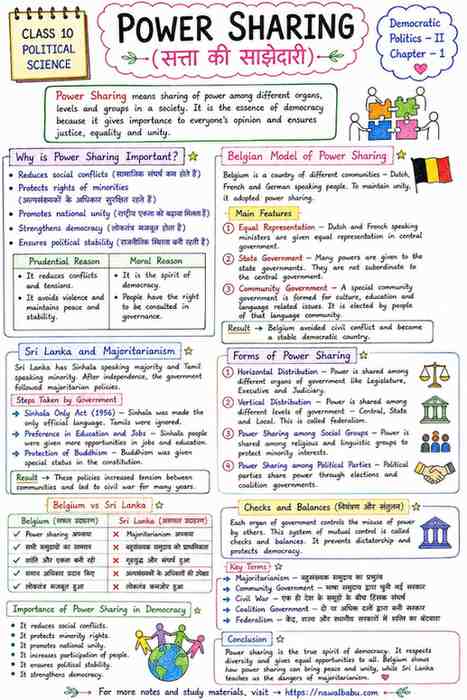
What is Power Sharing? (सत्ता की साझेदारी क्या है?)
Power sharing is the system in which power is shared among different organs of government, social groups, and political parties. It reduces conflicts and maintains unity in the country. It is an important feature of democracy because it respects the feelings and rights of all communities.
सत्ता की साझेदारी वह व्यवस्था है जिसमें शासन की शक्ति सरकार के विभिन्न अंगों, सामाजिक समूहों और राजनीतिक दलों के बीच बाँटी जाती है। इससे संघर्ष कम होते हैं और देश में एकता बनी रहती है। यह लोकतंत्र की महत्वपूर्ण विशेषता है।
Why is Power Sharing Important? (सत्ता की साझेदारी क्यों आवश्यक है?)
Power sharing is important because it helps in maintaining peace and stability in society. It prevents domination by one community or group and protects minority rights. It also strengthens democracy by involving people in decision-making.
सत्ता की साझेदारी इसलिए आवश्यक है क्योंकि यह समाज में शांति और स्थिरता बनाए रखती है। इससे किसी एक समुदाय का प्रभुत्व नहीं होता और अल्पसंख्यकों के अधिकार सुरक्षित रहते हैं। यह लोगों की भागीदारी बढ़ाकर लोकतंत्र को मजबूत बनाती है।
Prudential Reason (व्यावहारिक कारण)
Power sharing reduces social conflicts and political tensions. It avoids violence and maintains national unity. Countries with proper power sharing are more stable and peaceful.
सत्ता की साझेदारी सामाजिक संघर्ष और राजनीतिक तनाव को कम करती है। इससे हिंसा कम होती है और राष्ट्रीय एकता बनी रहती है। जिन देशों में सत्ता का सही बँटवारा होता है वहाँ शांति और स्थिरता अधिक होती है।
Moral Reason (नैतिक कारण)
Power sharing is the spirit of democracy because people have the right to be consulted in governance. A democratic government should respect everyone’s opinion and participation.
सत्ता की साझेदारी लोकतंत्र की आत्मा है क्योंकि लोगों को शासन में भाग लेने का अधिकार है। लोकतांत्रिक सरकार को सभी की राय और भागीदारी का सम्मान करना चाहिए।
Belgian Model of Power Sharing (बेल्जियम में सत्ता की साझेदारी)
Belgium is a small European country where Dutch-speaking, French-speaking, and German-speaking people live together. There were tensions among communities, especially between Dutch and French speakers. To avoid conflict, Belgium adopted a power-sharing arrangement.
बेल्जियम एक छोटा यूरोपीय देश है जहाँ डच, फ्रेंच और जर्मन भाषी लोग रहते हैं। यहाँ विभिन्न समुदायों के बीच तनाव था। संघर्ष को रोकने के लिए बेल्जियम ने सत्ता साझेदारी की व्यवस्था अपनाई।
Major Features of Belgian Model (बेल्जियम मॉडल की प्रमुख विशेषताएँ)
1. Equal Representation (समान प्रतिनिधित्व)
The constitution provided equal number of Dutch and French-speaking ministers in the central government. No single community could dominate.
संविधान में केंद्र सरकार में डच और फ्रेंच भाषी मंत्रियों की संख्या समान रखी गई ताकि कोई समुदाय प्रभुत्व न जमा सके।
2. State Governments (राज्य सरकारें)
Many powers were given to state governments. State governments are not subordinate to the central government.
कई शक्तियाँ राज्य सरकारों को दी गईं। राज्य सरकारें केंद्र सरकार के अधीन नहीं हैं।
3. Community Government (सामुदायिक सरकार)
Belgium created a special community government elected by people belonging to one language community. It works on culture, language, and education.
बेल्जियम में सामुदायिक सरकार बनाई गई जो भाषा समुदाय के लोगों द्वारा चुनी जाती है। यह संस्कृति, भाषा और शिक्षा से जुड़े कार्य करती है।
Result of Belgian Model (परिणाम)
Belgium successfully avoided civil conflict and became a stable democratic country through power sharing.
सत्ता साझेदारी के कारण बेल्जियम गृहयुद्ध से बच गया और एक स्थिर लोकतांत्रिक देश बन गया।
Sri Lanka and Majoritarianism (श्रीलंका और बहुसंख्यकवाद)
Sri Lanka has two major communities – Sinhala-speaking majority and Tamil-speaking minority. After independence, the Sinhala leaders followed the policy of majoritarianism.
श्रीलंका में सिंहली बहुसंख्यक और तमिल अल्पसंख्यक समुदाय रहते हैं। स्वतंत्रता के बाद सिंहली नेताओं ने बहुसंख्यकवाद की नीति अपनाई।
Steps Taken by Sri Lankan Government (श्रीलंका सरकार द्वारा उठाए गए कदम)
1. Sinhala Only Act
Sinhala was declared the only official language in 1956. Tamil people felt ignored and discriminated against.
1956 में सिंहली भाषा को एकमात्र आधिकारिक भाषा घोषित किया गया। तमिल लोगों ने स्वयं को उपेक्षित महसूस किया।
2. Preference in Education and Jobs
The government gave preference to Sinhala people in government jobs and university admissions.
सरकार ने सरकारी नौकरियों और शिक्षा में सिंहली लोगों को प्राथमिकता दी।
3. Protection of Buddhism
The constitution gave special protection to Buddhism, hurting the feelings of other communities.
संविधान में बौद्ध धर्म को विशेष स्थान दिया गया जिससे अन्य समुदायों की भावनाएँ आहत हुईं।
Result in Sri Lanka (श्रीलंका में परिणाम)
These policies increased tensions between Sinhala and Tamil communities. A civil war started and continued for many years, causing destruction and loss of lives.
इन नीतियों से सिंहली और तमिल समुदायों के बीच तनाव बढ़ गया। गृहयुद्ध शुरू हो गया जिससे भारी नुकसान हुआ।
Forms of Power Sharing (सत्ता साझेदारी के स्वरूप)
1. Horizontal Distribution of Power (शक्ति का क्षैतिज विभाजन)
Power is shared among different organs of government such as Legislature, Executive, and Judiciary. Each organ checks the others. This system is called checks and balances.
शक्ति का बँटवारा सरकार के विभिन्न अंगों – विधायिका, कार्यपालिका और न्यायपालिका – के बीच किया जाता है। प्रत्येक अंग दूसरे पर नियंत्रण रखता है।
Example:
- Parliament makes laws.
- Executive implements laws.
- Judiciary interprets laws.
2. Vertical Distribution of Power (शक्ति का ऊर्ध्वाधर विभाजन)
Power is shared among different levels of government such as central, state, and local governments. This is called federalism.
शक्ति का बँटवारा केंद्र, राज्य और स्थानीय सरकारों के बीच किया जाता है। इसे संघवाद कहते हैं।
Example:
- Central Government
- State Government
- Panchayat and Municipality
3. Power Sharing Among Social Groups (सामाजिक समूहों के बीच सत्ता साझेदारी)
Power is shared among religious and linguistic groups to protect minority interests. Special arrangements are made to ensure representation.
धार्मिक और भाषाई समूहों के बीच सत्ता का बँटवारा किया जाता है ताकि अल्पसंख्यकों के हित सुरक्षित रहें।
Example:
- Reservation system in India
- Community government in Belgium
4. Power Sharing Among Political Parties (राजनीतिक दलों के बीच सत्ता साझेदारी)
In democracy, political parties share power through elections and coalition governments. Different parties represent different views.
लोकतंत्र में राजनीतिक दल चुनाव और गठबंधन सरकारों के माध्यम से सत्ता साझा करते हैं। अलग-अलग दल विभिन्न विचारों का प्रतिनिधित्व करते हैं।
Example:
- Coalition governments in India
Checks and Balances (नियंत्रण और संतुलन)
Checks and balances mean each organ of government controls the misuse of power by the other organs. This prevents dictatorship and protects democracy.
नियंत्रण और संतुलन का अर्थ है कि सरकार का प्रत्येक अंग दूसरे अंग की शक्तियों पर नियंत्रण रखता है। इससे तानाशाही नहीं होती और लोकतंत्र सुरक्षित रहता है।
Difference Between Belgium and Sri Lanka (बेल्जियम और श्रीलंका में अंतर)
| Belgium (बेल्जियम) | Sri Lanka (श्रीलंका) |
|---|---|
| Followed power sharing | Followed majoritarianism |
| Respected all communities | Favoured majority community |
| Maintained peace and unity | Faced civil war and conflict |
| Equal rights were provided | Minority rights were ignored |
| Democracy became stronger | Democracy became weaker |
Importance of Power Sharing in Democracy (लोकतंत्र में सत्ता साझेदारी का महत्व)
- It reduces social conflicts.
- It protects minority rights.
- It promotes national unity.
- It strengthens democracy.
- It increases participation of people.
- It ensures political stability.
हिंदी में
- सामाजिक संघर्ष कम होते हैं।
- अल्पसंख्यकों के अधिकार सुरक्षित रहते हैं।
- राष्ट्रीय एकता मजबूत होती है।
- लोकतंत्र सशक्त बनता है।
- लोगों की भागीदारी बढ़ती है।
- राजनीतिक स्थिरता बनी रहती है।
Key Terms (मुख्य शब्द)
Majoritarianism (बहुसंख्यकवाद)
A belief that the majority community should dominate the country.
यह विचार कि बहुसंख्यक समुदाय को शासन में प्रभुत्व मिलना चाहिए।
Community Government (सामुदायिक सरकार)
A government elected by people belonging to one language community.
ऐसी सरकार जिसे एक भाषा समुदाय के लोग चुनते हैं।
Civil War (गृहयुद्ध)
A violent conflict between groups within the same country.
एक ही देश के समूहों के बीच होने वाला हिंसक संघर्ष।
Coalition Government (गठबंधन सरकार)
A government formed by two or more political parties together.
दो या अधिक राजनीतिक दलों द्वारा मिलकर बनाई गई सरकार।
Conclusion (निष्कर्ष)
Power sharing is the true spirit of democracy. It helps in maintaining peace, equality, and unity in society. Countries that respect diversity and share power equally become stable and successful democracies. Belgium is an example of successful power sharing, while Sri Lanka shows the dangers of majoritarianism.
सत्ता की साझेदारी लोकतंत्र की वास्तविक भावना है। यह समाज में शांति, समानता और एकता बनाए रखती है। जो देश विविधता का सम्मान करते हैं और सत्ता को समान रूप से बाँटते हैं, वे मजबूत लोकतंत्र बनते हैं। बेल्जियम सफल सत्ता साझेदारी का उदाहरण है जबकि श्रीलंका बहुसंख्यकवाद के खतरे को दर्शाता है।
Frequently Asked Questions (FAQs)
What is Power Sharing?
Power sharing means distribution of power among different organs, levels, and groups of society. It is an important feature of democracy.
सत्ता साझेदारी का अर्थ है समाज के विभिन्न अंगों, स्तरों और समूहों के बीच शक्ति का बँटवारा।
Why is power sharing important in democracy?
Power sharing is important because it reduces conflicts, protects minority rights, maintains unity, and strengthens democracy.
सत्ता साझेदारी लोकतंत्र को मजबूत बनाती है और सामाजिक संघर्ष को कम करती है।
What are the two reasons for power sharing?
The two reasons are:
Prudential Reason (व्यावहारिक कारण)
Moral Reason (नैतिक कारण)
What is Prudential Reason?
Prudential reason states that power sharing helps in reducing social conflict and political instability.
व्यावहारिक कारण के अनुसार सत्ता साझेदारी सामाजिक संघर्ष और अस्थिरता को कम करती है।
What is Moral Reason?
Moral reason says that power sharing is the spirit of democracy and every citizen has the right to participate in governance.
नैतिक कारण के अनुसार सत्ता साझेदारी लोकतंत्र की आत्मा है।
Which countries are discussed in the chapter Power Sharing?
The chapter mainly discusses:
Belgium
Sri Lanka
Why is Belgium considered a successful example of power sharing?
Belgium respected all communities and shared power equally among Dutch and French-speaking people, which helped maintain peace and unity.
बेल्जियम ने सभी समुदायों को समान अधिकार दिए जिससे देश में शांति बनी रही।
What is Majoritarianism?
Majoritarianism is a belief that the majority community should dominate the country and make decisions without considering minorities.
बहुसंख्यकवाद वह विचार है जिसमें बहुसंख्यक समुदाय शासन पर प्रभुत्व स्थापित करता है।
What happened in Sri Lanka due to majoritarianism?
Majoritarian policies in Sri Lanka increased tensions between Sinhala and Tamil communities, leading to civil war.
श्रीलंका में बहुसंख्यकवाद के कारण गृहयुद्ध जैसी स्थिति उत्पन्न हुई।
What is horizontal distribution of power?
Horizontal distribution means sharing power among Legislature, Executive, and Judiciary at the same level.
क्षैतिज सत्ता विभाजन में शक्ति सरकार के विभिन्न अंगों के बीच बाँटी जाती है।