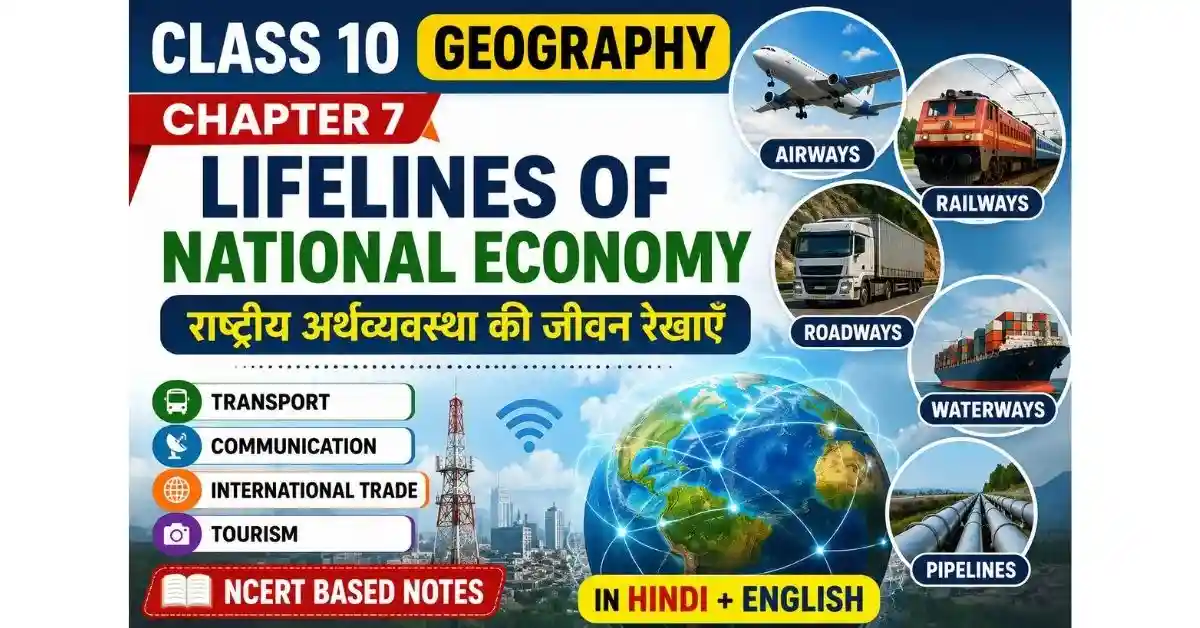
Lifelines of National Economy: भारत जैसे विशाल देश के विकास में परिवहन, संचार और व्यापार की बहुत महत्वपूर्ण भूमिका होती है। सड़क, रेल, जलमार्ग, वायुमार्ग, पाइपलाइन, संचार सेवाएँ और अंतर्राष्ट्रीय व्यापार देश के अलग-अलग हिस्सों को आपस में जोड़ते हैं। यही कारण है कि इन्हें “राष्ट्रीय अर्थव्यवस्था की जीवन रेखाएँ” कहा जाता है। इस अध्याय में आप जानेंगे कि कैसे सड़कें, रेलमार्ग, बंदरगाह, हवाई सेवाएँ और आधुनिक संचार प्रणाली देश की आर्थिक प्रगति को तेज बनाते हैं। साथ ही, पर्यटन और अंतर्राष्ट्रीय व्यापार का महत्व भी सरल भाषा में समझाया गया है।
Lifelines of National Economy का ये नोट्स NCERT आधारित हैं और परीक्षा की तैयारी को आसान बनाने के लिए हिंदी + English मिश्रित भाषा में तैयार किए गए हैं। प्रत्येक विषय को छोटे-छोटे बिंदुओं और सरल व्याख्या के साथ प्रस्तुत किया गया है ताकि विद्यार्थी जल्दी समझ सकें और लंबे समय तक याद रख सकें। Download NCERT BOOK.
Chapter 7: Lifelines of National Economy (NCERT Based)
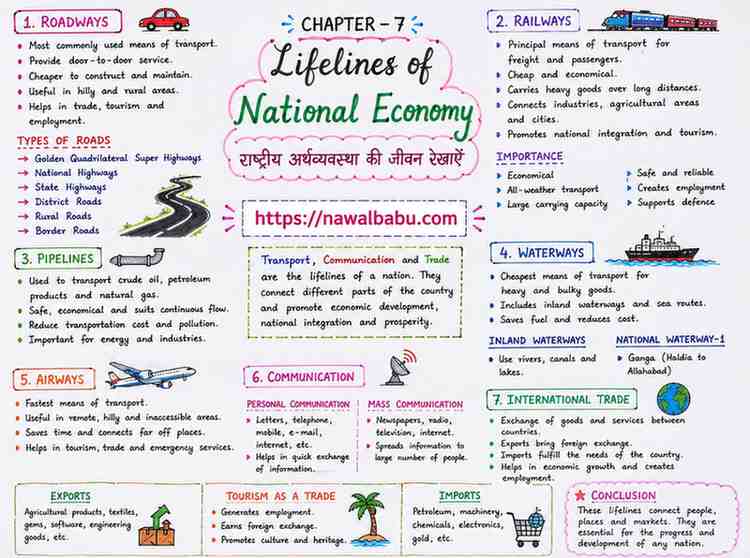
Transport, communication and trade are called the lifelines of a nation because they connect different parts of the country and help in economic development. बिना परिवहन और संचार के किसी भी देश की अर्थव्यवस्था विकसित नहीं हो सकती। Roads, railways, waterways, airways, communication and international trade help people, goods and services move from one place to another. These facilities improve business, tourism, employment and national unity. इसलिए इन्हें राष्ट्रीय अर्थव्यवस्था की जीवन रेखा कहा जाता है।
Roadways / सड़क परिवहन
Roadways are the most commonly used means of transport in India. भारत में सड़क परिवहन सबसे अधिक उपयोग किया जाता है क्योंकि यह गाँवों और शहरों को सीधे जोड़ता है। Roads are cheaper to construct and maintain than railways in hilly areas. They provide door-to-door service and are useful for transporting small quantities of goods. Road transport also helps in trade, tourism and employment generation. However, traffic jams and accidents are major problems of road transport.
Types of Roads in India / भारत में सड़कों के प्रकार
- Golden Quadrilateral Super Highways
- National Highways
- State Highways
- District Roads
- Rural Roads
- Border Roads
Golden Quadrilateral Super Highways
The Golden Quadrilateral is a major road project connecting Delhi, Mumbai, Chennai and Kolkata. यह भारत का सबसे बड़ा राजमार्ग परियोजना है जिसे NHAI द्वारा विकसित किया गया। It improves transport, trade and industrial growth between major cities. The North-South and East-West corridors are also important highway projects. These roads reduce travel time and help economic development.
National Highways / राष्ट्रीय राजमार्ग
National Highways connect important cities, ports and state capitals. These roads are maintained by the Central Government. भारत का सबसे लंबा राष्ट्रीय राजमार्ग NH-44 है जो श्रीनगर से कन्याकुमारी तक जाता है। National highways carry heavy traffic and support trade and defense activities. They are very important for national integration and fast transportation.
State Highways / राज्य राजमार्ग
State Highways connect important cities within a state. These roads are maintained by the State Government. They connect district headquarters with national highways and help local trade and transportation. राज्य की आर्थिक गतिविधियों को बढ़ाने में इन सड़कों की महत्वपूर्ण भूमिका होती है।
Rural Roads / ग्रामीण सड़कें
Rural roads connect villages with towns and cities. प्रधानमंत्री ग्राम सड़क योजना के तहत गांवों को सड़कों से जोड़ा जा रहा है। These roads improve education, healthcare and market facilities in rural areas. Farmers can easily transport crops to markets through these roads. Rural roads help in reducing regional inequality.
Border Roads / सीमा सड़कें
Border Roads are constructed in mountainous and border areas by the Border Roads Organisation (BRO). These roads help defense forces and improve transportation in remote regions. सीमा सड़कें देश की सुरक्षा और व्यापार दोनों के लिए महत्वपूर्ण हैं। They also promote tourism in hilly areas.
Railways / रेल परिवहन
Railways are the principal mode of transport for freight and passengers in India. Indian Railways is one of the largest railway networks in the world. रेल परिवहन भारी और लंबी दूरी के सामान को कम लागत में पहुँचाने में मदद करता है। Railways connect industries, agricultural areas and cities. It also promotes national integration and tourism. However, railway transport faces problems like old tracks, overcrowding and accidents.
Importance of Railways / रेलवे का महत्व
- Cheap and economical transport
- Carries heavy goods over long distances
- Connects different regions of India
- Promotes trade and tourism
- Generates employment opportunities
- Helps in national unity and defense
Problems Faced by Railways / रेलवे की समस्याएँ
Railways face many challenges such as overcrowding, accidents and old infrastructure. Mountainous regions and desert areas make railway construction difficult. Floods and landslides also damage railway tracks. Modernization and electrification are needed to improve railway services in India.
Pipelines / पाइपलाइन परिवहन
Pipelines are used to transport crude oil, petroleum products and natural gas. पाइपलाइन परिवहन सुरक्षित और सस्ता माना जाता है। It can transport materials continuously without interruption. Pipelines reduce transportation cost and pollution. Important pipeline networks connect oil fields, refineries and industrial areas across India.
Advantages of Pipelines / पाइपलाइन के लाभ
- Safe and economical transport
- Continuous supply of oil and gas
- Less pollution
- Low maintenance cost
- Useful in difficult terrains
Waterways / जल परिवहन
Waterways are the cheapest means of transport for heavy and bulky goods. भारत में लगभग 14,500 किमी लंबी नौगम्य जलमार्ग उपलब्ध हैं। Water transport saves fuel and reduces transportation cost. It includes inland waterways and sea routes. However, waterways are slower compared to road and rail transport.
Inland Waterways / आंतरिक जलमार्ग
Inland waterways use rivers, canals and lakes for transportation. National Waterway No. 1 is the Ganga River between Haldia and Allahabad. Inland waterways are eco-friendly and economical. They help in transporting heavy goods and developing tourism.
Major Sea Ports / प्रमुख समुद्री बंदरगाह
India has 12 major and many minor ports. Ports help in international trade and economic growth. प्रमुख बंदरगाहों में मुंबई, चेन्नई, कोलकाता, कांडला और विशाखापट्टनम शामिल हैं। Ports handle export and import activities and connect India with other countries through sea routes.
Airways / वायु परिवहन
Airways are the fastest means of transport. Airways are useful in mountainous, desert and remote areas where other transport modes are difficult. वायु परिवहन समय बचाता है और आपातकालीन सेवाओं में महत्वपूर्ण भूमिका निभाता है। It promotes tourism, trade and international connectivity. However, air travel is expensive compared to road and rail transport.
Importance of Airways / वायु परिवहन का महत्व
- Fastest mode of transport
- Useful in remote and hilly areas
- Helps during natural disasters
- Promotes tourism and business
- Saves travel time
Communication / संचार
Communication helps in sharing ideas, information and messages. आधुनिक संचार के साधनों ने दुनिया को छोटा बना दिया है। Communication can be personal or mass communication. It helps in education, business, administration and entertainment. India has developed advanced communication systems like internet, mobile networks and satellite communication.
Personal Communication / व्यक्तिगत संचार
Personal communication includes letters, telephone, mobile phones, e-mails and internet. These methods help people communicate quickly over long distances. Digital communication has increased speed and convenience in modern life.
Mass Communication / जनसंचार
Mass communication spreads information to a large number of people at the same time. Newspapers, radio, television and internet are examples of mass communication. जनसंचार शिक्षा, जागरूकता और मनोरंजन में महत्वपूर्ण भूमिका निभाता है। It also helps in spreading government policies and national news.
International Trade / अंतर्राष्ट्रीय व्यापार
International trade means exchange of goods and services between countries. भारत दुनिया के कई देशों के साथ व्यापार करता है। Exports bring foreign exchange while imports fulfill the needs of the country. Trade improves economic growth and international relations. Favorable balance of trade occurs when exports are more than imports.
Exports and Imports / निर्यात और आयात
- Export: Selling goods to other countries
- Import: Buying goods from other countries
India exports agricultural products, textiles, gems, software and engineering goods. India imports petroleum, machinery and chemicals.
Tourism as a Trade / व्यापार के रूप में पर्यटन
Tourism is an important part of the Indian economy. भारत की प्राकृतिक सुंदरता, ऐतिहासिक स्थल और सांस्कृतिक विविधता पर्यटकों को आकर्षित करती है। Tourism generates employment in hotels, transport and handicraft industries. It also earns foreign exchange for the country. Eco-tourism and heritage tourism are rapidly growing in India.
Lifelines of National Economy: Conclusion / निष्कर्ष
Transport, communication and trade are essential for the development of a country. They connect people, markets and industries and strengthen the economy. सड़क, रेल, जल, वायु परिवहन और संचार सेवाएँ भारत की प्रगति में महत्वपूर्ण योगदान देती हैं। International trade and tourism also help in economic growth and employment generation. Therefore, these are rightly called the lifelines of the national economy.
Lifelines of National Economy: FAQs
Q1. राष्ट्रीय अर्थव्यवस्था की जीवन रेखाएँ किसे कहा जाता है?
Transport, communication and trade are called the lifelines of national economy because they connect different parts of the country and help in economic development. परिवहन, संचार और व्यापार देश की प्रगति के लिए अत्यंत आवश्यक हैं।
Q2. भारत में सबसे अधिक उपयोग होने वाला परिवहन कौन सा है?
Roadways are the most commonly used means of transport in India because they provide door-to-door services and connect villages, towns and cities easily.
Q3. गोल्डन क्वाड्रिलेटरल परियोजना क्या है?
Golden Quadrilateral is a highway project connecting Delhi, Mumbai, Chennai and Kolkata. यह भारत के चार प्रमुख महानगरों को जोड़ने वाला महत्वपूर्ण राजमार्ग नेटवर्क है।
Q4. पाइपलाइन परिवहन का उपयोग किसके लिए किया जाता है?
Pipelines are mainly used for transporting crude oil, petroleum products and natural gas safely and economically.
Q5. भारत का सबसे लंबा राष्ट्रीय राजमार्ग कौन सा है?
NH-44 is the longest National Highway in India. It connects Srinagar to Kanyakumari.
Q6. जल परिवहन को सबसे सस्ता परिवहन क्यों कहा जाता है?
Waterways are economical because they consume less fuel and can carry heavy and bulky goods at low cost.
Q7. जनसंचार (Mass Communication) क्या है?
Mass communication means spreading information to a large number of people through newspapers, television, radio and internet.
Q8. अंतर्राष्ट्रीय व्यापार क्या है?
International trade refers to the exchange of goods and services between different countries through exports and imports.
Q9. पर्यटन को व्यापार के रूप में क्यों माना जाता है?
Tourism generates employment, earns foreign exchange and promotes cultural development, so it is considered an important trade activity.
Q10. भारतीय रेल का क्या महत्व है?
Indian Railways help in transporting passengers and goods across long distances at low cost and promote national integration and economic growth.