
यदि आप Class 10 English Poem 3 “A Tiger in the Zoo” के आसान, विस्तृत और परीक्षा-उपयोगी नोट्स खोज रहे हैं, तो आप बिल्कुल सही जगह पर हैं। इस पोस्ट में आपको NCERT First Flight पर आधारित हिंदी में सरल व्याख्या, English Summary, हिंदी सारांश, Theme, Central Idea, Poetic Devices, Word Meanings, Important Question Answers, MCQs, Extra Questions, Board Exam Important Points और Quick Revision Notes एक ही स्थान पर मिलेंगे।
सभी नोट्स अनुभवी शिक्षक की तरह सरल भाषा में तैयार किए गए हैं ताकि CBSE, Bihar Board तथा अन्य बोर्डों के विद्यार्थी आसानी से समझ सकें और परीक्षा में अच्छे अंक प्राप्त कर सकें। यदि आप बोर्ड परीक्षा 2026 की तैयारी कर रहे हैं, तो ये नोट्स आपके लिए त्वरित रिवीजन और कॉन्सेप्ट क्लियर करने का बेहतरीन स्रोत साबित होंगे।
A Tiger in the Zoo Class 10 Notes: Summary, Explanation, Question Answers
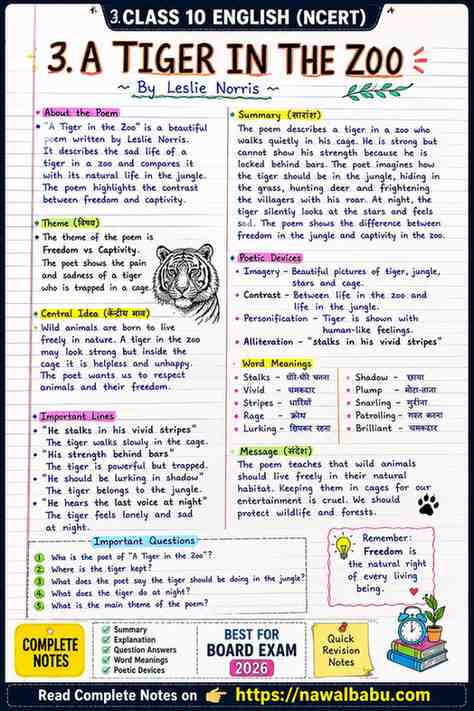
“A Tiger in the Zoo” is a beautiful poem written by Leslie Norris. The poem compares the life of a tiger in a zoo with its natural life in the jungle. The poet shows that wild animals are born to live freely, not inside cages. Through this poem, students learn about freedom, wildlife conservation, and the pain of captivity. The poem also creates sympathy for animals that lose their natural habitat because of humans.
Download NCERT BOOK PDF: Click Here
About the Poet (कवि परिचय)
Leslie Norris was a famous Welsh poet and short story writer. He loved writing about nature, animals, and human emotions. His poems are simple but full of deep meaning. In “A Tiger in the Zoo,” he explains the difference between freedom and captivity. Through the tiger’s silent suffering, he reminds readers that every living being deserves freedom and respect. His writing encourages kindness towards wildlife and awareness about animal conservation.
Theme of the Poem (कविता का विषय)
The main theme of the poem is Freedom vs Captivity (स्वतंत्रता बनाम कैद). The poet highlights the unhappy life of a tiger trapped inside a zoo cage. He compares it with the fearless and powerful life the tiger would enjoy in the jungle. The poem also focuses on wildlife protection, human interference in nature, and the emotional pain of losing freedom. It teaches readers to respect animals and protect their natural habitats.
Central Idea (केंद्रीय भाव)
The poem tells us that wild animals belong to forests, not cages. A tiger in the zoo looks strong but feels helpless because it cannot live naturally. It cannot hunt, roam freely, or express its real power. Through this contrast, the poet criticizes the practice of keeping wild animals imprisoned. The poem inspires readers to understand the importance of liberty and the need to conserve forests and wildlife for future generations.
Summary (Hindi + English)
The poem describes a tiger walking slowly inside a small cage in the zoo. Although it is strong and dangerous, it cannot show its real strength because it is imprisoned. In contrast, the poet imagines the tiger roaming freely in the jungle, hiding in long grass, hunting deer, and frightening villagers. At night, the caged tiger silently watches the shining stars, expressing sadness and loneliness. The poem beautifully highlights the difference between freedom and captivity while creating sympathy for wild animals.
“A Tiger in the Zoo” कविता में लेस्ली नॉरिस ने चिड़ियाघर में बंद एक बाघ की दुखद स्थिति का चित्रण किया है। बाघ शक्तिशाली होने के बावजूद पिंजरे में कैद होने के कारण अपनी प्राकृतिक जीवनशैली नहीं जी सकता। कवि उसकी तुलना जंगल में स्वतंत्र रूप से घूमने, शिकार करने और गर्जना करने वाले बाघ से करते हैं। रात में वह चुपचाप तारों को देखता रहता है। कविता हमें सिखाती है कि प्रत्येक जीव के लिए स्वतंत्रता आवश्यक है तथा वन्यजीवों और उनके प्राकृतिक आवास की रक्षा करनी चाहिए.
Read More : Class 10 Economics Chapter 1 Development Notes in Hindi + English | NCERT Understanding Economic Development
Stanza 1 Explanation (व्याख्या)
The tiger walks quietly inside his small cage with soft steps. His strength is hidden because he is trapped behind bars. The poet says the tiger should actually be moving proudly through the jungle, but now he can only walk helplessly in a limited space. This stanza introduces the tiger’s sadness and loss of freedom, making readers feel pity for the majestic animal.
Stanza 2 Explanation (व्याख्या)
The poet imagines how the tiger should behave in the forest. It should hide near the long grass, waiting silently to hunt deer near the water hole. This is the tiger’s natural lifestyle. Instead of living freely and hunting for food, the tiger is forced to remain inside the zoo. The comparison shows how captivity destroys the natural instincts of wild animals.
Stanza 3 Explanation (व्याख्या)
The poet further imagines the tiger frightening villagers by roaring near their houses at the edge of the forest. Such actions are natural for a wild tiger. However, the tiger in the zoo cannot roar with pride because it is locked behind strong bars. This stanza emphasizes that captivity takes away the tiger’s freedom, confidence, and natural behavior.
Stanza 4 Explanation (व्याख्या)
At night, the tiger hears the sound of patrolling vehicles and watches the bright stars silently. It does not roar or move freely because it has accepted its helpless condition. The image of the tiger quietly looking at the stars reflects loneliness, sadness, and deep emotional pain. The stanza creates sympathy and reminds readers that every animal deserves to live freely in nature.
Characters (मुख्य पात्र))
- Tiger – Symbol of strength, courage, freedom, and dignity.
- Poet – Expresses sympathy for the tiger and criticizes captivity.
- Villagers (Imaginary) – Represent human fear of wild animals in forests.
- Zoo Visitors (Indirectly) – Show how humans keep animals for entertainment.
Message of the Poem (संदेश)
The poem teaches that freedom is precious for every living being. Wild animals should live in forests where they can behave naturally. Keeping them in cages for entertainment is cruel and unfair. The poet also spreads awareness about wildlife conservation and encourages people to protect forests instead of destroying them. The poem reminds us that respecting nature means respecting every creature’s right to freedom.
Poetic Devices (अलंकार)
- Imagery – Beautiful pictures of the jungle, cage, stars, and tiger.
- Personification – Tiger is shown expressing human-like emotions.
- Alliteration – “He stalks”, “few steps”, “strength behind bars.”
- Symbolism – Cage symbolizes imprisonment; jungle symbolizes freedom.
- Contrast – Strong comparison between zoo life and forest life.
Rhyme Scheme (तुकांत योजना)
The poem follows Free Verse. There is no fixed rhyme scheme. The poet uses simple language and natural rhythm to express the tiger’s emotions effectively.
Read Also: Madam Rides the Bus Class 10 Notes in Hindi: Summary, Explanation, Question Answers & MCQs
Symbols in the Poem (प्रतीक)
- Tiger – Strength, bravery, and freedom.
- Cage – Captivity, helplessness, and loss of liberty.
- Jungle – Natural habitat, independence, and happiness.
- Stars – Hope, loneliness, and silent dreams of freedom.
- Bars – Human control over wild animals.
Important Word Meanings (Word Meaning)
- Stalks – धीरे-धीरे दबे पाँव चलना
- Quiet Rage – शांत क्रोध
- Velvet – मखमली
- Pads – पंजों के नरम तलवे
- Snarling – गुर्राना
- Lurking – छिपकर इंतजार करना
- Plump – मोटा-ताजा
- Terrorising – डराना
- Patrolling – गश्त करना
- Brilliant – चमकदार
Important Lines Explained
“He stalks in his vivid stripes.”
The tiger walks slowly inside the cage. Its beautiful striped body still looks powerful, but it cannot enjoy freedom.
“His strength behind bars.”
The tiger is naturally powerful, but the cage makes it helpless. Its real strength becomes useless.
“He should be lurking in shadow.”
The poet believes the tiger belongs to the forest where it should hide in the grass and hunt naturally.
“On pads of velvet quiet.”
The tiger walks very softly without making noise. This shows its natural hunting skill.
“He hears the last voice at night.”
The tiger spends lonely nights inside the cage and hears only distant sounds instead of the jungle.
Important Questions (Very Short Answer)
Q1. Who is the poet of “A Tiger in the Zoo”?
Answer: Leslie Norris.
Q2. Where is the tiger kept?
Answer: In a small cage inside the zoo.
Q3. How does the tiger walk in the cage?
Answer: Slowly and silently with soft steps.
Q4. Where should the tiger actually live?
Answer: In the jungle.
Q5. What does the tiger watch at night?
Answer: The shining stars.
Short Answer Questions
Q1. Why is the tiger unhappy in the zoo?
The tiger is unhappy because it has lost its freedom. It cannot hunt, run, or live naturally. The cage limits its movements and makes it feel lonely and helpless.
Q2. How does the poet compare the zoo and the jungle?
The zoo represents imprisonment and sadness, while the jungle represents freedom, power, and natural life. This contrast forms the central idea of the poem.
Q3. What message does the poet give?
The poet teaches that wild animals should live freely in forests. Humans should protect wildlife and avoid keeping animals imprisoned for entertainment.
Long Answer Question
Describe the contrast between the tiger’s life in the zoo and in the jungle.
The tiger in the zoo lives inside a small cage where it can only walk a few steps. It cannot hunt, roar proudly, or enjoy freedom. It silently watches the stars and feels lonely. In contrast, a tiger in the jungle moves fearlessly through the forest, hides in long grass, hunts deer, and roars with confidence. Through this comparison, the poet shows that freedom is essential for every living being and encourages wildlife conservation.
Important Points for Revision
- Poet: Leslie Norris
- Poem Type: Nature and Wildlife Poem
- Theme: Freedom vs Captivity
- Central Idea: Wild animals should live in forests.
- Symbol: Tiger represents freedom and strength.
- Tone: Sympathetic and thoughtful.
- Rhyme Scheme: Free Verse.
- Message: Protect wildlife and respect the freedom of animals.
Exam Tips
- Remember the contrast between Zoo Life and Jungle Life.
- Learn the meanings of difficult words.
- Revise the poetic devices and symbols.
- Focus on the central idea and message.
- Practice important question answers in simple language for board exams.