यदि आप Class 10 Economics Chapter 1 “Development” के आसान, विस्तृत और परीक्षा उपयोगी नोट्स खोज रहे हैं, तो यह पोस्ट आपके लिए बेहद महत्वपूर्ण है। इस अध्याय में विकास (Development) का अर्थ, विभिन्न लोगों के विकास के लक्ष्य, राष्ट्रीय विकास, प्रति व्यक्ति आय (Per Capita Income), मानव विकास सूचकांक (HDI), सार्वजनिक सुविधाएँ तथा सतत विकास (Sustainable Development) जैसे महत्वपूर्ण विषयों को सरल Hindi + English भाषा में समझाया गया है।
ये नोट्स NCERT आधारित हैं और बोर्ड परीक्षा की तैयारी के लिए विशेष रूप से तैयार किए गए हैं। प्रत्येक टॉपिक को आसान शब्दों, बिंदुवार विवरण और उदाहरणों के साथ समझाया गया है ताकि विद्यार्थी जल्दी याद कर सकें। यह पोस्ट Bihar Board, CBSE तथा अन्य राज्य बोर्ड के विद्यार्थियों के लिए भी उपयोगी है। परीक्षा की बेहतर तैयारी और Quick Revision के लिए यह एक सम्पूर्ण अध्ययन सामग्री है। Download NCERT BOOK PDF.
Class 10 Economics Chapter 1 Development Notes
(Based on NCERT | Hindi + English Medium Notes)
Development means improvement in the quality of life of people. Different people have different goals for development. For some people, higher income is important, while for others equality, freedom, security, education, and respect are more important. A country is considered developed when people have better living conditions, education, health facilities, employment, and equal opportunities. Development should not only increase income but also improve human life and protect the environment for future generations.
विकास का अर्थ लोगों के जीवन स्तर में सुधार से है। अलग-अलग लोगों के लिए विकास के लक्ष्य अलग होते हैं। किसी के लिए अधिक आय महत्वपूर्ण है, तो किसी के लिए समानता, स्वतंत्रता, सुरक्षा, शिक्षा और सम्मान अधिक महत्वपूर्ण होते हैं। एक देश तब विकसित माना जाता है जब लोगों को बेहतर जीवन, शिक्षा, स्वास्थ्य सुविधा, रोजगार और समान अवसर प्राप्त हों।
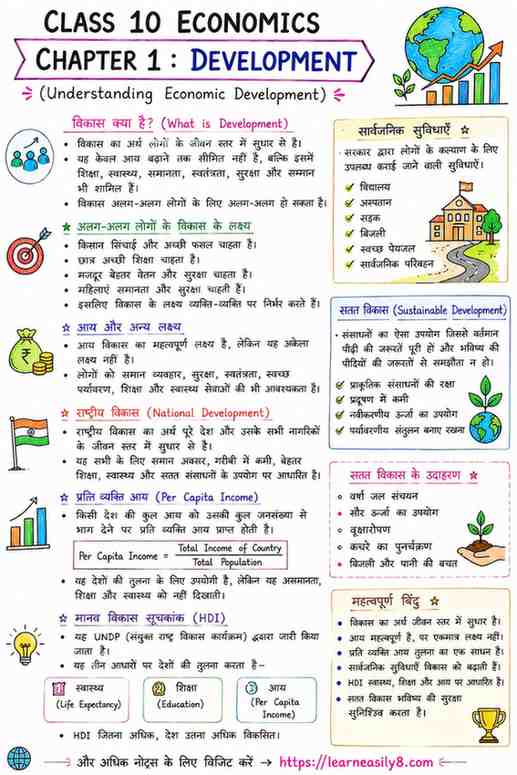
What is Development? (विकास क्या है?)
Development refers to progress and improvement in economic, social, and human life. It includes increase in income, better education, health services, freedom, and equality. True development improves overall quality of life rather than only increasing money. Development is different for different people because everyone has different needs and aspirations. Therefore, development should focus on human welfare and sustainable use of resources.
विकास का अर्थ आर्थिक, सामाजिक और मानवीय जीवन में प्रगति और सुधार से है। इसमें आय में वृद्धि, बेहतर शिक्षा, स्वास्थ्य सेवाएँ, स्वतंत्रता और समानता शामिल हैं। वास्तविक विकास केवल धन बढ़ाना नहीं बल्कि जीवन की गुणवत्ता सुधारना है।
Read More: Gender, Religion and Caste Class 10 Notes in Hindi + English | Gender Religion and Caste Notes PDF
Different People, Different Development Goals
(अलग-अलग लोगों के विकास के लक्ष्य)
People have different goals depending on their needs and situations. A farmer may want better irrigation facilities, while a student may want quality education. Women may seek equality and safety, whereas workers may demand better wages and job security. Sometimes one person’s development may become harmful to another person. Therefore, development goals can vary from person to person.
लोगों की आवश्यकताओं और परिस्थितियों के अनुसार उनके विकास के लक्ष्य अलग-अलग होते हैं। किसान बेहतर सिंचाई चाहते हैं, छात्र अच्छी शिक्षा चाहते हैं और मजदूर बेहतर वेतन चाहते हैं। कई बार एक व्यक्ति का विकास दूसरे के लिए हानिकारक भी हो सकता है।
Important Points:
- Development goals are not the same for everyone.
- Income is important but not the only goal.
- People also want equality, security, freedom, and respect.
- Conflicting goals may create social problems.
- Development should benefit all sections of society.
Income and Other Goals: (आय और अन्य लक्ष्य)
Income is one of the important goals of development because it helps people fulfill their needs. However, money alone cannot guarantee happiness or a good life. People also need equal treatment, security, freedom, clean environment, education, and healthcare. Therefore, development should include both material and non-material goals.
आय विकास का महत्वपूर्ण लक्ष्य है क्योंकि इससे आवश्यकताओं की पूर्ति होती है। लेकिन केवल धन से सुख और अच्छा जीवन सुनिश्चित नहीं होता। लोगों को समान व्यवहार, सुरक्षा, स्वतंत्रता, स्वच्छ वातावरण, शिक्षा और स्वास्थ्य सेवाएँ भी चाहिए।
Example:
A job with high salary but unsafe working conditions may not be considered good development.
उच्च वेतन वाली नौकरी यदि असुरक्षित हो तो उसे अच्छा विकास नहीं माना जाएगा।
National Development: (राष्ट्रीय विकास)
National development means the improvement of the whole country and the well-being of all citizens. Different people may have different ideas about what is best for the country. Some may prefer industries and roads, while others may focus on education, agriculture, or environmental protection. National development should consider the needs of all people equally.
राष्ट्रीय विकास का अर्थ पूरे देश और उसके नागरिकों के जीवन स्तर में सुधार से है। विभिन्न लोगों के विचार अलग हो सकते हैं। कुछ लोग उद्योग और सड़क चाहते हैं, जबकि कुछ शिक्षा और पर्यावरण संरक्षण को प्राथमिकता देते हैं।
Features of National Development:
- Better standard of living
- Equal opportunities
- Reduction in poverty
- Improved healthcare and education
- Sustainable use of resources
How to Compare Different Countries or States? (देशों या राज्यों की तुलना कैसे करें?)
Countries are often compared on the basis of income, literacy rate, health facilities, employment, and quality of life. Average income or per capita income is commonly used to compare countries. However, other indicators like education and healthcare are also important for proper comparison.
देशों की तुलना सामान्यतः आय, शिक्षा, स्वास्थ्य सुविधाओं और जीवन स्तर के आधार पर की जाती है। प्रति व्यक्ति आय (Per Capita Income) सबसे अधिक उपयोग किया जाने वाला मापदंड है।
Per Capita Income (औसत आय)
Per capita income is the average income of a country. It is calculated by dividing the total income of the country by its total population.
Formula:
Countries with higher per capita income are generally considered more developed.
जिस देश की प्रति व्यक्ति आय अधिक होती है, उसे अधिक विकसित माना जाता है।
Limitations of Per Capita Income:
- It does not show income inequality.
- It ignores health and education.
- Rich people may earn much more than poor people.
- It does not measure happiness or security.
Income and Other Criteria: (आय और अन्य मापदंड)
Besides income, other factors are also important for development:
- Literacy rate
- Life expectancy
- Availability of healthcare
- Employment opportunities
- Clean environment
- Gender equality
केवल आय ही विकास का मापदंड नहीं है। शिक्षा, स्वास्थ्य, रोजगार और स्वच्छ वातावरण भी महत्वपूर्ण हैं।
Public Facilities: (सार्वजनिक सुविधाएँ)
Public facilities are services provided by the government for the welfare of people. These include schools, hospitals, roads, electricity, drinking water, and public transport. Good public facilities improve the quality of life and help in overall development.
सार्वजनिक सुविधाएँ सरकार द्वारा लोगों के कल्याण के लिए उपलब्ध कराई जाती हैं। इनमें विद्यालय, अस्पताल, सड़क, बिजली और पानी शामिल हैं।
Importance of Public Facilities:
- Improve standard of living
- Reduce inequality
- Help poor people
- Promote social welfare
- Increase human development
Human Development Report (HDR): (मानव विकास रिपोर्ट)
The Human Development Report is published by the United Nations Development Programme (UNDP). It compares countries based on:
- Health
- Education
- Income
Human Development Index (HDI) measures the overall development of a country.
मानव विकास रिपोर्ट संयुक्त राष्ट्र विकास कार्यक्रम (UNDP) द्वारा प्रकाशित की जाती है। इसमें स्वास्थ्य, शिक्षा और आय के आधार पर देशों की तुलना की जाती है।
HDI Indicators:
- Life expectancy
- Educational level
- Per capita income
Countries with better HDI are considered more developed.
Sustainability of Development: (विकास की स्थिरता)
Sustainable development means using resources carefully so that future generations can also meet their needs. Overuse of natural resources causes environmental damage and resource depletion. Therefore, development must protect nature and maintain ecological balance.
सतत विकास का अर्थ है संसाधनों का ऐसा उपयोग जिससे भविष्य की पीढ़ियाँ भी अपनी आवश्यकताएँ पूरी कर सकें। प्राकृतिक संसाधनों का अत्यधिक उपयोग पर्यावरण को नुकसान पहुँचाता है।
Important Points:
- Protect natural resources
- Reduce pollution
- Use renewable energy
- Maintain ecological balance
- Ensure future security
Examples of Sustainable Development: (सतत विकास के उदाहरण)
- Rainwater harvesting
- Solar energy use
- Afforestation
- Recycling of waste
- Saving electricity and water
वर्षा जल संचयन, सौर ऊर्जा और वृक्षारोपण सतत विकास के उदाहरण हैं।
Important Terms (महत्वपूर्ण शब्द)
| English Term | Hindi Meaning |
|---|---|
| Development | विकास |
| Income | आय |
| Per Capita Income | प्रति व्यक्ति आय |
| Literacy Rate | साक्षरता दर |
| Life Expectancy | जीवन प्रत्याशा |
| Sustainable Development | सतत विकास |
| Public Facilities | सार्वजनिक सुविधाएँ |
| HDI | मानव विकास सूचकांक |
Key Points for Quick Revision: (त्वरित पुनरावृत्ति हेतु मुख्य बिंदु)
- Development means improvement in quality of life.
- Different people have different development goals.
- Income is important but not the only measure of development.
- Per capita income is used to compare countries.
- Public facilities improve human welfare.
- HDI measures health, education, and income.
- Sustainable development protects future generations.
- True development includes equality, freedom, and security.
Conclusion (निष्कर्ष)
Development is a broad concept that includes economic growth, equality, education, healthcare, and environmental protection. It should improve the lives of all people equally and ensure sustainable use of resources. A truly developed society provides opportunities, dignity, and security to every citizen.
विकास केवल आर्थिक वृद्धि नहीं बल्कि लोगों के जीवन स्तर में सुधार, समानता, शिक्षा, स्वास्थ्य और पर्यावरण संरक्षण का समावेश है। वास्तविक विकास वही है जो सभी लोगों के जीवन को बेहतर बनाए और भविष्य की पीढ़ियों के लिए संसाधनों की रक्षा करे।
FAQ
विकास (Development) क्या है?
विकास का अर्थ लोगों के जीवन स्तर में सुधार से है। इसमें आय, शिक्षा, स्वास्थ्य, समानता, सुरक्षा और बेहतर सुविधाएँ शामिल होती हैं।
क्या केवल आय बढ़ना ही विकास कहलाता है?
नहीं, केवल आय बढ़ना विकास नहीं कहलाता। वास्तविक विकास में शिक्षा, स्वास्थ्य, स्वतंत्रता, सम्मान और सुरक्षित वातावरण भी शामिल होते हैं।
प्रति व्यक्ति आय (Per Capita Income) क्या होती है?
किसी देश की कुल आय को उसकी कुल जनसंख्या से भाग देने पर जो औसत आय प्राप्त होती है उसे प्रति व्यक्ति आय कहते हैं।
HDI का पूरा नाम क्या है?
HDI का पूरा नाम Human Development Index (मानव विकास सूचकांक) है।
HDI किन आधारों पर देशों की तुलना करता है?
HDI मुख्य रूप से तीन आधारों पर देशों की तुलना करता है:
स्वास्थ्य (Health)
शिक्षा (Education)
आय (Income)
सतत विकास (Sustainable Development) क्या है?
ऐसा विकास जिसमें वर्तमान पीढ़ी अपनी आवश्यकताएँ पूरी करे लेकिन भविष्य की पीढ़ियों की आवश्यकताओं को नुकसान न पहुँचे, उसे सतत विकास कहते हैं।
सार्वजनिक सुविधाएँ (Public Facilities) क्या हैं?
सरकार द्वारा लोगों के लिए उपलब्ध कराई जाने वाली सुविधाएँ जैसे विद्यालय, अस्पताल, सड़क, बिजली और पानी सार्वजनिक सुविधाएँ कहलाती हैं।
अलग-अलग लोगों के विकास के लक्ष्य अलग क्यों होते हैं?
क्योंकि प्रत्येक व्यक्ति की आवश्यकताएँ, परिस्थितियाँ और इच्छाएँ अलग-अलग होती हैं। इसलिए उनके विकास के लक्ष्य भी अलग होते हैं।
राष्ट्रीय विकास (National Development) क्या है?
पूरे देश और उसके सभी नागरिकों के जीवन स्तर में सुधार को राष्ट्रीय विकास कहते हैं।