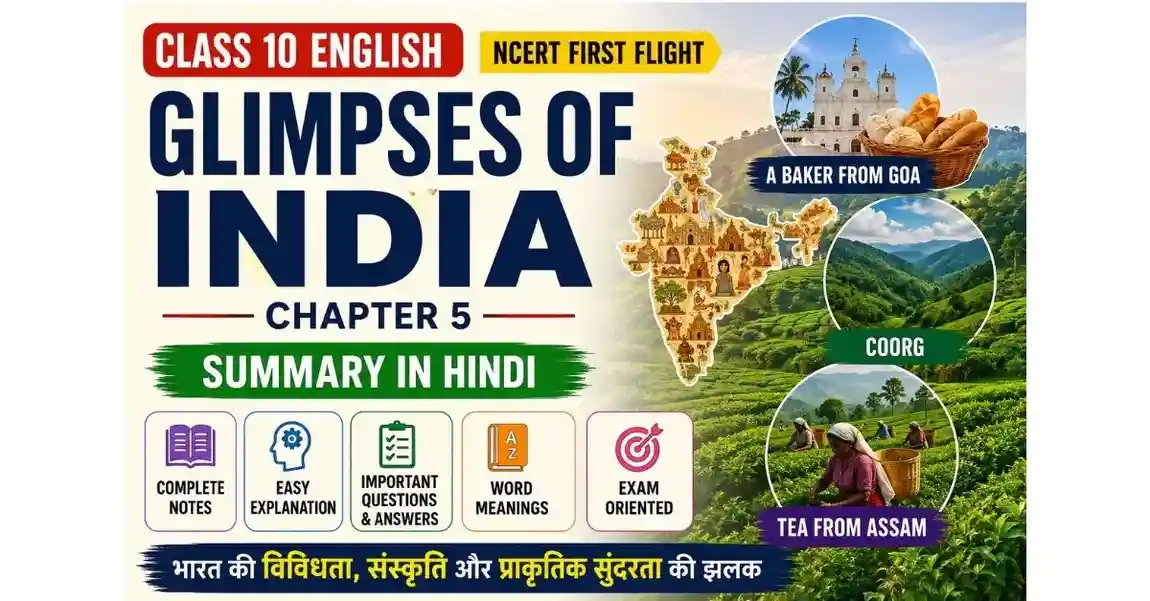
अगर आप Class 10 English Glimpses of India के आसान और complete notes खोज रहे हैं, तो यह पोस्ट आपके लिए बहुत उपयोगी है। Glimpses of India NCERT की First Flight पुस्तक का एक महत्वपूर्ण chapter है, जिसमें भारत की संस्कृति, परंपराओं, प्राकृतिक सुंदरता और विभिन्न क्षेत्रों की विशेषताओं को बहुत सुंदर तरीके से प्रस्तुत किया गया है। इस chapter में तीन अलग-अलग parts—A Baker from Goa, Coorg और Tea from Assam—शामिल हैं। इसमें आपको Goa की traditional baking culture, Coorg की natural beauty और brave people तथा Assam के famous tea gardens के बारे में पढ़ने को मिलता है।
इस पोस्ट में हमने Glimpses of India Class 10 English Summary in Hindi, आसान भाषा में chapter explanation, important themes, characters, word meanings और exam-oriented important questions and answers को शामिल किया है। ये notes CBSE Class 10 English Board Exam की तैयारी और quick revision के लिए विशेष रूप से उपयोगी हैं। Download NCERT BOOK PDF.
Glimpses of India Class 10 English: Summary in English
NCERT First Flight | Chapter 5 | CBSE Class 10 English
Glimpses of India is an interesting chapter from the NCERT Class 10 English textbook First Flight. It consists of three independent parts written by three different writers. These stories introduce us to the culture, traditions, food habits, occupations, natural beauty, and lifestyle of different regions of India.
The three parts are:
- A Baker from Goa – by Lucio Rodrigues
- Coorg – by Lokesh Abrol
- Tea from Assam – by Arup Kumar Datta
The chapter teaches us about India’s rich cultural diversity and beautiful traditions. Each part presents a unique picture of India and shows how different regions have their own special identity.
1. A Baker from Goa
About the Author – Lucio Rodrigues
Lucio Rodrigues was an Indian writer who wrote about the life, culture, and traditions of Goa. In “A Baker from Goa,” he recalls his childhood memories and describes the important role played by traditional Goan bakers. His writing shows how Portuguese influence became an important part of Goan culture. The story particularly focuses on the traditional bread-making profession and the strong connection between bakers and the people of Goa.
Introduction to A Baker from Goa
The first part of the chapter describes the Portuguese influence on Goa and the traditional profession of baking. The author remembers the days when Portuguese bakers were an important part of Goan society. Bread was an essential food item in daily life and on special occasions. The traditional baker was known as a pader. Even after the Portuguese left Goa, the tradition of baking continued.
The Portuguese Influence on Goa
The Portuguese ruled Goa for a long period and left a strong influence on its culture and lifestyle. One of their important contributions was the tradition of making bread and cakes. According to the author, the Portuguese may have left Goa, but their famous bread-making tradition remained alive. The traditional Goan bread became an important part of local life. Even today, the influence of Portuguese culture can be seen in Goa’s food and traditions.
The Traditional Goan Baker
The Goan baker was known as a pader. He played an important role in the daily life of the people. Every morning, the baker would come to the village with fresh bread. The sound of his bamboo staff announced his arrival. Children would eagerly wait for him because they loved the delicious bread-bangles called bread-bangles. The baker usually wore a traditional dress called kabai, which was a long frock-like garment.
The Baker’s Morning Visit
The baker usually arrived early in the morning. The sound of his bamboo staff could be heard as he walked through the village. The children were attracted to the sound because they knew that the baker had brought fresh bread. They would run to greet him and buy bread. The arrival of the baker was therefore an exciting part of the children’s daily routine.
Bread and Its Importance
Bread was an important part of Goan life. It was used during marriages, feasts, festivals, and other celebrations. A marriage ceremony was considered incomplete without the traditional sweet bread called bol. Cakes and bread were also necessary for Christmas and other festivals. This shows that bread was not merely a food item but an important part of Goan culture and social life.
The Baker’s Dress – Kabai
The traditional Goan baker wore a special dress known as kabai. It was a long, frock-like garment that reached up to the knees. The baker’s traditional dress made him easily recognizable in the village. The author remembers this dress from his childhood days. It also reflects the cultural influence of the Portuguese on Goan society.
The Baker’s Profession
Baking was considered a profitable profession in Goa. The baker and his family lived comfortably because people regularly purchased bread and other bakery products. The baker had a good income and maintained a respectable position in society. The author humorously says that even today, people associated with the baking profession can be recognized by their healthy and well-fed appearance.
The Author’s Childhood Memories
The author recalls his childhood days with great affection. He remembers waiting eagerly for the baker’s arrival. The children would run towards him and enjoy the fresh bread. The author also remembers the sound of the baker’s bamboo staff and his traditional dress. These memories show how deeply the baker was connected with the everyday life of Goan children.
Main Theme of A Baker from Goa
The main theme of this part is the importance of traditional occupations and cultural heritage. The author shows how the profession of baking became an essential part of Goan life. The story also highlights the Portuguese influence on Goa. Through his childhood memories, the author presents a simple but beautiful picture of village life, traditions, food, and social relationships.
2. Coorg
About the Author – Lokesh Abrol
Lokesh Abrol is the writer of the second part, “Coorg.” In this travel description, he presents Coorg as one of the most beautiful regions of India. He describes its natural beauty, brave people, coffee plantations, wildlife, and adventure activities. Through his vivid description, the writer encourages readers to visit Coorg and experience its unique beauty and culture.
Introduction to Coorg
Coorg, also known as Kodagu, is a beautiful district in Karnataka. It lies between Mysore and the coastal town of Mangalore. The region is famous for its green hills, coffee plantations, forests, spices, and pleasant weather. The writer describes Coorg as a place full of natural beauty and adventure. It is also known for the bravery and hospitality of its people.
Location of Coorg
Coorg is situated in the southern part of India in the state of Karnataka. It is located between Mysore and Mangalore. The region is surrounded by beautiful hills and dense forests. Its geographical location makes it an attractive tourist destination. The combination of mountains, rivers, forests, coffee plantations, and pleasant climate gives Coorg a unique natural charm.
The Best Time to Visit Coorg
According to the writer, the best time to visit Coorg is from September to March. During this period, the weather remains pleasant and suitable for travelling. The region looks especially beautiful because of its green surroundings and fresh atmosphere. Tourists can enjoy the natural beauty and participate in different adventure activities during this season.
Natural Beauty of Coorg
Coorg is famous for its breathtaking natural beauty. It has rolling hills, evergreen forests, coffee plantations, orange orchards, and spice gardens. The mist-covered hills create a magical atmosphere. The forests are home to many wild animals and birds. The beauty of the region attracts nature lovers and tourists from different parts of India and the world.
Coffee Plantations
Coffee plantations are one of the major attractions of Coorg. The region has extensive coffee estates surrounded by beautiful greenery. The pleasant climate and fertile soil are suitable for growing coffee. The smell of fresh coffee fills the atmosphere. The coffee plantations add to the beauty of Coorg and also provide an important source of livelihood for the local people.
The People of Coorg
The people of Coorg are famous for their bravery, courage, and hospitality. The writer mentions that the people of Coorg may have descended from Greek or Arab origins. However, this is presented as a possible theory rather than a confirmed fact. The people are known for their martial traditions and strong sense of courage.
The Coorgi People and Their Bravery
The Coorgis have a long tradition of bravery and military service. Many people from Coorg have joined the Indian Army. The writer mentions General Cariappa, the first Indian Commander-in-Chief of the Indian Army, as a famous Coorgi. The Coorg Regiment is known for its bravery. The people of Coorg are proud of their military tradition and courage.
Possible Greek and Arab Connection
There are different theories about the origin of the Coorg people. One theory suggests that they may have descended from the Greeks who came to India with Alexander. Another theory connects them with Arabs. The traditional dress and cultural practices of the Coorgis are sometimes linked to these origins. However, the exact historical origin of the Coorg people remains uncertain.
River Kaveri
The river Kaveri gets its water from the hills and forests of Coorg. The river is an important part of the region’s natural beauty and ecology. The forests and hills of Coorg contribute to the river’s water supply. The Kaveri is also associated with the rich biodiversity of the region.
Wildlife of Coorg
Coorg is rich in wildlife and biodiversity. The forests are home to many animals and birds. Tourists may see elephants, bison, macaques, Malabar squirrels, and other wildlife. The region is also known for its beautiful birds. The forests provide an excellent environment for nature lovers and wildlife enthusiasts.
Adventure Activities in Coorg
Coorg is an ideal destination for adventure lovers. Tourists can enjoy activities such as river rafting, canoeing, rappelling, rock climbing, and trekking. The hills and rivers provide excellent opportunities for outdoor adventures. Visitors can also explore the forests and enjoy the peaceful natural environment. Thus, Coorg offers both relaxation and adventure.
Main Theme of Coorg
The main theme of “Coorg” is the beauty of nature and the unique culture of its people. The writer presents Coorg as a wonderful tourist destination with green hills, coffee plantations, forests, wildlife, and adventure activities. The chapter also highlights the bravery and hospitality of the Coorgis and their connection with the Indian Army.
3. Tea from Assam
About the Author – Arup Kumar Datta
Arup Kumar Datta is an Indian writer known for his books and writings about the Northeast region of India. In “Tea from Assam,” he describes the journey of two friends, Pranjol and Rajvir, to Assam. Through their conversation and experiences, the chapter provides information about the origin, history, cultivation, and production of tea.
Introduction to Tea from Assam
The third part of the chapter focuses on tea plantations in Assam. The story follows two schoolboys, Rajvir and Pranjol, who travel to Assam. Pranjol’s father manages a tea plantation. Rajvir is fascinated by the beautiful tea gardens and shares interesting facts and legends about the origin of tea. The story combines travel experience with information about tea.
Rajvir and Pranjol
Rajvir and Pranjol are school friends. Pranjol belongs to Assam because his father manages a tea garden there. Rajvir is visiting Assam for the first time. During their train journey, Rajvir looks outside the window and enjoys the beautiful scenery. He is particularly excited to see the famous tea gardens of Assam.
The Train Journey to Assam
Rajvir and Pranjol travel to Assam by train. As the train moves through the countryside, Rajvir observes the beautiful landscape. He sees green tea bushes spread across large areas. The tea plantations look like a sea of green. The natural beauty of Assam impresses Rajvir greatly.
The Tea Gardens of Assam
The tea gardens of Assam are among the most famous tea-growing regions in the world. The gardens have rows of neatly planted tea bushes. The women working in the plantations carry baskets on their backs and carefully collect the tea leaves. The green landscape creates a beautiful and memorable sight for visitors.
Rajvir’s Knowledge About Tea
Rajvir surprises Pranjol with his knowledge about tea. He tells him that there are many legends about the discovery of tea. He also mentions that more than eighty crore cups of tea are consumed daily throughout the world. This shows how popular tea is as a beverage. Rajvir is clearly interested in the history and production of tea.
The Chinese Legend of Tea
According to one Chinese legend, a Chinese emperor always boiled water before drinking it. One day, some dried leaves from a nearby plant fell into the boiling water. The water developed a pleasant flavour. The emperor liked the drink and tea was discovered. This is one of the popular legends associated with the origin of tea.
The Indian Legend of Tea
According to an Indian legend, Bodhidharma, a Buddhist monk, cut off his eyelids because he felt sleepy while meditating. It is believed that tea plants grew from the eyelids that fell to the ground. The leaves of these plants helped people stay awake. This legend connects tea with the practice of meditation and staying alert.
History of Tea in India
Tea was first grown in China and became popular there long ago. Later, tea cultivation spread to different parts of the world. In India, the British developed tea plantations on a large scale. Assam became one of the most important tea-producing regions because its climate and soil were suitable for growing tea.
Tea Cultivation in Assam
Assam has ideal conditions for tea cultivation. The region has a warm and humid climate, frequent rainfall, fertile soil, and suitable temperatures. These natural conditions help tea plants grow well. The large tea gardens of Assam produce a significant amount of tea and contribute greatly to India’s tea industry.
Tea Pluckers
Tea leaves are carefully collected by workers in the tea gardens. The workers, often women, carry baskets on their backs and pluck fresh tea leaves. They usually collect the young and tender leaves because these are suitable for producing high-quality tea. The process of plucking tea leaves requires care and experience.
Pranjol’s Father’s Tea Estate
Pranjol’s father manages a tea estate in Assam. When Rajvir and Pranjol reach the tea estate, Rajvir gets an opportunity to see the tea plantation closely. He is amazed by the huge green fields of tea plants. Pranjol’s father welcomes Rajvir and takes them around the tea garden.
Main Theme of Tea from Assam
The main theme of this part is the beauty of Assam’s tea plantations and the history of tea. The story combines travel, friendship, nature, and general knowledge. It introduces readers to the importance of tea cultivation in Assam and explains the different legends connected with the discovery of tea.
Glimpses of India Class 10 English: Summary in Hindi
“Glimpses of India” कक्षा 10 की NCERT English पुस्तक First Flight का एक महत्वपूर्ण अध्याय है। इस अध्याय में भारत के तीन अलग-अलग क्षेत्रों Goa, Coorg और Assam की संस्कृति, परंपराओं, प्राकृतिक सुंदरता और जीवनशैली का वर्णन किया गया है। अध्याय के तीन भाग हैं—A Baker from Goa, Coorg और Tea from Assam। इन तीनों भागों के माध्यम से लेखक भारत की विविधता और समृद्ध सांस्कृतिक विरासत को प्रस्तुत करते हैं।
1. A Baker from Goa – गोवा का एक बेकर
इस भाग में लेखक Lucio Rodrigues अपने बचपन की यादों को साझा करते हैं। वे बताते हैं कि गोवा में पुर्तगालियों के समय से ही bread और baking की परंपरा चली आ रही है। पारंपरिक Goan baker को pader कहा जाता था। वह हर सुबह अपने बाँस के डंडे की आवाज़ के साथ गाँव में आता था और लोगों को ताज़ी bread देता था। बच्चे उसके आने का बेसब्री से इंतजार करते थे।
गोवा के लोगों के जीवन में bread का बहुत महत्व था। शादी, त्योहार और अन्य समारोह bread और cakes के बिना अधूरे माने जाते थे। शादी के अवसर पर विशेष प्रकार की मीठी bread bol बनाई जाती थी। Baker का पारंपरिक पहनावा kabai कहलाता था। इस प्रकार यह भाग गोवा की पुरानी baking tradition और Portuguese culture के प्रभाव को दर्शाता है।
2. Coorg – कूर्ग
दूसरे भाग के लेखक Lokesh Abrol ने कूर्ग की प्राकृतिक सुंदरता का वर्णन किया है। Coorg को Kodagu भी कहा जाता है और यह कर्नाटक में स्थित है। यह स्थान Mysore और Mangalore के बीच स्थित है। यहाँ हरे-भरे पहाड़, घने जंगल, coffee plantations, spice gardens और orange orchards पाए जाते हैं।
Coorg अपने brave और hospitable people के लिए भी प्रसिद्ध है। यहाँ के कई लोग भारतीय सेना में सेवा करते हैं। प्रसिद्ध सेना अधिकारी General Cariappa भी Coorg से संबंधित थे। यहाँ Kaveri River का उद्गम होता है और जंगलों में elephants, bison, macaques तथा Malabar squirrels जैसे अनेक जीव पाए जाते हैं।
Coorg adventure lovers के लिए भी बहुत अच्छा स्थान है। यहाँ trekking, river rafting, canoeing, rappelling और rock climbing जैसी activities की जा सकती हैं। इस प्रकार Coorg प्राकृतिक सुंदरता, साहस और रोमांच का अद्भुत संगम है।
3. Tea from Assam – असम की चाय
तीसरे भाग के लेखक Arup Kumar Datta हैं। इसमें दो मित्र Rajvir और Pranjol की कहानी है। Pranjol Assam का रहने वाला है और उसके पिता एक tea estate के manager हैं। जब दोनों Assam जाते हैं, तो Rajvir रास्ते में फैले हुए विशाल और सुंदर tea gardens को देखकर बहुत प्रभावित होता है।
Rajvir को tea के बारे में काफी जानकारी होती है। वह Pranjol को बताता है कि दुनिया में चाय की खोज से जुड़ी कई legends हैं। एक Chinese legend के अनुसार, एक Chinese emperor के उबलते पानी में कुछ tea leaves गिर गए थे और उससे एक स्वादिष्ट पेय बन गया। दूसरी Indian legend के अनुसार, Bodhidharma के कटे हुए eyelids से tea plants उत्पन्न हुए थे।
Assam की गर्म और नम जलवायु, पर्याप्त वर्षा और उपजाऊ मिट्टी tea cultivation के लिए बहुत उपयुक्त हैं। यहाँ बड़े-बड़े tea estates हैं, जहाँ workers छोटी और कोमल tea leaves को तोड़कर baskets में इकट्ठा करते हैं।
Glimpses of India Class 10 English: अध्याय का मुख्य संदेश
“Glimpses of India” हमें भारत की Unity in Diversity अर्थात विविधता में एकता का परिचय कराता है। Goa की baking tradition, Coorg की प्राकृतिक सुंदरता और Assam की tea culture भारत की अलग-अलग पहचान को दर्शाती हैं। यह अध्याय हमें अपनी संस्कृति, परंपराओं, प्राकृतिक संपदा और विरासत को समझने तथा उनका सम्मान करने की प्रेरणा देता है।
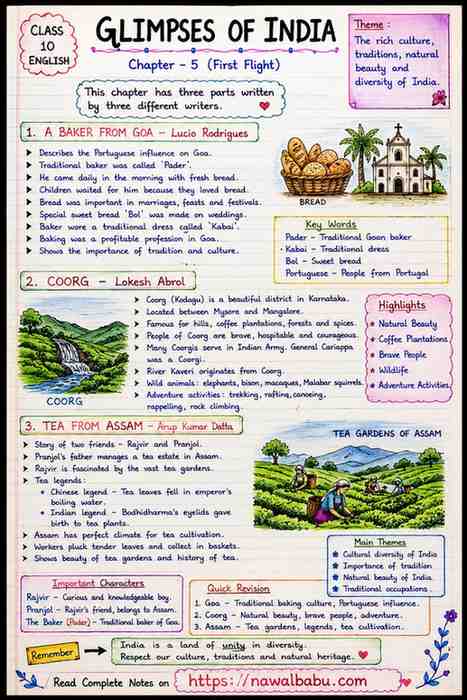
Glimpses of India Class 10 English: Important Characters
1. Rajvir
Rajvir is an intelligent and curious schoolboy. He is interested in learning new things and has good knowledge about tea. During his visit to Assam, he observes the tea gardens carefully. He shares interesting facts and legends about tea with Pranjol. His curiosity and knowledge make him an important character in “Tea from Assam.”
2. Pranjol
Pranjol is Rajvir’s friend. He belongs to Assam and knows about tea plantations because his father manages a tea estate. Unlike Rajvir, he is familiar with tea gardens and does not feel as excited about them. However, he is friendly and helpful towards Rajvir during his visit to Assam.
3. The Baker
The traditional Goan baker, or pader, is an important figure in the first part. He represents the old Portuguese tradition of baking in Goa. His daily visit brings fresh bread to the village. He is closely connected with festivals, marriages, and everyday life. His character represents the importance of traditional occupations in society.
Glimpses of India Class 10 English: Important Themes of the Chapter
1. Cultural Diversity of India
The chapter presents India’s cultural diversity through three different regions. Goa is shown through its traditional baking culture, Coorg through its natural beauty and brave people, and Assam through its tea gardens. These three stories prove that India has many different cultures, traditions, occupations, and lifestyles.
2. Importance of Tradition
Tradition is an important theme in the chapter. The baking tradition of Goa has continued from the Portuguese period. The people of Coorg maintain their traditional customs and martial culture. Assam has a long history of tea cultivation. The chapter teaches us to respect and preserve our cultural traditions.
3. Beauty of Nature
Nature plays an important role in all three parts. Goa is shown through its village life and traditional surroundings. Coorg is famous for its hills, forests, coffee plantations, and rivers. Assam is known for its beautiful tea gardens. The chapter encourages readers to appreciate India’s natural beauty.
4. Traditional Occupations
The chapter introduces readers to traditional occupations. The Goan baker represents the baking profession, the people of Coorg are connected with coffee cultivation and military service, and Assam is famous for tea cultivation. These occupations are closely connected with the culture and economy of these regions.
Glimpses of India Class 10 English: Important Word Meanings
| Word | Meaning |
|---|---|
| Glimpses | Brief views or short pictures |
| Pader | Traditional Goan baker |
| Portuguese | People belonging to Portugal |
| Kabai | Traditional dress of the Goan baker |
| Bol | A traditional sweet bread |
| Coorg | A beautiful district in Karnataka |
| Evergreen | Always green |
| Plantation | Land where crops are grown |
| Martial | Related to war or fighting |
| Hospitality | Friendly treatment of guests |
| Trekking | Walking long distances in mountains |
| Rappelling | Descending a steep surface using ropes |
| Canoeing | Travelling in a canoe |
| Legend | An old traditional story |
| Beverage | A drink |
| Plantation | Large area used for growing crops |
| Pruning | Cutting unwanted parts of a plant |
| Tea estate | Large area where tea is grown |
Important Questions and Answers
Q1. What is the main idea of “Glimpses of India”?
Answer:
“Glimpses of India” presents three different pictures of India through Goa, Coorg, and Assam. The first part describes the traditional baking culture of Goa. The second part presents the natural beauty and brave people of Coorg. The third part describes Assam’s famous tea gardens. Together, these stories show India’s rich cultural diversity, traditions, occupations, and natural beauty.
Q2. Why was the baker important in Goa?
Answer:
The baker was important because bread was an essential part of Goan life. It was used during marriages, festivals, and celebrations. The traditional sweet bread called bol was especially important at weddings. The baker’s daily visit was also a familiar part of village life. Therefore, the baker had an important social and cultural role in Goa.
Q3. What is Coorg famous for?
Answer:
Coorg is famous for its natural beauty, coffee plantations, evergreen forests, spices, orange orchards, and wildlife. It is also known for the bravery and hospitality of its people. The region offers many adventure activities such as trekking, river rafting, canoeing, and rappelling. It is one of India’s most attractive tourist destinations.
Q4. What makes the people of Coorg special?
Answer:
The people of Coorg are known for their bravery, courage, and hospitality. Many Coorgis have served in the Indian Army. The famous Coorg Regiment is known for its bravery. General Cariappa, the first Indian Commander-in-Chief of the Indian Army, was also a Coorgi. Their martial traditions make them unique among the people of India.
Q5. What are the two legends about the discovery of tea?
Answer:
The first legend comes from China. According to it, tea was discovered when some tea leaves accidentally fell into boiling water prepared for a Chinese emperor. The second is an Indian legend associated with Bodhidharma. It says that tea plants grew from his eyelids after he cut them off to avoid sleep during meditation.
Q6. Why was Rajvir excited during his journey to Assam?
Answer:
Rajvir was excited because he was visiting Assam for the first time. He had read about tea and knew several interesting facts and legends about its origin. He was especially eager to see the famous tea gardens of Assam. When he saw the vast green tea plantations from the train, he was amazed by their beauty.
Q7. Why did Pranjol not find the tea gardens as exciting as Rajvir?
Answer:
Pranjol belonged to Assam and had grown up around tea gardens. His father managed a tea estate, so tea plantations were a familiar part of his everyday life. Rajvir, however, was visiting Assam for the first time. Therefore, the beautiful tea gardens looked new and exciting to Rajvir, while Pranjol considered them ordinary.
NCERT Exam-Oriented Quick Revision
A Baker from Goa
- Writer: Lucio Rodrigues
- Place: Goa
- Traditional baker: Pader
- Traditional dress: Kabai
- Special sweet bread: Bol
- Main influence: Portuguese culture
- Important idea: Traditional baking culture of Goa
Coorg
- Writer: Lokesh Abrol
- Other name: Kodagu
- State: Karnataka
- Location: Between Mysore and Mangalore
- Famous for: Coffee, forests, wildlife, hills
- River: Kaveri
- Famous person: General Cariappa
- Best time: September to March
- Important idea: Natural beauty and bravery of Coorg
Tea from Assam
- Writer: Arup Kumar Datta
- Main characters: Rajvir and Pranjol
- Place: Assam
- Famous for: Tea gardens
- Tea legends: Chinese Emperor and Bodhidharma
- Main idea: Tea cultivation and history
- Important occupation: Tea plucking
One-Line Summary of the Three Parts
A Baker from Goa: Goa’s traditional baker and the importance of bread in Goan culture.
Coorg: The natural beauty, coffee plantations, wildlife, and brave people of Coorg.
Tea from Assam: The beauty of Assam’s tea gardens and the history and legends related to tea.
Know More: Consumer Rights Class 10 Notes in Hindi & English | NCERT Economics Chapter 5 Complete Notes
Glimpses of India Class 10 English: Final Conclusion
Glimpses of India is a beautiful chapter that introduces students to the cultural and geographical diversity of India. The three parts take us on a journey from the traditional bakeries of Goa to the green hills of Coorg and finally to the vast tea gardens of Assam. The chapter teaches us that India’s true beauty lies in its different cultures, traditions, occupations, people, and natural landscapes. It also encourages students to respect and appreciate the rich heritage of our country.